Boutique hotels are reshaping luxury travel with personal service, thoughtful design and the kind of stays guests remember long after checkout.
There is a reason the phrase boutique hotel carries more weight now than it did a decade ago. Travellers with taste have grown a bit weary of marble atriums the size of aircraft hangars and service polished to the point of feeling pre-programmed. What people remember instead is subtler: the breakfast that arrives just so, the room that suits their mood, the sense that someone noticed who they were without making a song and dance about it.
Luxury, in other words, is getting smaller, cleverer and far more personal.
The strongest properties in this lane are not trying to win with volume. They are winning with judgement. Fewer rooms. Better memory. Sharper design. Less theatre. More instinct. Across Amsterdam, Kyoto, the Himalayan foothills, Costa Rica’s cloud forest and the Caribbean coast of Saint Lucia, five standout stays show how the modern boutique hotel has become less about fuss and more about fluency.
Why smaller hotels are winning the luxury argument
Large hotels still do many things well. They can be efficient, reassuring and gloriously slick. But they often struggle with the one thing that has become most prized in high-end travel: emotional accuracy.
A smaller luxury stay can read the room, literally and figuratively. It can notice that you prefer the quieter table, the softer schedule, the gentler route back to your suite after dinner. It can treat design not as branding but as atmosphere. It can make hospitality feel less like a performance and more like a private understanding.
That is where the modern boutique hotel has found its edge.
The Dylan Amsterdam brings elegance without the elbowing
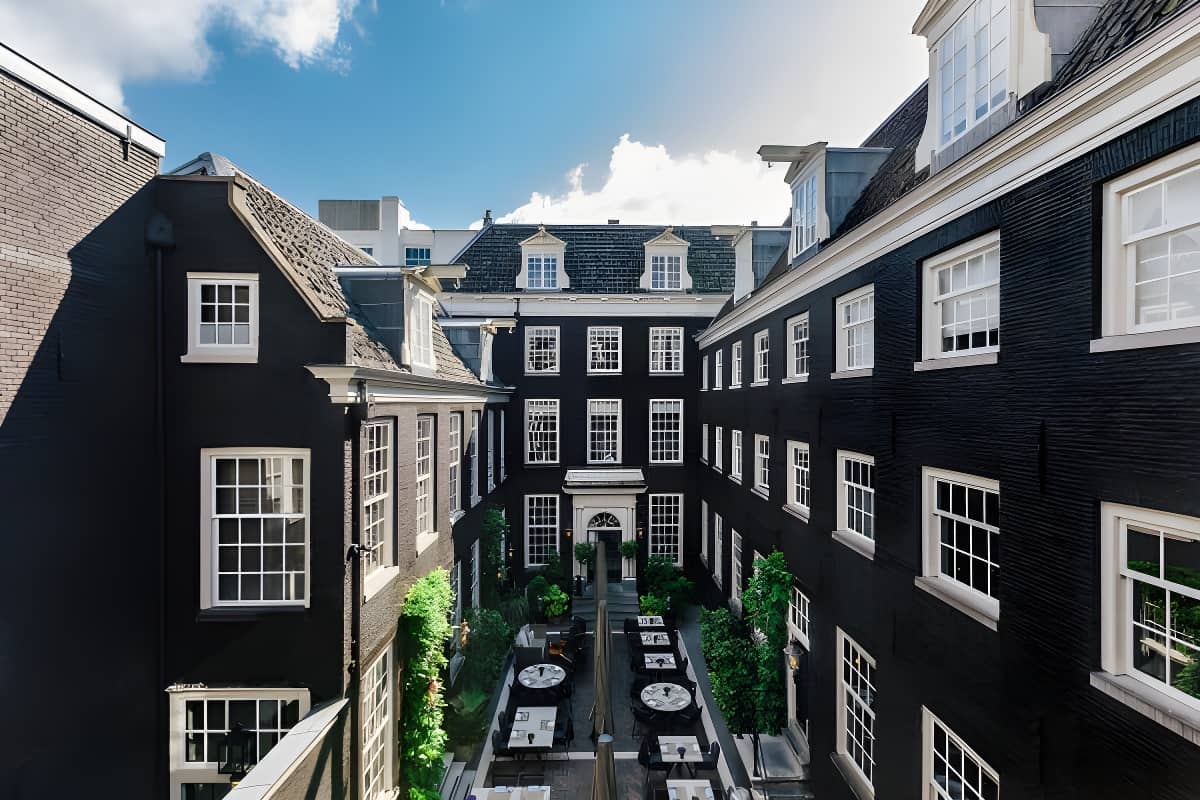
Set behind a seventeenth-century stone gateway on the Keizersgracht, The Dylan Amsterdam is the sort of place that seems to inhale before it speaks. You step in from the canal-side movement of the city and, suddenly, the mood changes. The enclosed courtyard hushes the outside world. The old theatre bones remain in the building. The whole place feels as though Amsterdam has lowered its voice.
That matters in a city that can often be sold too loudly.
With 41 rooms, The Dylan has the scale to make each stay feel tailored rather than processed. The room categories are not merely different shades of the same idea. They have distinct personalities. Amber Rooms by Studio Linse use richer tones and a softer visual rhythm, while Loft Suites lean into space, beams and height. Loxura Rooms by FG Stijl bring copper and earthy warmth. Serendipity Rooms, refined in 2024 from Remy Meijers’ original concept, deliver a cleaner contemporary calm.
The trick here is not just design variety. It is selection. Guests often feel as though their room fits the trip they came to have.
Service follows the same logic. At Bar Brasserie OCCO, details are remembered with a light touch. Breakfast preferences do not need to be explained twice. Suggestions around the Nine Streets are shaped to temperament, not tourist traffic. That is the difference between service and attentiveness. One is efficient. The other is intelligent.
Restaurant Vinkeles, set within an eighteenth-century bakery with original brick ovens, deepens the sense of place. There is history in the walls, but the experience never leans on heritage like a crutch. It feels grounded rather than staged, which is harder to pull off than many grander hotels would care to admit.
Looking ahead, the hotel also sits neatly for WorldPride 2026 in Amsterdam, offering a discreet canal-side base during what will be a major moment on the city’s cultural calendar. Add the spring opening of a new fitness studio and The Dylan looks like the rare boutique hotel that can evolve without losing its nerve.
Compared with the larger palace properties of Paris or the heavy-gilded romance of Venice, this is Amsterdam luxury at its best: restrained, handsome and quietly aware of itself.
Imperial Hotel, Kyoto understands the value of restraint
Kyoto has no shortage of beautiful places to stay, but beauty alone is cheap currency in a city like this. What separates the Imperial Hotel, Kyoto is its sense of belonging.
Housed inside the restored 1936 Yasaka Kaikan theatre in Gion, the property wears its history without turning it into costume. The preserved façades, copper rooflines and terracotta tiles give the building a natural continuity with the neighbourhood, as if it has not been inserted into Gion so much as returned to it. That distinction is important.
With 55 rooms, this boutique hotel has room to breathe but not enough to become anonymous. Interiors by Tomoyuki Sakakida of New Material Research Laboratory draw on Tamina-ishi stone, zelkova wood and early twentieth-century references without descending into preciousness. The materials do the talking. The palette stays disciplined. The rooms are thoughtful rather than flashy.
Some guests will gravitate to tatami-based rooms in the North Wing, where the pace of the stay naturally slows. Others will prefer Heritage Suites that honour the original proportions of the building. Contemporary rooms, meanwhile, frame views across Gion’s machiya rooftops with a measured elegance. Again, the theme is alignment. The room should suit the traveller, not merely impress them.
Service here is built on timing. A recommendation for a quieter street through Gion at the right hour can be worth more than any concierge script. Access to a small atelier, suggested because of an interest casually mentioned earlier, is exactly the sort of thing travellers remember once they are back home explaining why the stay felt different.
At REN, the counter experience brings diners into close contact with the chef and the process itself. It is less a performance than a conversation. The Old Imperial Bar extends the evening without trying too hard to manufacture atmosphere. It simply lets it accumulate.
If Tokyo’s luxury hotel scene can at times feel all velocity and precision, Kyoto’s great strength is texture and pause. This property understands that. In the crowded field of heritage hospitality, it feels less like a restored building turned into a hotel and more like a living part of the city.
Ananda in the Himalayas turns wellness into something personal
Many wellness retreats promise transformation. Quite a few deliver green juice, a timetable and the faint feeling you have accidentally enrolled in a very expensive school. Ananda in the Himalayas works differently.
Set on a former palace estate above the Himalayan foothills in northern India, this 75-room retreat uses space, silence and continuity to create something steadier. The views stretch over the Ganges valley. The light shifts slowly across the hills. The air feels clearer, cooler and somehow less argumentative than the modern world.
What makes Ananda stand out, though, is not simply the setting. It is the degree to which the programme adapts. Each stay begins with consultations across Ayurveda, yoga, emotional healing and nutrition, then adjusts over time according to observation, follow-up conversations and day-to-day responses. That may sound obvious, but in practice it is rare. Too many wellness destinations hand out bespoke plans that behave suspiciously like templates.
At this boutique hotel scale, the team can remain closely involved. Treatments are modified. Session timing shifts. Meals are adapted according to energy levels and comfort. Guests do not have to keep restating themselves. That alone can feel like a form of healing.
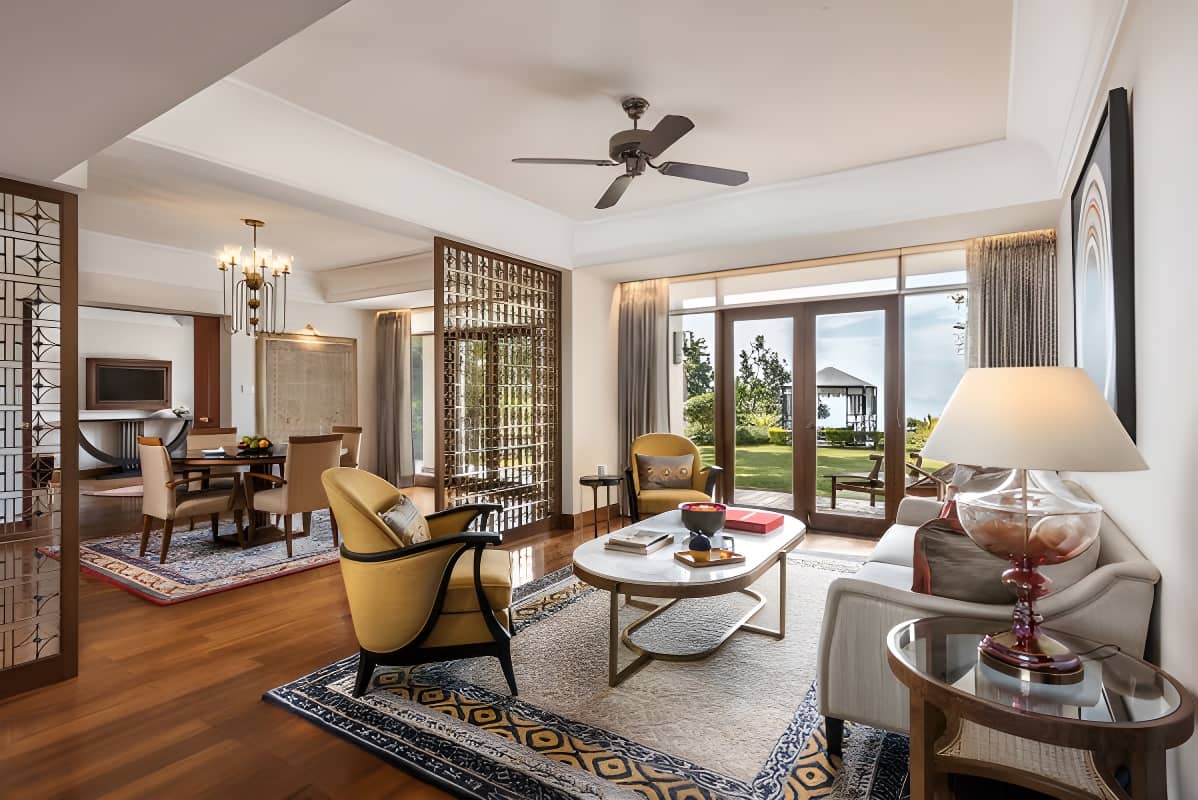
The architecture supports the mood. Natural light, soft tones and generous space stop the property from ever feeling clinical. Outdoor pavilions vary in exposure, from open hillside outlooks to more sheltered settings, allowing guests to drift towards the environment that best suits them. There is intelligence in that softness.
Accommodation ranges from rooms overlooking the estate, gardens or valley to suites with private garden space and villas with private pools. In the 25,000-square-foot spa, treatment rooms and hydrotherapy experiences are selected with a similarly responsive eye.
Ananda’s new Diabetes Management Program, launched in its 25th year, adds another serious dimension to the retreat, bringing together Ayurveda, Yoga, Traditional Chinese Medicine, physiotherapy, nutritional science and emotional healing in a multi-disciplinary format.
Where some elite wellness addresses in Switzerland or the Californian desert can feel sharply clinical, Ananda remains warmer, more spiritual and more emotionally literate. It is less about being fixed and more about being understood.
Hotel Belmar lets the cloud forest do half the talking
Monteverde is not a place that benefits from over-explaining. Mist moves through the trees as if the forest is thinking. The air carries damp earth, leaves and a kind of green silence. Light arrives filtered, not blasted. In a setting like that, a hotel has two choices: work with nature or blunder in wearing too much cologne.
Hotel Belmar chooses wisely.
This family-owned 26-room property is rooted in what it calls The Art of Nature, and for once that sort of phrase feels earned rather than polished up by committee. The hotel’s use of sustainably sourced woods, artisan detailing and natural ventilation keeps the experience connected to the landscape. The absence of televisions and air conditioning is not a gimmick. It is an invitation to notice where you are.
That will not be for everyone, and that is fine. Good travel is not meant to suit every pulse rate.
What Belmar does particularly well is let attentiveness feel organic. Experiences unfold according to rhythm rather than pressure, whether through time at Finca Madre Tierra or exploration in the SAVIA private forest reserve. Discovery here is not packaged with a whistle and clipboard. It unfolds.
Dining works the same way. Menus shift with the seasons and bend naturally around guest preferences. Meals feel tied to the land and weather rather than imported from some global luxury playbook. There is a conversational quality to the whole stay, as if the boutique hotel is listening as much as it is leading.
The new Sleep Ritual turndown, inspired by the rhythms of the forest, adds an elegant evening note through subtle sensory elements and audio-guided meditations. Crucially, it does not push itself at guests. It offers. It does not insist.
Compared with larger eco-resorts that can sometimes feel suspiciously managerial in their virtue, Hotel Belmar is looser, warmer and more believable. It understands that nature does not need branding. It needs respect.
Calabash Cove proves Caribbean luxury need not shout
The Caribbean hotel market has never had a problem with beauty. The issue, more often, is volume. Too many resorts mistake size for generosity and entertainment for atmosphere. Calabash Cove Resort & Spa in Saint Lucia takes the opposite view.
Set along a shallow cove in Bonaire Bay, this 26-room property is built around privacy, quiet recognition and the sort of unforced calm that many larger beach resorts spend a fortune trying to simulate. The sea is close, the gardens are considered, and the mood is measured rather than manic.
Accommodation is arranged around preference rather than hierarchy. Water’s Edge Cottages, with private plunge pools, verandahs and outdoor showers, lean into seclusion. Swim Up Junior Suites offer easier access to shared areas. Sunset Ocean View Suites sit higher in the main house buildings, giving guests greater distance and wider outlook. That matters because the right room in a coastal resort can shape the entire tempo of a holiday.
Materials including mahogany and stone keep the architecture tied to its setting, while the landscaping softens the edges rather than over-framing the view. It is a cohesive environment, not a collection of photogenic corners.
The service culture here is the thing. Preferred tables at Windsong Restaurant are remembered. Shade and breeze are factored into dining suggestions. Poolside loungers and refreshments appear with a kind of serene competence. Even the quieter corners of the gardens seem to reveal themselves once staff understand how a guest likes to spend the day.
The newly introduced seasonal vegan and vegetarian menus, built around local island ingredients, fit neatly into that guest-led approach. They reflect flexibility, freshness and a welcome lack of fuss.
Against the mega-resorts of the Caribbean, or even some of the more theatrical private-island escapes elsewhere, Calabash Cove feels grown-up. It knows that serenity is not the absence of activity. It is the absence of unnecessary noise.
The new luxury memory is not the suite, but the feeling
What links these five properties is not a design style, a region or even a common traveller. It is a shared understanding of how luxury is now judged.
Guests do not go home raving only about thread counts and square footage. They remember recognition. They remember atmosphere. They remember that curious, hard-to-manufacture sensation that a hotel had understood the version of them that arrived there.
That is why the modern boutique hotel is having more than a moment. It is answering a change in appetite. Travellers want less spectacle and more signal. Less generic perfection. More emotional precision.
And perhaps that is the real aspiration in travel now. Not to be dazzled, but to be known a little. To step into a place far from home and feel, almost immediately, that you have landed somewhere that was ready for you.