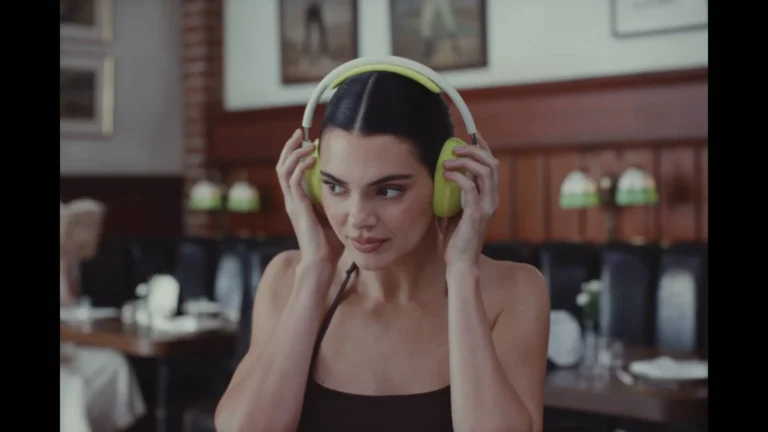
Apple AirPods Max 2 bring sharper ANC, richer sound and smarter everyday features in a refined over-ear package.
Apple AirPods Max 2 have entered the room not with a brass band, but with the quiet confidence of a product that knows exactly where it sits: at the premium end of the headphone market, where price tags are firm, expectations are higher, and excuses are in short supply. Apple’s latest over-ear flagship promises stronger Active Noise Cancellation, improved sound quality, and a raft of intelligent features designed to make the headphones more useful in daily life rather than merely impressive on a spec sheet.
That distinction matters. Plenty of premium headphones can sound lovely while sitting perfectly still in a marketing deck. The harder trick is to justify themselves on a plane, in a busy station, on a work call, while editing audio, or halfway through a long-haul trip when your patience is hanging by a thread. Apple’s pitch with AirPods Max 2 is not that they are radically different in appearance. It is that they are materially better where people will actually notice.
“With the incredible performance of H2, AirPods Max are upgraded with up to 1.5x more effective ANC for the ultimate all-day listening experience,” said Eric Treski, Apple’s director of Audio Product Marketing.“ The sound quality is remarkably clean, rich, and acoustically detailed — and when combined with capabilities like Personalised Spatial Audio, AirPods Max 2 deliver a profoundly immersive experience.”
First impressions: familiar shell, more serious intent
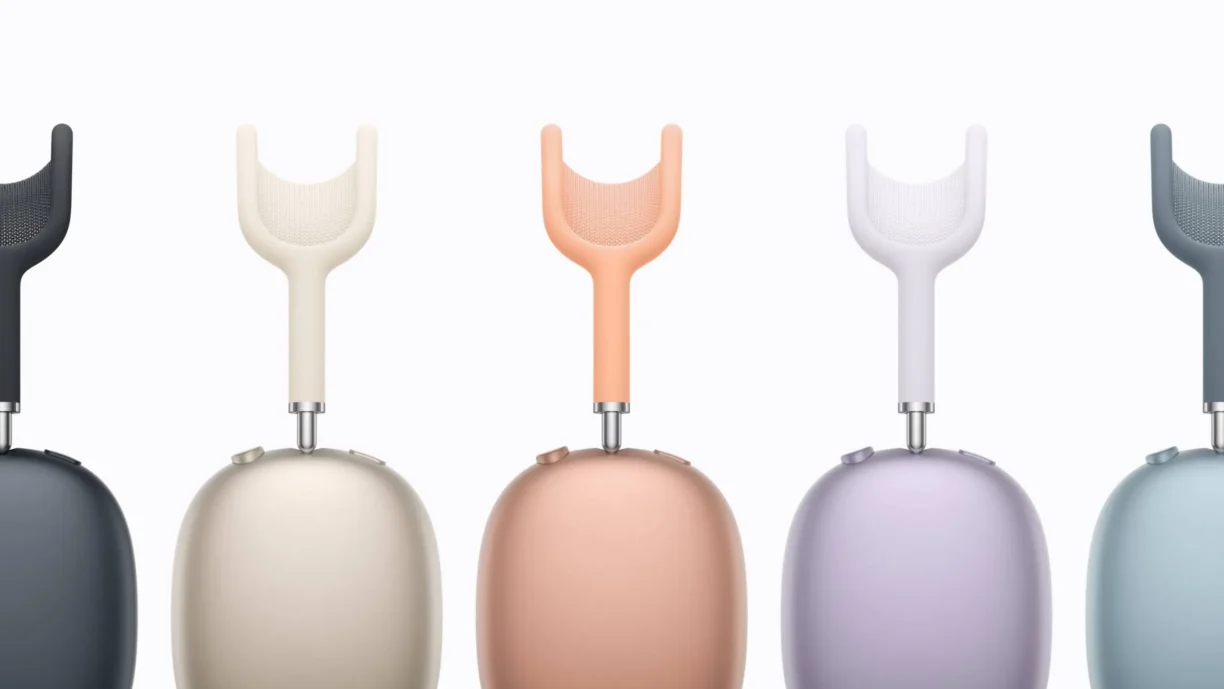
At first glance, there is no dramatic redesign here. Apple has wisely resisted the urge to fiddle with an over-ear silhouette that already looks distinct in a market full of headphones that tend to resemble one another after a few pints. AirPods Max 2 arrive in midnight, starlight, orange, purple, and blue, which gives buyers enough room for personality without turning the whole thing into a children’s sweet aisle.
The real story sits under the hood. Powered by Apple’s H2 chip, these headphones are less about cosmetic theatre and more about refinement. That is often the mark of a mature premium product. When a company stops shouting and starts sanding the rough edges off performance, it usually means it thinks the fundamentals are sound.
Active Noise Cancellation that matters in the real world
Apple says AirPods Max 2 offer noise cancellation up to 1.5 times more effective than the previous generation. In practical terms, that is the difference between hearing the drone of an aircraft engine and forgetting it exists for a while. It is the difference between a commuter train remaining part of your day and becoming background wallpaper.
For most buyers, that will be the headline feature. Better ANC is not glamorous, but it is one of the few headphone upgrades that immediately improves life. It helps during travel, deep work, calls, and those increasingly rare moments when one simply wants a bit of peace without negotiating with the outside world.
Transparency mode has also been refined through updated digital signal processing and microphone tuning. Apple says it now sounds more natural, which is exactly how it should. A good transparency mode should not feel like your ears have been outsourced to a slightly confused robot.
Cleaner, richer audio without the usual nonsense
Apple is also making a serious play on sound quality with AirPods Max 2. The new high dynamic range amplifier is intended to deliver cleaner audio while preserving the core sound signature of the original model. The promise is improved instrument placement, tighter bass consistency, and more natural mids and highs.
Translated into plain English, this means music should sound less smeared, less congested, and more composed. Bass ought to arrive with shape rather than just weight. Vocals should sit where they belong instead of floating around the room like a lost shopping bag. High frequencies should carry detail without becoming sharp or brittle.
That will matter particularly with orchestral tracks, layered pop production, film soundtracks and spatial audio content, where separation and localisation are not luxuries but the whole point of the exercise. Apple AirPods Max 2 appear designed to reward careful listening without alienating those who simply want to press play and get on with their day.
Lossless audio and creator features broaden the appeal
This is where the product becomes more interesting. AirPods Max 2 support 24-bit, 48 kHs lossless audio via the included USB-C cable, while also offering ultra-low latency audio. That gives Apple a stronger footing with content creators, podcasters, musicians and editors who want fidelity without being dragged into a nest of adapters and compromise.
Studio-quality audio recording and camera remote functionality push the headphones beyond passive listening. For interviewers, singers, podcasters and mobile creators, that is not a gimmick. It adds utility. Apple is effectively telling buyers these are not just luxury listening cans for the sofa; they are also tools.
That said, the serious studio crowd will still compare them with dedicated wired monitoring headphones from brands long entrenched in professional audio. Apple’s advantage is convenience and ecosystem integration rather than trying to cosplay as a niche studio manufacturer.
The intelligent features that could actually prove useful
This is where Apple usually separates itself from rivals. The list is long: Adaptive Audio, Conversation Awareness, Voice Isolation, Live Translation, Personalised Volume, Loud Sound Reduction, Siri Interactions, and more. On paper, that can sound like a buffet of features no one asked for. In use, some of them may quietly become hard to give up.
Adaptive Audio automatically shifts between noise cancellation and awareness depending on surroundings. Conversation Awareness lowers playback when you start speaking. Voice Isolation prioritises your voice on calls while filtering ambient noise. These are not the sort of additions that make people gasp in a keynote, but they are exactly the kind that improve ownership over time.
Live Translation, powered by Apple Intelligence, is the bolder inclusion. If it performs smoothly across supported languages and regions, it has the potential to move from party trick to genuinely valuable travel and communication tool. The caveat, of course, is availability. Apple has already noted that the feature may not be available everywhere, which is sensible if a little less romantic than the launch copy.
Who are Apple AirPods Max 2 best for?
AirPods Max 2 are clearly aimed at three overlapping groups.
The first is the premium everyday user: commuters, travellers, office workers and Apple loyalists who want excellent noise cancellation, polished controls and effortless device switching.
The second is the entertainment-first buyer: someone who watches films, listens to spatial audio, plays games and wants immersion without fiddling about in settings menus until retirement.
The third is the creative user: podcasters, musicians, interviewers and mobile content creators who can make use of studio-quality recording, low-latency performance and the USB-C lossless option.
They are less obviously built for bargain hunters or platform-agnostic shoppers who do not live in Apple’s ecosystem. At £499, this is not an impulse buy. It is a premium decision, and Apple knows it.
Strengths and weaknesses
Strengths
AirPods Max 2 appear to double down on the things that matter most in premium headphones: stronger ANC, better sonic clarity, smarter call performance, and deeper integration with the Apple ecosystem.
The creator-friendly additions are also shrewd. Studio-quality recording and camera remote features give the product more range than a simple music-and-movies proposition.
The continued emphasis on Personalised Spatial Audio, lossless USB-C listening and low-latency gaming support makes the package broad without feeling scattered.
Weaknesses
The obvious hurdle is price. At £499, Apple AirPods Max 2 remain an expensive way to improve your commute, however elegant the improvement may be.
There is also the challenge of competition. Sony’s WH-1000X series and Bose’s QuietComfort Ultra line have built reputations on comfort, class-leading ANC and broad compatibility, often at lower prices. Apple will need its ecosystem advantages and new creator features to do the heavy lifting here.
And while the intelligent features sound promising, their real value will depend on how often people use them rather than how nicely they sit in a product briefing.
How they compare with the competition
In the premium over-ear space, Apple is not operating alone in some velvet-rope private club. Sony tends to dominate the conversation around smart noise cancellation and feature density. Bose remains the dependable old hand when comfort and ANC are top priorities.
Brands like Sennheiser and Bowers & Wilkins often appeal to buyers who lean more heavily toward audio purity and traditional hi-fi credibility.
Apple AirPods Max 2 take a slightly different road. They are not trying to be the cheapest, nor the most clinically neutral. They are aiming to be the most integrated premium headphones for people already living in Apple’s hardware and software universe.
That is a strong position if you own an iPhone, iPad and Mac. It is less persuasive if you do not.
A greener build, without making a song and dance of it
Apple has also leaned into its environmental messaging, noting that AirPods Max 2 use 100 per cent recycled rare earth elements in all magnets, 100 per cent recycled polyester in the ear cushion, and 100 per cent recycled gold plating and tin solder in Apple-designed printed circuit boards. The paper packaging is 100 per cent fibre-based too.
That will not be the reason most people buy them, nor should it be. But in a category where premium products increasingly need to justify not only their performance but their footprint, it is a useful part of the overall case.
Pricing, availability and the value question
Customers in the U.S. and more than 30 countries and regions can order AirPods Max 2 from March 25, with availability starting early next month. The price starts at £499.
That figure puts them firmly in luxury territory, which means value becomes a more nuanced discussion. If you are buying purely on sound per pound, there will be strong alternatives. If you are buying for the total package of ANC, premium build, ecosystem integration, creator tools, spatial audio and smart features, the arithmetic begins to look more favourable.
Apple is not selling a cheap escape. It is selling convenience, polish and capability, wrapped in a product that wants to earn its keep in several parts of your life at once.
Verdict: more than a tidy refresh
Apple AirPods Max 2 look less like a revolution and more like a disciplined, intelligent refinement of a product that already knew its lane. The better noise cancellation should prove the biggest day-to-day win.
The cleaner audio and lossless support give the headphones more credibility among demanding listeners. And the added suite of smart features, particularly for calls and content creation, makes them feel more rounded and more practical.
For Apple users with the budget, there is a compelling case here. For everyone else, the question is whether the ecosystem benefits and creator-friendly tools justify the premium.
Either way, AirPods Max 2 are not trying to be all things to all people. They are trying to be extremely good at a very specific kind of premium listening experience. On the evidence of this launch, that aim appears not only sensible, but rather well judged.