Amazon Marathon will take runners deep into Peru’s rainforest for a rare endurance test wrapped in culture, adventure and careful logistics.
The Amazon Marathon sounds like the sort of idea dreamt up by someone with a brave heart, sturdy calves and a loose relationship with comfort, but that is precisely what makes it compelling. Set for Wednesday, September 9, 2026, this new event from Marathon Tours & Travel will take runners to Puerto Maldonado, on the edge of the Peruvian Amazon rainforest, for a race that is less about urban splits and more about disappearing into one of the most extraordinary landscapes on Earth.
This is not another city marathon with a medal, a banana and a shuttle bus back to the hotel. The Amazon Marathon is being pitched as a tightly managed, small-capacity endurance experience, with just 50 runners expected in its first year, and there is a certain sense in that. The Amazon is not a place for excess, noise or logistical improvisation. It is a place of dense green walls, humid air, flickering light and the faint feeling that nature was here first and remains gloriously unbothered by your training plan.
A race course cut through one of the world’s richest ecosystems
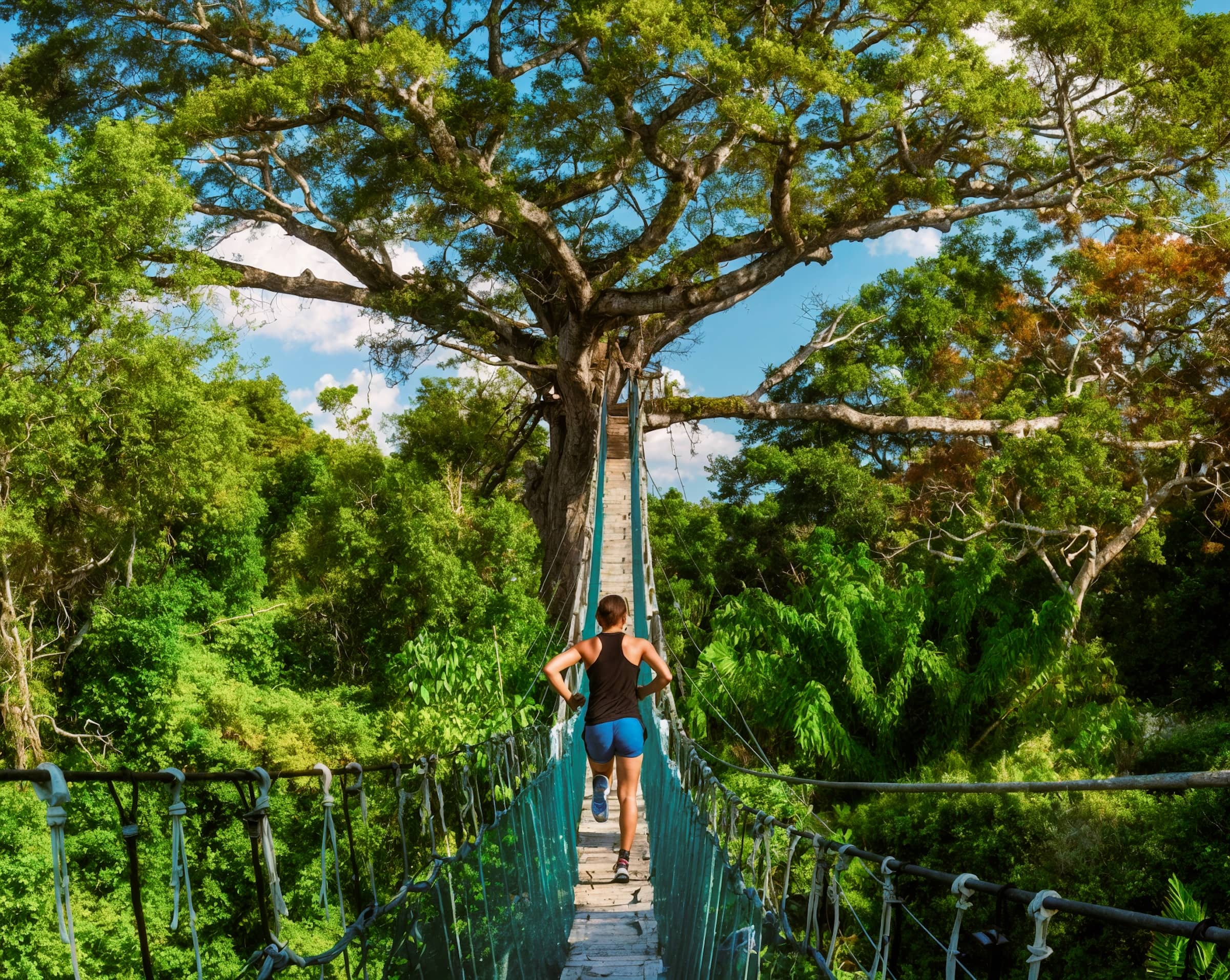
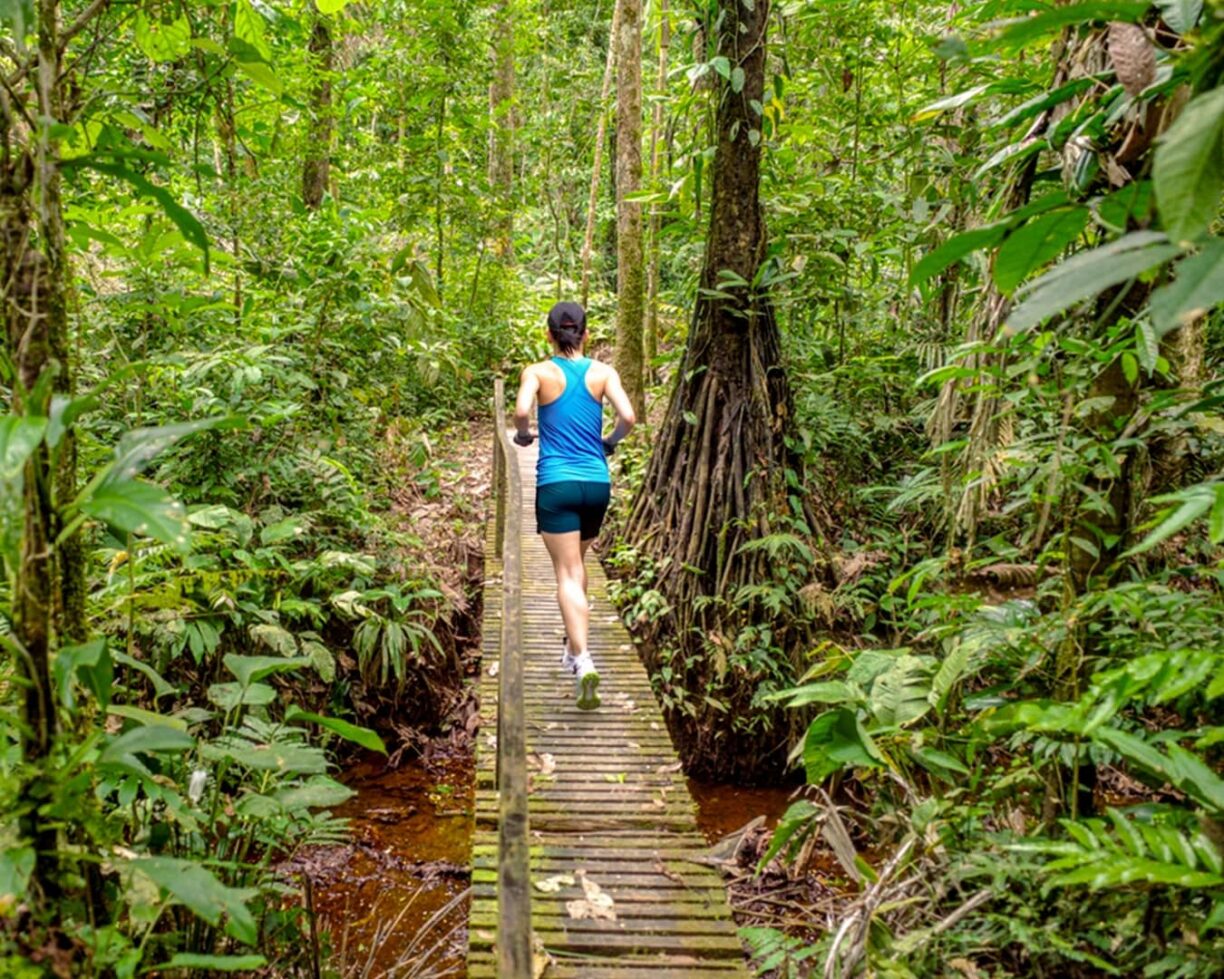
The route itself will offer three distances: marathon, half-marathon and 10.5km, each staged on a looped jungle trail course. That alone separates the Amazon Marathon from the usual calendar clutter. Trail underfoot, rainforest all around, and the unmistakable atmosphere of a place where the scenery does not merely decorate the race but dictates its mood.
Puerto Maldonado is no postcard pretender. It sits at the gateway to one of the most biodiverse regions on the planet, where the air feels heavy with life and the landscape seems to operate on its own terms. The light can be sharp one moment and filtered the next. The climate is part of the conversation. The jungle does not present itself politely. It arrives all at once.
That is what gives the Amazon Marathon its appeal. It is not simply a test of endurance, but a chance to run inside a living, breathing ecosystem that most people will only ever glimpse in documentaries or dog-eared travel books.
Why this feels more expedition than ordinary race weekend
Plenty of races claim to be memorable. Some have a dramatic bridge, others a historic city centre, and a few have enough inflatable branding to be seen from low orbit. The Amazon Marathon is different because its attraction lies in access. It takes runners somewhere genuinely rare.
Marathon Tours & Travel is packaging the event as a fully hosted experience, with international runners travelling as part of an official programme. That is not a minor detail in a remote environment like this. It means the usual anxieties of transport, timing and logistics are stripped out, allowing participants to concentrate on the rather more pressing business of running through the Amazon without wondering where the next transfer is coming from.
The itinerary includes domestic transfers within Peru, pre-race accommodation and welcome experiences in Lima, race-week stays in jungle lodges and hotels, and on-the-ground support from the Marathon Tours & Travel team. There is also an optional post-race extension to the Sacred Valley and Machu Picchu, which is a rather elegant way of saying your recovery week could include one of the world’s great cultural landmarks.
The Amazon Marathon’s travel appeal is not an afterthought
This is where the event begins to separate itself from more conventional endurance races. For all the sweat and discipline involved, the Amazon Marathon is also a destination experience in the truest sense. Peru already occupies rarefied air as a travel proposition, with its mix of ancient history, dramatic geography and strong culinary reputation. Add the Peruvian Amazon to that picture and the race becomes something richer than a single morning’s effort.
There is also a sustainability angle here that matters. Remote destinations can be exploited just as easily as they can be celebrated, so the emphasis on managed numbers and local collaboration is significant. It suggests an event trying to leave a meaningful footprint without leaving the wrong kind.
Jeff Adams, President of Marathon Tours & Travel, said: “The Amazon Marathon is the definition of a bucket-list race. It’s not just about covering the distance, it’s about where you are, what you are able to experience and the stories you take home. Running in the Amazon rainforest is something very few people ever get to do, and we’re proud to be launching an event that makes that possible in a safe, supported and unforgettable way.”
That gets to the heart of it. The medal will matter, certainly. So will the finish line. But the memory most runners are likely to keep is the setting itself: the oppressive beauty, the unfamiliar sounds, the sense that this was not just another event ticked off a list.
Local partnership gives the event its deeper purpose
The strongest travel experiences tend to involve more than scenery. They rely on local knowledge, local trust and some shared benefit beyond the visitor’s camera roll. The Amazon Marathon appears keenly aware of that.
Sandra Fernández – Biologist and President of Bajo Madre de Dios Tourism Association, said: “With a vision of collaboration, local businesses came together to promote the Bajo Madre de Dios as a unique nature and living culture destination that preserves the Amazon rainforest through sustainable tourism. Hosting the Amazon Marathon is a great honour for us and we are excited to expand our partnerships, supporting this important ecosystem for humanity as a whole.”
That quote gives the event weight beyond its sporting novelty. There is a serious point here about how tourism, when handled properly, can support conservation and local enterprise rather than merely consume them. In that respect, the Amazon Marathon is selling not just adventure, but participation in a broader story about place, preservation and responsible travel.
What makes this race stand out in a crowded endurance market
Destination races are hardly new. There are marathons in world capitals, mountain races with cinematic backdrops, and desert events designed to test the limits of sanity and hydration strategy. But few offer the same blend of rainforest terrain, cultural immersion, limited-entry exclusivity and fully supported logistics.
That combination is what gives the Amazon Marathon a sharper identity. It is intimate rather than sprawling. Experiential rather than transactional. Challenging without pretending to be a survival show. For adventurous runners, that will be the sweet spot.
It also helps that Peru can offer contrast in abundance. A trip that begins in Lima, dives into the jungle and potentially stretches on to the Sacred Valley and Machu Picchu is not merely a race trip. It is a layered journey through one of South America’s most compelling countries.
An event built for runners who want more than a finishing time
The Amazon Marathon will not suit everyone. Those who prefer flat boulevards, familiar comforts and the dependable rhythm of major-city racing may find the jungle a bit too raw for their liking. Fair enough. But for runners who like the idea of earning their stories the hard way, this has obvious pull.
There is a romance to racing in places that still feel untamed. Not a soft-focus brochure sort of romance, but the real kind, where the environment asks something of you and gives something back in return. That is the promise here.
With places limited, the Amazon Marathon is aiming squarely at runners who see travel as part of the challenge and challenge as part of the reward. In a world cluttered with interchangeable events, that alone makes it worth noticing.
And for the fortunate few who make the start line in September 2026, it may prove to be the rarest thing in endurance sport: a race that feels genuinely unlike anything else.