Wolf Run turns 15 with mud, obstacles, family spirit and thousands returning to the wild each year.
Wolf Run has reached 15 with mud on its boots, water in its socks and absolutely no intention of tidying itself up for polite company. What began in the Midlands as a rough-edged adventure cooked up by a farming family has grown into one of Britain’s most distinctive outdoor participation events, with Wolf Run now drawing up to 30,000 people a year to its obstacle-laden weekends.
That rise is not the usual sports-business fairy tale dressed in lycra and corporate optimism. It is a more grounded thing than that. Wolf Run was built from countryside, family graft and the increasingly radical notion that adults should occasionally stop staring at screens and go and fling themselves through mud.
From local farmland idea to national fixture

The event was created and organised by brothers Charlie and Will Moreton, who remain at the centre of Wolf Run today. The first edition sent 650 runners to the start line. Fifteen years later, the scale is vastly different, but the DNA has not changed. This is still not a race in the conventional sense. Nobody is really here for a sterile personal best or a watch-beeped sermon on split times.
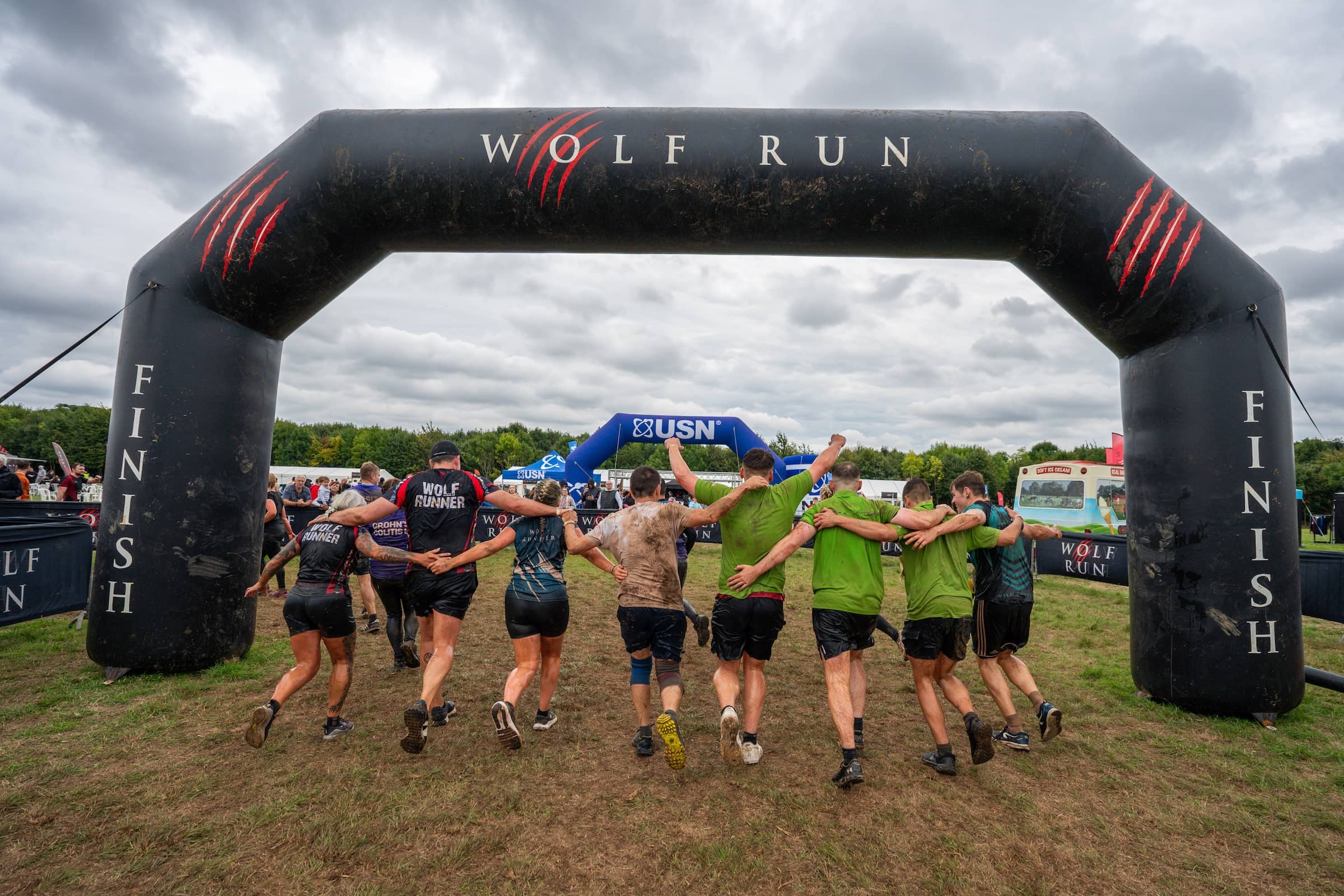
Instead, Wolf Run asks participants to deal with mud, water, obstacles and unruly countryside in courses designed to test body and mind in equal measure. The point is not merely speed. The point is to emerge on the other side looking like you have wrestled a swamp and learned something about yourself in the process.
That distinction matters. In a crowded endurance market full of branded suffering and polished motivational slogans, Wolf Run has held onto something more elemental. It offers discomfort with a pulse, challenge with a sense of place, and the rare luxury of being gloriously dirty without apology.
A Midlands event with proper roots
Geography is not a backdrop here. It is part of the machinery. Spring Wolf and Autumn Wolf take place at Offchurch Bury near Leamington Spa, while Summer Wolf brings thousands to Stanford Hall in Leicestershire for a full-throttle weekend of action.
These are not anonymous event sites dressed up with bunting and ambition. The brothers grew up in these wild surroundings, and that childhood sense of freedom still runs through the event like a current. The courses feel less manufactured than discovered, shaped by land that already knew how to be difficult long before anyone thought to sell tickets for it.
That helps explain why Wolf Run has struck such a chord. It taps into something many people have misplaced: the appetite for outdoor adventure that used to arrive naturally in childhood, then got buried somewhere under office chairs, notifications and very respectable indoor shoes.
Built by family, powered by community
There is something almost cheerfully old-fashioned about the way Wolf Run is run. For all its growth, it still bears the marks of a family operation in the best sense: hands-on, slightly chaotic, heavily committed and stitched together by people who care enough to muck in.
Founder Charlie Moreton said: “We have lots of family members involved. My cousin Tom does the website and graphics; my wife Katie does the marketing, and my father-in-law James is the financial director. We’ve also roped in our sister Harri, she’s on the mic at every weekend calling out the wave times and general information. We’ve got a DJ onsite, we try to make it a full day out so it’s not just the run, we have a big event village.
“Quite a few of our uncles and cousins get involved too whether it’s marshalling, driving, registration or running the bar. We’ve been very lucky, without friends and family it wouldn’t have taken off, we owe a few favours I think.”
That is the sound of an event that still knows where it came from. In truth, plenty of sports events talk about community; fewer can point to cousins on registration, relatives on logistics and family members helping keep the whole machine moving. Wolf Run can.
More than an obstacle race
The smart thing Wolf Run has done is resist becoming one-note. Yes, the mud and obstacles are the obvious draw, but the broader offer is more expansive than a simple punishment parade for fitness enthusiasts.
Junior Wolf gives 7 to 17-year-olds a route into the experience, turning the event into a family affair rather than an adults-only test of mud tolerance. Then there is Wolf Trails, a dog-friendly trail running option without obstacles, for those who prefer their countryside challenge with fewer freezing water pits and less chance of having to explain bruises in the office on Monday.
That wider structure gives Wolf Run more staying power than many niche events. It is not just selling hardship. It is selling participation, atmosphere and a day out with texture. The event village, DJ and festival-like setup help move it beyond the finish line itself. People are not simply turning up to run; they are stepping into a weekend with its own muddy ecosystem.
Adventure is not a marketing line
With some events, the branding arrives first and the meaning is squeezed in afterward. Wolf Run feels like the reverse. The adventurous spirit at its core is not manufactured because Charlie and Will Moreton live it themselves.
Rock climbing, banger races across Europe, mountain biking down glaciers in the Alps and taking on their own courses together are not exactly the hobbies of men looking for a quiet sit-down. That matters because participants can usually tell when the people behind an event actually believe in what they are asking others to do.
Will Moreton added: “We run together still. We always try and do the test run together. If things have gone well, one of us will try to sneak in the last wave with runners and marshals which is great fun. It’s a great way to get true feedback from runners, when you’re caked in mud together and you get to hear what bits they like.”
That is a useful detail, and an unusually honest one. The last wave, caked in mud, listening to runners in real time, tells you more about Wolf Run than any polished campaign line ever could. It remains close to its audience because its founders still throw themselves into the same mess.
Why Wolf Run still matters at 15
Anniversaries in sport and events can become sentimental exercises, all rear-view mirror and self-congratulation. Wolf Run’s 15th has something more solid behind it. Its success says something about the kind of experiences people still crave.
In an age of convenience, frictionless entertainment and algorithm-fed attention spans, Wolf Run offers the opposite: effort, weather, uncertainty and the possibility that you may end the day soaked to the knees and oddly delighted about it. That is not a flaw in the model. It is the model.
And perhaps that is why the event has lasted. It understands that challenge is memorable, that the outdoors still has a hold on people, and that not every sporting occasion needs elite times or polished surfaces to matter. Sometimes a field, a few obstacles and a family with a slightly wild idea are enough.
Both brothers plan to run in the last wave of the final event this year, Autumn Wolf, to celebrate 15 years of Wolf Run together. That feels fitting. No velvet rope, no distant VIP platform, just back into the mud where it all started.
For an event built on grit, that is about as authentic a birthday party as you could ask for. Don’t miss out, book your Wolf Run tickets now at: https://thewolfrun.com/entry/