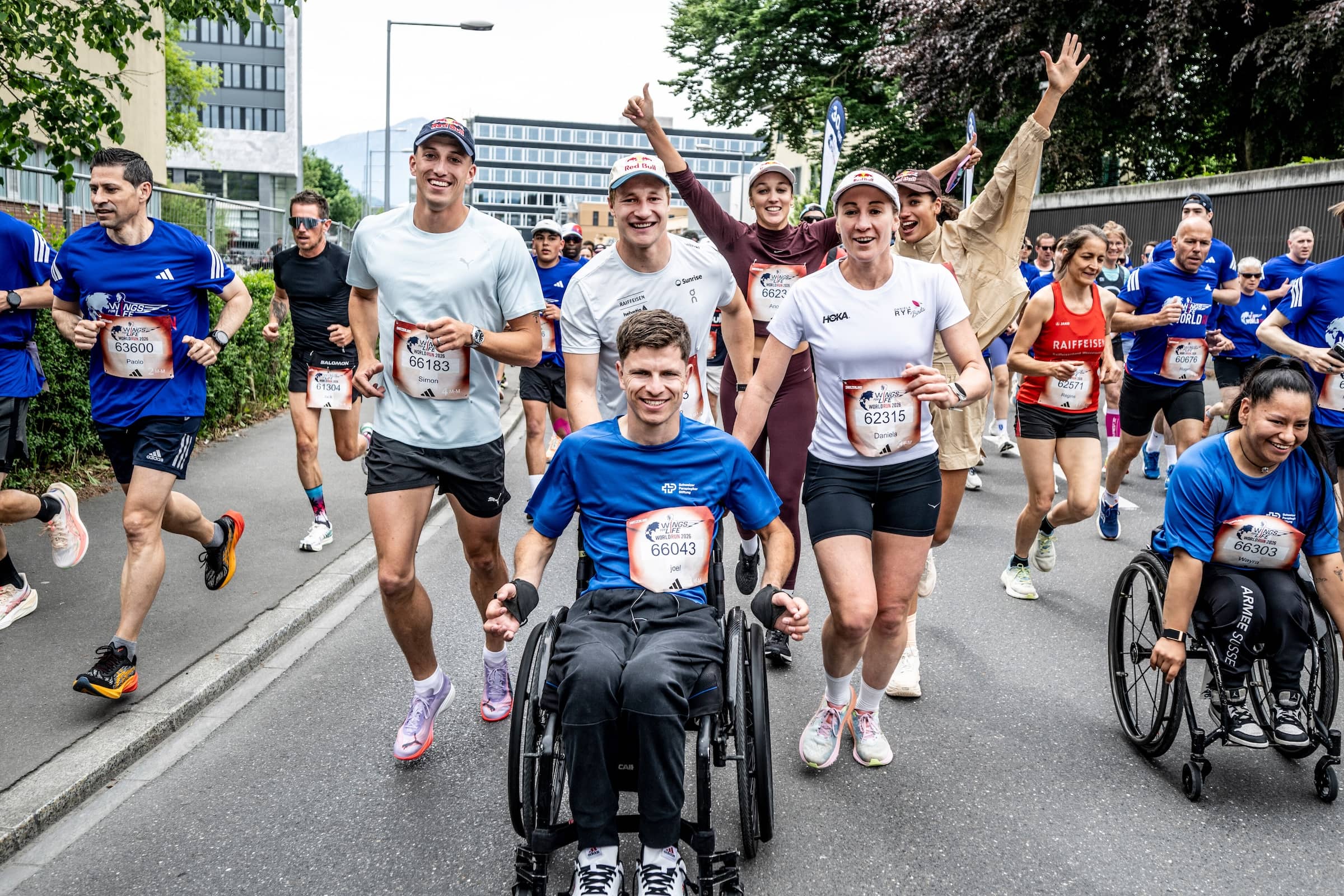
Wings for Life World Run raises record €9.2m as Jo Fukuda and Mikky Keetels set new global distance records.
The Wings for Life World Run has never been your ordinary Sunday jog. There is no traditional finish line, no polite little ribbon waiting in the distance, and no chance of pretending you were “just pacing yourself” when the Catcher Car finally rolls up behind you like a very well-mannered debt collector.
On 10 May 2026, the event concluded its 13th global edition with a record-breaking €9.2 million raised for spinal cord injury research. Across 173 countries, 346,527 participants of 192 nationalities took part, all starting simultaneously at 11:00 am UTC, or 13:00 CEST local time.
For a race built around being chased rather than chasing, it has once again managed to pull the world together rather beautifully.
A Global Race With One Relentless Finish Line
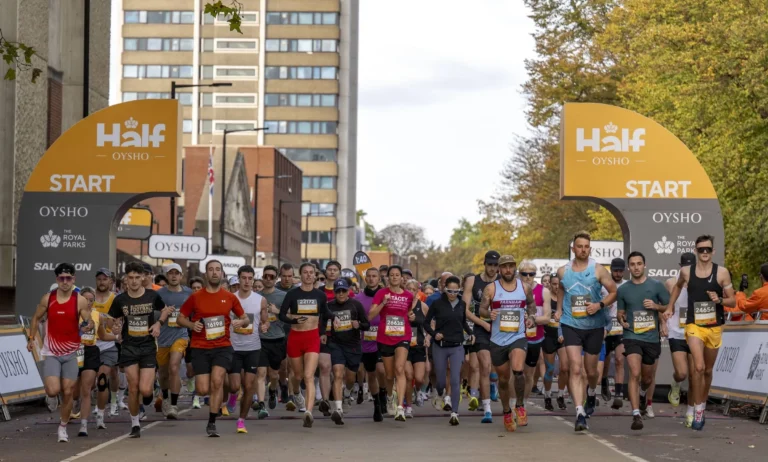
The Wings for Life World Run remains one of sport’s great democratic oddities: elite athletes, weekend warriors, famous faces, first-timers and everyone in between all begin at exactly the same moment, across continents and time zones.
This year’s field spread across seven official Flagship Runs, 648 App Run Events and the Wings for Life World Run App. Fifty-nine per cent of participants joined organised events, turning streets, parks and city centres into moving, sweating, occasionally limping proof that purpose can be a powerful pacemaker.
The Catcher Car set off at 11:30 am UTC, 30 minutes after the runners, gradually reeling in the field until every participant had been caught. It is a finish line on wheels, which sounds charming until it is gaining on you while your calves are filing for divorce.
Jo Fukuda Sets A Huge New Men’s World Record
Japan’s Jo Fukuda delivered the performance of the day in Fukuoka, recording a colossal 78.95 km to become the men’s global champion and set a new world record.
That is not so much a run as a disagreement with geography.
Fukuda’s distance underlined the unique brutality of the Wings for Life format. There is no fixed finish, no neat 10k sign, no marathon gantry, no comforting official telling you there are only two corners left. You run until the Catcher Car catches you. And Fukuda, plainly, took some catching.
“It was really tough, but I am so happy and I am proud. The audience helped me do my best. I hope more people will join this event next year.” Jo Fukuda, Men’s Global Champion
Mikky Keetels Rewrites The Women’s Record
In Breda, Netherlands, Mikky Keetels produced an equally formidable performance, setting a new women’s world record with 62.24 km.
The Dutch runner’s effort was a masterclass in patience, rhythm and mental economy. The sort of run where the body is clearly working overtime, but the mind has decided to clock in and take charge.
“At first we started off at a certain pace, but I think around 50km I just thought ‘don’t stop, just keep on running, this feels comfortable’. I was just thinking, ‘run for those who can’t’, and that kept me going… I tried to focus on feeling good remaining on pace, and feeling mentally focused.” Mikky Keetels, Women’s Global Champion
That line — “run for those who can’t” — sits at the heart of the event. It is not a slogan floating above the race like decorative bunting. It is the reason the thing exists.
Famous Faces, Fierce Effort And A 100-Year-Old Inspiration
The 2026 Wings for Life World Run also drew an impressive cast from across elite sport.
Oracle Red Bull Racing driver Yuki Tsunoda took part, as did alpine skiing’s overall World Cup champion Marco Odermatt and HYROX World Champion Alexander Rončević.
Yet perhaps the most remarkable participant was Austrian Paula Attwenger, who became the oldest ever participant at 100 years of age.
There are many ways to describe that. Inspiring will do. Humbling is better. Slightly embarrassing for anyone who skipped a walk because the sofa looked emotionally needy is probably most accurate.
Why The Wings for Life World Run Matters
The scale of the event is impressive, but the mission gives it weight.
One hundred per cent of all entry fees and donations raised go directly to the Wings for Life Foundation, which funds research into finding a cure for spinal cord injury.
That directness matters. In a sports world often cluttered with commercial fog, this is refreshingly clear: people enter, people run, money goes to research.
And in 2026, that collective effort produced €9.2 million — a record figure for a cause that remains urgent, complex and deeply human.
A Race That Turns Distance Into Purpose
The genius of the Wings for Life World Run is that it makes every distance count. The person caught early is part of the same global movement as the athlete still running after 70 kilometres. The number on the app may differ, but the purpose does not.
That is why this event keeps growing. It is accessible without being soft, competitive without being cold, and emotional without needing to rummage around in the theatrical cupboard.
In 2026, more than 346,000 people ran under one shared banner. Some chased records. Some chased personal limits. Some simply moved because others cannot.
And somewhere between Fukuoka, Breda and 171 other countries, the Wings for Life World Run once again proved that sport, at its best, is not merely about how far the body can go.
It is about who it carries with it.