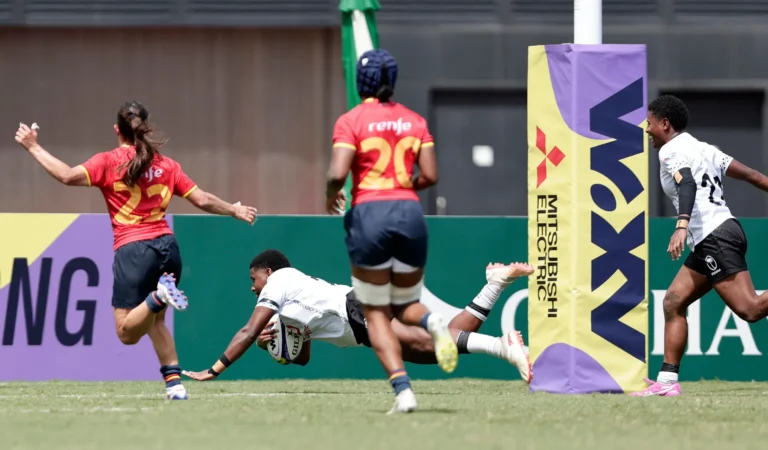
Experts reveal how rugby players prep, recover and go again in the Six Nations, with heat, cold and mobility staples.
If you’ve ever watched rugby at full tilt and thought, “Surely the human body wasn’t designed for that,” congratulations — you possess both eyesight and a functioning nervous system. As the Six Nations kicks off, the nation’s fans will feast on tries, tackles and the occasional philosophical debate about what constitutes “rolling away.” But what you don’t see, tucked behind the highlight reels and the slow-motion collisions, is the quietly heroic business of getting battered on Saturday and being ready to do it all again a few days later.
Because this sport doesn’t just test lungs and guts — it audits every ligament you’ve ever owned. Knees throb. Hamstrings tighten like violin strings. Calves complain. Backs grumble. Shoulders feel like they’ve been used to open stubborn jars for charity. The toll accumulates, and the recovery routine becomes as important as the game plan.
Chartered physiotherapist and part of the Deep Heat and Deep Freeze expert hub, Sammy Margo says: “Pain is a real problem. We only need to look at the latest Deep Heat and Deep Freeze research to see just how impactful pain can be on exercise with 42% of Brits saying pain has stopped them from exercising; 30% noting muscle and joint pain in their legs; while 28% have pain in their knees. These stats are coupled with the same poll finding that 26% have discomfort in their backs and a quarter noting foot pain, while 24% experience muscle and joint pain in their ankles.”
In other words: if pain had a kit sponsor, it’d be on the front of the shirt. And that’s not just for elite players. The same research suggests plenty of us are one awkward stair-step away from sounding like a haunted door hinge.
Rugby coach, Keith Beech and a guest advisor for the Deep Heat & Deep Freeze expert hub says: “The Six Nations is a battle of preparation, recovery and pain management with each 80-minute match placing a gruelling amount of pressure on players’ bodies. This is why professional players follow structured and consistent recovery routines to help them reset and go again.”
Even the old pros had their little habits. Former Welsh Rugby Union player Scott Quinnell has previously spoken about his pre-match rituals of applying Deep Heat to his calves, hamstrings, back, shoulders and neck, two minutes before a match. He even credited this routine behind his Man Of The Match award in an international fixture against Western Samoa.
@sticktorugby Scott Quinnell reveals his deep heat disaster in the changing room 😅 #theoverlap #sticktorugby #scottquinnell #rugbyleague #rugbyunion #deepheat #rituals #walesrugby ♬ original sound – Stick to Rugby
And while the professionals have medical teams, recovery rooms and enough tape to giftwrap Cardiff, the basic principles of matchday prep and recovery apply to the rest of us too — from club players to the fans who’ve spent 80 minutes locked in a stress-clench that could crack walnuts.
Sammy Margo explains: “Of course, the players also have a team of experts on hand to make sure their bodies are ready to survive the Six Nations, but the principles remain the same around preparation and recovery and we should all take note.”
So what does a proper Six Nations “survival kit” actually look like? According to the experts: warm the body, move dynamically, cool smartly after impact, keep blood flowing, and learn the difference between soreness and something that needs attention.
Prep: turn to heat before the hits
Before a match, players aren’t just getting “loose.” They’re preparing tissue for repeated, high-force collisions — the kind that make your spine briefly consider a career change.
Keith Beech explains: “Players are bracing for repeated high-force impacts so increasing blood flow and muscle elasticity can help reduce stiffness, reducing injury risk. Heat brings more blood to the muscle and that brings added oxygen and nutrients to enhance muscle repair, as well as relaxing aching and over tired muscles. It also helps to ease those uncomfortable muscle ‘knots’, whether you’re stepping onto the pitch or heading to a weekend training session.”
Heat isn’t only a pre-match ritual either. Once any minor injury has been checked and inflammation has settled, gentle warmth can help stiffness ease off in the days after the heavy lifting.
“In the days following a match, gentle heat, such as the Deep Heat products, can help relax tight muscles and ease stiffness, especially around the lower back, hips, shoulders or calves,” says Sammy Margo.
Players don’t just rock up, sing the anthem and hope their hamstrings behave. Before the first hit, they’re warming the engine — because a cold muscle in a hot match is basically a breakdown waiting to happen.
The experts point to the Deep Heat range as the kind of thing you’ll hear name-checked when bodies are being prepped, particularly when players want something quick, targeted and easy to apply. Deep Heat Muscle Rescue Heat Spray is one of the products in the mix. “This is a go-to, warming therapy essential self-care must-have. It delivers fast, targeted relief to warm and soothe tight, tense muscles via Vanillyl butyl ether (VBE).” And there’s a reason that ingredient gets the spotlight. “This hero ingredient creates a thermal sensation on the skin by activating a specific thermal receptor (vanilloid). It’s also climate-friendly thanks to the ingenious Bag-on-Valve technology, which eliminates the need for ozone-depleting Liquefied Petroleum Gas (LPG) while producing an even, fine, misted spray for easy application,” says Sammy Margo.
Not everyone wants a spray-and-go. Some prefer a bit of hands-on work, which is where Deep Heat Muscle Massage Roll-on Lotion comes in — combining massage with heat therapy and pitched as helpful before exercise to reduce injury risk, while also dampening down flare-ups when you’re already feeling it.
The old faithful Deep Heat Heat Rub still has its place too, especially when stiffness is the headline complaint. Margo adds: “It also helps with stiffness including back and rheumatic pain, sciatica, fibrositis, sprains and chilblains.”
And if you’re after a more turbo-charged hit, Deep Heat Max Strength contains more than twice the amount of methyl salicylate — though, as ever, always read the label.
Then there are the longer-lasting fixes for when the ache doesn’t get the memo and move on. Deep Heat Pain Relief Heat Patch is designed as an odourless adhesive option, providing warming relief for muscular pain, strains and joint stiffness for up to 16 hours across common problem areas.
Deep Heat Pain Relief Back Patch goes bigger, activating within a minute and providing 8 hours of comfortable, non-medicinal, targeted warming therapy, as well as an additional 8 hours of ongoing relief once the patch is removed.
For those who want heat they can wear and forget about, Deep Heat Warming Belt can help soothe pain in the lower back or hips, with four large heat cells that provide up to 12 hours of deep penetrating warmth — and it can be worn during exercise too.
There’s also Deep Heat Magnesium Massage Balm, which leans into the natural angle. Sammy Margo explains: “It includes natural ingredients including the mineral magnesium and arnica, a natural herb that’s been used for centuries and known for its plant health wonders.”
Dynamic warm-ups: move like you mean it
Static stretching has its place, but pre-match prep is typically about dynamic movement — getting joints through range while switching muscles “on” before the first collision.
“Think lunges, leg swings, shoulder rolls, squats and mobility drills,” says Sammy Margo. “These increase joint range and activate muscles so they’re ready.”
And the numbers are blunt: dynamic moves have been proven to improve performance and reduce the risk of injury by as much as 36%.
Which makes this next bit fairly alarming: 27% of respondents in the Deep Heat & Deep Freeze survey said they don’t warm up before exercise.
“You’re far more likely to suffer a muscle injury which will take you out of the game for a few days or, in some cases, several weeks. Plus, once you’ve sustained a muscle sprain or torn ligament, you become more susceptible to injuries in future, so it becomes even more important to make sure that every workout or run includes at least five minutes of warming up and cooling down,” says Sammy Margo.
Only 37% say they regularly cool down — which, in match terms, is like skipping the seatbelt because the car “usually behaves.”
Recover: post-match cold to calm things down
The minute the final whistle goes, the body’s recovery clock starts ticking. Inflammation and soreness can peak within hours, so the immediate post-match window matters — especially in a contact game where knocks come bundled with extra knocks.
Keith Beech says: “Cooling therapies have the opposite effect to heat as they help calm minor aches and pains by calming inflammation and reducing blood flow, which is why they’re often used in the immediate post-match window.”
Ice baths get the headlines, but not everyone has the facilities — or the emotional readiness — to climb into a wheelie bin of freezing water on a Tuesday night. The experts point to cold-based tools that are more realistic for at-home or on-the-go recovery.
Deep Freeze Muscle Rescue Cold Spray is one of the immediate options mentioned for use after exercise. “The no-fuss spray format allows application on hard-to-reach areas such as the back, legs, feet, and shoulders. It also comes in a new climate-friendly aerosol with zero LPG,” says Sammy Margo.
If you want something that lives in your kit bag without leaking, Deep Freeze Glide-on Gel is designed to be close-to-hand for cooling relief for minor aches in the back, neck, shoulders, legs and feet, whether you’re in the gym, in the car, or trying to sit down the day after a match like a normal adult.
For a more discreet option, Deep Freeze Cold Patch is a self-adhesive patch providing targeted cooling and soothing relief for three hours. And if you’d rather keep it simple, Deep Freeze Cold Gel is a fast, mess-free gel for cooling and soothing minor muscle and joint aches.
Keep moving: active recovery beats total shutdown
After a weekend match, the temptation is to collapse into the nearest soft furnishing and stay there until Thursday. But total stillness can leave muscles tighter and joints stiffer.
Still stretches help, but as Keith Beech explains, it doesn’t end there: “Walking, yoga or light cycling and swimming can help boost circulation and ease stiffness without putting extra strain on tired muscles. Players won’t simply sit still until the next match; they’ll make sure they move a little to stop muscles from becoming tight and joints from becoming stiff.”
Massage: not a luxury — a lever
Whether it’s delivered by a therapist, a foam roller or self-work, massage plays a big role in recovery routines because it helps restore movement quality when the body’s feeling like it’s been used in a demolition test.
Margo says: “Massage helps increase blood flow to the area, reduce muscle tension and improve flexibility, which is essential to help players move comfortably on and off the pitch.”
She also recommends pairing your massage with Deep Heat Muscle Massage Roll-On Lotion to add a warming sensation “without any mess or fuss.”
Know your pain: soreness isn’t always injury
One of the most useful skills in the sport — for pros and weekend warriors alike — is recognising what’s normal post-match soreness and what’s your body waving a red flag.
Margo says: “Post-exercise soreness, known as Delayed Onset Muscle Soreness, or DOMS, usually feels like a dull, achy stiffness that develops gradually (often peaking 24 to 72 hours after exercise) and affects the muscles symmetrically.”
The bottom line for players (and the rest of us)
Readiness isn’t just about bravery and bravado — it’s about routines: warming up with intent, using heat strategically, cooling smartly after impact, staying gently active between matches, and treating pain like information rather than background noise. The Six Nations may be theatre, but the survival kit is the backstage crew doing the real work.
And here’s the honest truth: the difference between “I’m fine” and “I can’t walk downstairs” is usually five minutes of decent prep, a smart cool-down, and not pretending you’re made of granite.
So enjoy the Six Nations, shout at the telly, and if your body starts singing the blues afterwards — don’t just grit your teeth and call it character. Warm it up, cool it down, keep it moving… and live to argue about “rolling away” another day.