Rory McIlroy reveals how resilience, longevity and elite mindset are driving his next chapter after Masters glory.
Rory McIlroy has always had the swing, the swagger and the sort of competitive engine that could tow a small nation uphill, but his latest Masters victory says something bigger than golf. It speaks to resilience, sporting longevity, pressure, self-belief and the awkward business of staying hungry when you have already climbed most of the mountains.
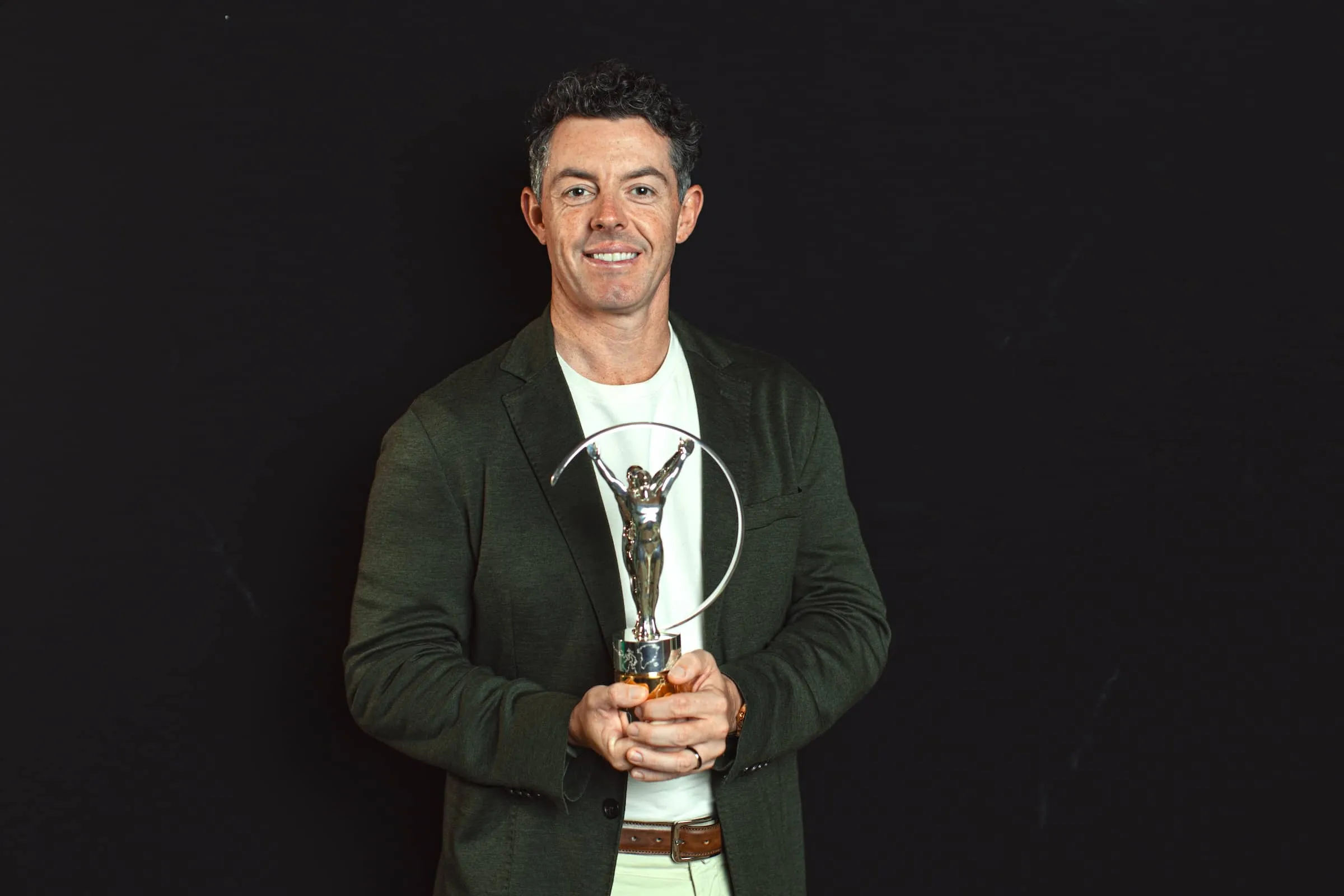
Speaking at the Laureus World Sports Awards, McIlroy made it clear that Augusta has not left him satisfied and ready to polish trophies in a cardigan. Quite the opposite. The World No.2 now has his eyes fixed on the four Majors and the Ryder Cup, with Team Europe heading to Ireland next year in search of a fourth consecutive win.
For Sustain Health readers, this is where the story becomes more than birdies and blazers. McIlroy’s latest chapter is a sharp reminder that high performance is not simply about talent. It is about recovery, renewal, mindset and knowing how to find fresh purpose when the world assumes your best work may already be behind you.
A Masters Victory That Felt Like Validation
McIlroy’s long relationship with Augusta National has been part sporting drama, part emotional obstacle course. For years, the Masters represented the missing piece in an already gilded career. Winning there once completed the career Grand Slam. Winning there again appears to have given him something different: confirmation.
McIlroy on comparing his Masters wins: “This year it felt more real, more complete. When I won in 2025, I kept thinking to myself, ‘is this real life?’, the way it happened, and there was this outpouring of emotion. This year it was like validation.”
That word matters. Validation is not the same as relief. Relief is collapsing into a chair after surviving a tax return. Validation is standing upright and realising the work, the pressure and the persistence were worth it.
In elite sport, that kind of emotional reset can be powerful. McIlroy has spent years carrying expectation like an overpacked tour bag. This win appears to have lightened the load without dulling the ambition.
The Mindset Of An Athlete Still Chasing More
McIlroy was honoured with the Laureus World Comeback of the Year Award after becoming the sixth golfer to complete the career Grand Slam. For many athletes, that kind of milestone would be the cue to slow down, savour the view and stop checking leaderboards quite so obsessively.
Not McIlroy.
McIlroy on hunting Majors: “Completing the career Grand Slam, I always felt like that was going to be the highlight of my career. But I’m still competitive, I still feel like I have a lot left to give. I’m at a point in my career where I really have to target the bigger events, the four Major championships, the Ryder Cup. Trying to add to that number is something that’s really important to me.”
There is a health and performance lesson tucked neatly inside that quote. Purpose does not vanish after achievement. In fact, for many elite athletes, the hardest challenge comes after the big win: what now?
McIlroy seems to have answered that question quickly. Target the biggest stages. Protect energy. Prioritise meaning. Compete where it matters most.
That is not just good career management. It is sustainable performance.
Learning From Nadal, Federer, Djokovic And Brady
One of the more interesting parts of McIlroy’s reflection was not about golf at all. It was about longevity across sport.
McIlroy on sporting longevity: “I got a lot of inspiration from athletes that are maybe at the back end of their careers, and still able to achieve these great things. And I think of Novak and Roger and Rafa in tennis, or I look at Messi or Ronaldo in soccer, I look at Tom Brady in American football. I take inspiration from those guys and what they were able to achieve later into their careers.”
That is a telling list. Novak Djokovic, Roger Federer, Rafael Nadal, Lionel Messi, Cristiano Ronaldo and Tom Brady did not extend their careers by accident. They evolved. They adapted training, recovery, nutrition, preparation, emotional control and workload.
The older elite athlete has to become more precise. Less wasteful. Less reactive. More aware of the body’s signals and the mind’s limits.
McIlroy is now entering that phase of his career. He is not trying to be the young phenomenon anymore. He is becoming something more interesting: the experienced champion who knows where to spend his energy and where not to.
Why Nadal’s Support Mattered
Perhaps the most human detail in McIlroy’s story came from Rafael Nadal, who became an unlikely cheerleader during Augusta.
McIlroy and his biggest fan – Rafael Nadal: “I saw Rafa a lot at Augusta and to have his support… he’d leave me little voice notes at the end of every day and it’s really cool when you have one of the absolute legends of sport cheering you on like that, and him knowing what it feels like to be in that position – that’s really cool.”
There is something quietly brilliant about that. Nadal, a man who knows all about pain, pressure and dragging greatness out of tired limbs, sending encouragement to McIlroy at the end of each day.
Elite sport can look glamorous from the outside, but pressure is often a lonely room. Having someone who truly understands that environment can be invaluable.
Support systems matter. Even for global stars. Especially for global stars.
Ryder Cup In Ireland Brings A New Emotional Challenge
McIlroy’s next great emotional stage may be the Ryder Cup in Ireland, where European golf will carry expectation, noise and national pride in equal measure.
McIlroy on Ryder Cup 2027: “I can’t wait to play in front of those crowds in Ireland. I really think the crowd are going to give us the momentum to go and win our fourth Ryder Cup in a row.”
Crowds can lift an athlete, but they can also add pressure. The trick is learning how to convert atmosphere into energy rather than anxiety.
For McIlroy, Irish support could become a performance advantage. He understands Ryder Cup emotion better than most. He has lived the tension, the tribalism and the strange joy of caring about every putt as though it has been personally insulted.
In health terms, this is the fascinating part: pressure does not disappear at the top level. Champions simply build better systems for carrying it.
Taking The Green Jacket To India
McIlroy’s post-Augusta journey also took him to India, where he joined cricket legend Sachin Tendulkar and brought the Green Jacket to the country for the first time.
McIlroy on taking the Green Jacket to India: “One of the coolest experiences for me was being able to bring the Green Jacket to India. It was the first time a Green Jacket has ever been in that country. And I did an event with Sachin Tendulkar, which was absolutely incredible.”
It was a meeting of two sporting worlds: golf and cricket, Augusta tradition and Indian sporting devotion. More importantly, it showed how symbols of achievement can travel far beyond their original setting.
For McIlroy, the Green Jacket is no longer just a prize. It is part of a wider story about persistence, global sport and what happens when years of effort finally meet the moment they were built for.
What McIlroy’s Story Teaches About Resilience
The Rory McIlroy story is often told through scorecards, trophies and Major tallies. But the more useful lesson may be this: excellence is rarely linear.
There are setbacks. Long waits. Doubt. Reinvention. Noise from outside. Noise from inside. Then, occasionally, a moment that makes the hard years look like training rather than punishment.
McIlroy’s latest Masters victory is not just about another title. It is about the psychology of staying in the fight. It is about ageing without retreating. It is about choosing your targets carefully and still believing there is more to give.
That is why this chapter lands beyond golf. Whether you are an athlete, a weekend runner, a gym-goer, or simply someone trying to rebuild momentum in life, McIlroy’s message is clear enough: the next peak does not have to arrive when everyone expects it.
Sometimes it comes later.
And sometimes, if you have the nerve to keep going, it means even more.