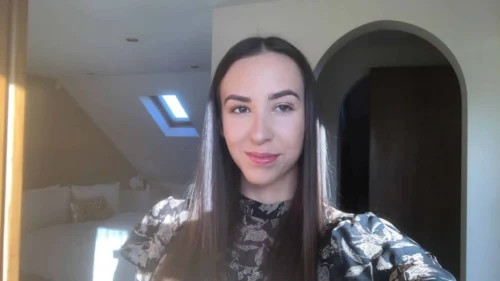
Two women share ME/CFS recovery journeys—losing everything, rebuilding slowly, and finding hope through acceptance, boundaries and self-care.
When your body suddenly slams on the brakes and leaves you marooned in bed, fatigue stops being a throwaway word and becomes the main character in your life. For people living with ME or Chronic Fatigue Syndrome (CFS) – thought to affect around 270,000 people in the UK and Ireland – that brutal, bone-deep exhaustion is just the beginning, joined by pain, brain fog, dizziness, nausea and sleep problems that could make a night owl envy a garden rock.
Yet behind the medical jargon and mystery, there are real people quietly rebuilding their lives from the ground up.
From boardroom and barbells to bedbound
Before illness barged in uninvited, Linda Jones, a mum-of-two and company director from the West Midlands, was the sort of person who made the rest of us look like we’d mislaid our get-up-and-go.
Then, in 2002, at the age of 34, she was diagnosed with ME/CFS – and life tilted.
“I lost six years of my life. I remember bits of it, but not most of it. I lost my home, everything,” says Jones. At the height of the illness, some days she could barely move or speak. Her career, marriage and independence all ground to a halt.
In a “weird way”, getting a diagnosis was a relief. “I thought, ‘OK great, at least we know what we’re dealing with’,” Jones recalls (lots of people with CFS still face a frustrating battle on this front). “But then the next stumbling block was, well, we don’t actually know what to do with you.”
Although her GP was “lovely”, CFS is often a vague condition. There’s no single test to diagnose it – instead, this often involves a range of assessments, monitoring symptom patterns and ruling out other possible causes – and no set treatment, although medications may help with some symptoms.
Jones remembers these early days as a “very difficult time”. Her world shrank to four walls and an unpredictable body. Friends carried on with careers, nights out and gym sessions while she wrestled with a nervous system that behaved like a smoke alarm set off by toast.
Fast-forward to today though: now 51, she practically glows with health, is working full-time in a new career she loves and, in many ways, is healthier and happier than ever.
The long road back from chronic fatigue
This was no fairytale overnight recovery. “It really took another 10 years,” says Jones. Over that decade, she began to probe the question every person with chronic illness eventually asks: What, if anything, can I change?
Bit by bit, she started seeking out things that helped her reclaim some energy from the clutches of fatigue, while also looking hard at “triggers” in her life that might need to change – like stress and burnout.
“I went to see a naturopath and a hypnotherapist. It was a big weight off my shoulders to think, ‘Actually, I can talk to some people and they know what’s going on’. I started to see small changes and get a bit of hope,” says Jones, who then became “sort of my own life coach, really”.
Rather than treating CFS as one huge, terrifying monster, she broke it down into smaller, more manageable pieces. Sleep, nutrition, relaxation, stress, gentle movement – each became its own project.
“You kind of rebuild yourself and rebuild a completely new life – and I’m still rebuilding,” she says.
Out went the old mentality of “push through at all costs”. In came wind-down routines, better sleep hygiene, food that actually fuelled her, and daily practices like walking, yoga and qigong that moved her body without emptying the tank. The aim wasn’t to “beat” fatigue in a heroic showdown; it was to work with her body, not against it.
Eventually, the rebuilding extended beyond her own life. Jones founded the Salus Fatigue Foundation (salus.org.uk), which helps people affected by fatigue for all kinds of reasons to develop their own self-management tools, turning her experience into a lifeline for others.
‘My life became a recovery journey’
Kim Willis, 38, from London, also discovered that recovery meant zooming out and looking at her whole life, not just the hours spent horizontal.
“My life became a recovery journey; sometimes one step forwards and two steps back, but with lessons and new experiences all the same.
“I began to realise that recovery wasn’t just about rest. It was about actively tuning into what actually gave me energy, and also understanding what depleted me. It meant consistently making decisions that moved me closer to things that felt lighter and away from those that felt heavier. That meant some pretty big life changes,” explains Willis, whose CFS diagnosis in 2007 resulted in missing a year of work.
Those “pretty big life changes” were not the sort of tweaks you make over a quiet weekend. There was a break-up, a move to a more “calm space”, and leaving her high-flying job in the Civil Service. Each shift was a conscious step away from environments that cranked up her fatigue, towards ones that offered breathing room.
Now, Willis’ life looks very different. She’s carved out a career she’s both passionate about and which allows for crucial flexibility and freedom, working as a travel journalist and running a communications company focused on social impact. She “hikes mountains, runs events and travels the world” and deliberately fills her days with things that fuel and soothe her body and soul.
Like Jones though, she says “this stuff didn’t happen overnight”. And both women remember what it was like in the early days, when things felt bleak and hopeless – when fatigue felt less like a symptom and more like an identity.
This is a very normal and understandable response to facing any major health shift – and nobody should ever beat themselves up for having a bad day or week, or struggling with the emotional impact of illness.
The power – and pain – of acceptance
Although recovery stories like Willis’ and Jones’ certainly exist, there wasn’t a magic switch. Moving forwards took time and a lot of self-love – and a vital step in the process for both was acceptance.
“Acceptance was a really big thing: ‘OK, this is happening to me and I’ve got to address it’, and then, ‘Well nobody else can help me, only I can help myself’,” says Jones. Reaching this point took her about two years, she adds, but it enabled her to start listening to her body, instead of constantly arguing with it.
Now, when early warning signs creep in – a drop in energy, that familiar fog rolling in – she acts quickly. “I check in with myself regularly. How am I feeling, what am I doing? I make sure I nurture myself every single day. I’ve become very clear on my boundaries and that’s really important,” says Jones.
For Willis, acceptance was equally central – and just as hard-won.
Willis says “in a lot of ways, ME/CFS is a life course in acceptance. And it was incredibly hard at times. CFS felt totally unpredictable: one moment I was at 20% energy, the next I would be getting a blinding headache. You’d just accept one thing, and another would come out of nowhere,” she adds, admitting that “a lot of the time, I just wanted it all to go away. Yet acceptance was an amazing practice.
I really got into reading [American Tibetan Buddhist] Pema Chodron and joined a meditation community. I used to practice regularly sitting still, asking myself how I felt, and then just saying ‘yes’ to whatever came up in the moment. It meant really working with my mind, so I wouldn’t get so stuck in a cycle of ‘why me’, or ‘it’s not fair’. Those thoughts were understandable, but they were so unhelpful.”
Instead of treating her thoughts like courtroom evidence, she learned to notice them and let them pass. In the process, fatigue stopped being a personal failure and became a signal – information she could use.
Managing, not ‘curing’, a chronic condition
Believing recovery was possible was key – but that doesn’t mean CFS completely disappears or that fatigue never knocks on the door again. For many chronic illnesses, it’s about a lifelong journey of listening to your body and honouring what it needs – managing, rather than curing – and sometimes this does mean making big changes to work, relationships, and the stories we tell ourselves about success.
But Willis and Jones both say, ultimately, their lives have improved as a result.
“It sounds like a cliché, but with hindsight, CFS is something I’m grateful for,” says Willis. “It was my body’s best way of telling me that what I was doing and how I was living wasn’t right for the person I am. It took me ages to accept that my body doesn’t quite operate like a lot of people’s, but it was also a gift. They say you don’t change your life unless you really have to. I really had to. And now I have a life that’s much more aligned with who I am.”
For Jones, channelling everything she’s learned into Salus, and now living with a much greater sense of balance and self-care, has been transformative. “We’re always learning and the journey continues,” says Jones, “but I’m living a really happy, healthy, fulfilled life. I’ve found my purpose.”
For anyone staring down the tunnel of ME/CFS, swamped by fatigue and fear, their stories don’t offer a quick fix – but they do offer something just as important: proof that with time, support, and a kinder relationship with your own body, life can not only go on, it can change direction for the better.