Manchester United honour coach Mark Brent as Michael Carrick spotlights a community project changing young lives in Trafford.
Manchester United are often judged by the noise at Old Trafford, the trophies in the cabinet and the theatre that comes with the badge. But a mile or so from the grand stage, in a sports barn where floodlit dreams tend to arrive in muddied trainers, the club reminded everyone that football’s true value is not always found on a scoreboard.
Michael Carrick, taking time out from his duties as Manchester United head coach, made a surprise visit to a community football session that bears his name and carries his backing. The occasion was not about fanfare or flashbulbs. It was about recognising the sort of contribution that keeps the game stitched into the fabric of a city.
A project built on access, trust and routine
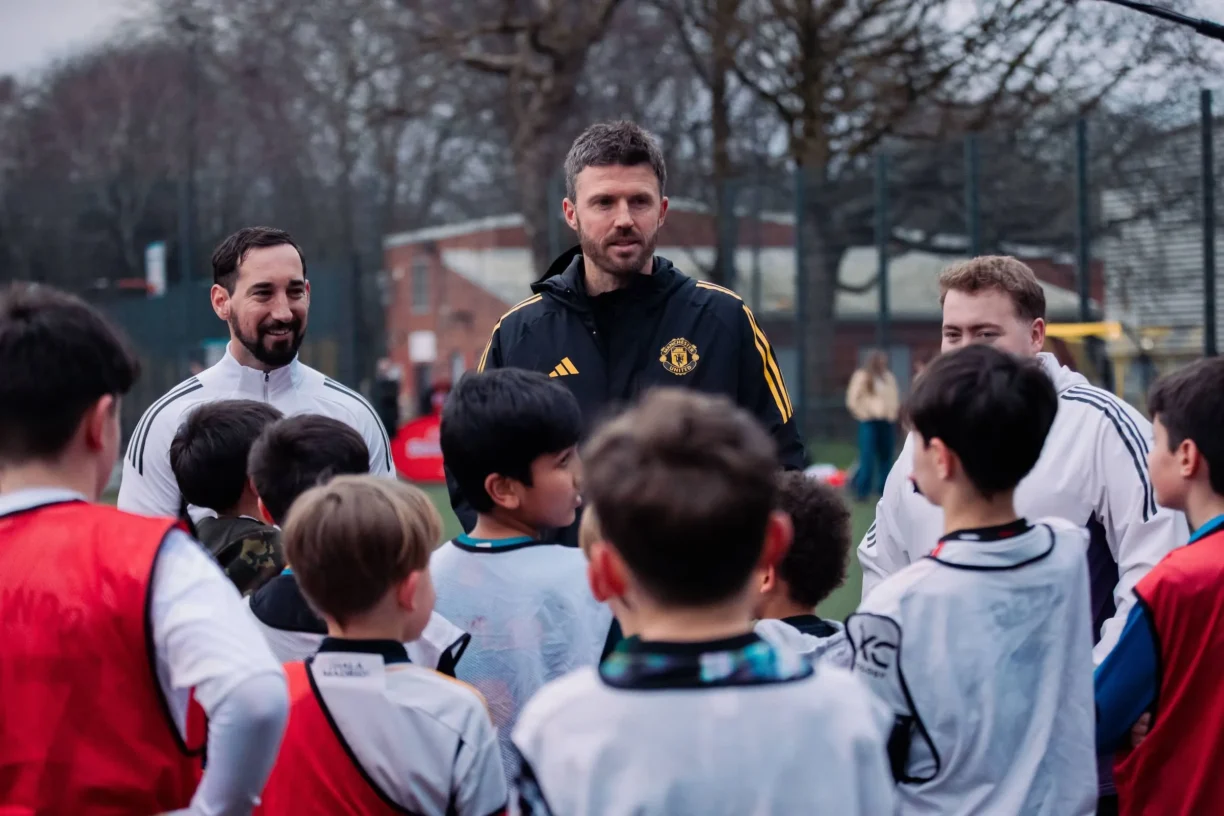
‘Carrick’s Street Reds’ is part of the Manchester United Foundation’s Street Reds programme, powered by Premier League Kicks, and one of more than 20 free community football sessions delivered across Greater Manchester for young people aged between 8 and 18.
Held at Old Trafford Sports Barn, the session offers more than football. It provides structure, familiarity, guidance and, for many youngsters, something increasingly rare in modern life: a place to belong without being asked for much more than effort and respect. In an age where elite football can sometimes seem wrapped in glass and marketed within an inch of its life, this is the game at ground level, useful and human.
That matters. It matters to the young people turning up each week, to families who know their children are in safe hands, and to a city where community football still does a lot of the heavy lifting that never makes the back pages.
Michael Carrick’s visit had substance, not ceremony
Carrick’s visit came as part of the Premier League’s ‘More Than A Game’ initiative, which marks 20 years of the Premier League Kicks programme. Each club has named a Community Captain, recognising someone whose life has been shaped by the programme and who now helps shape the lives of others.
At this Manchester United session, that honour went to Mark Brent, a long-serving coach whose story has the pleasing symmetry of football at its best. He first attended the project as an eight-year-old participant. Now he is one of the adults helping to guide the next wave through it.
There is something deeply reassuring about that arc. Football can spend an awful lot of time telling us about pathways, legacy and impact. Here, for once, it can point to one without requiring a marketing deck and a dramatic soundtrack.
From young participant to role model
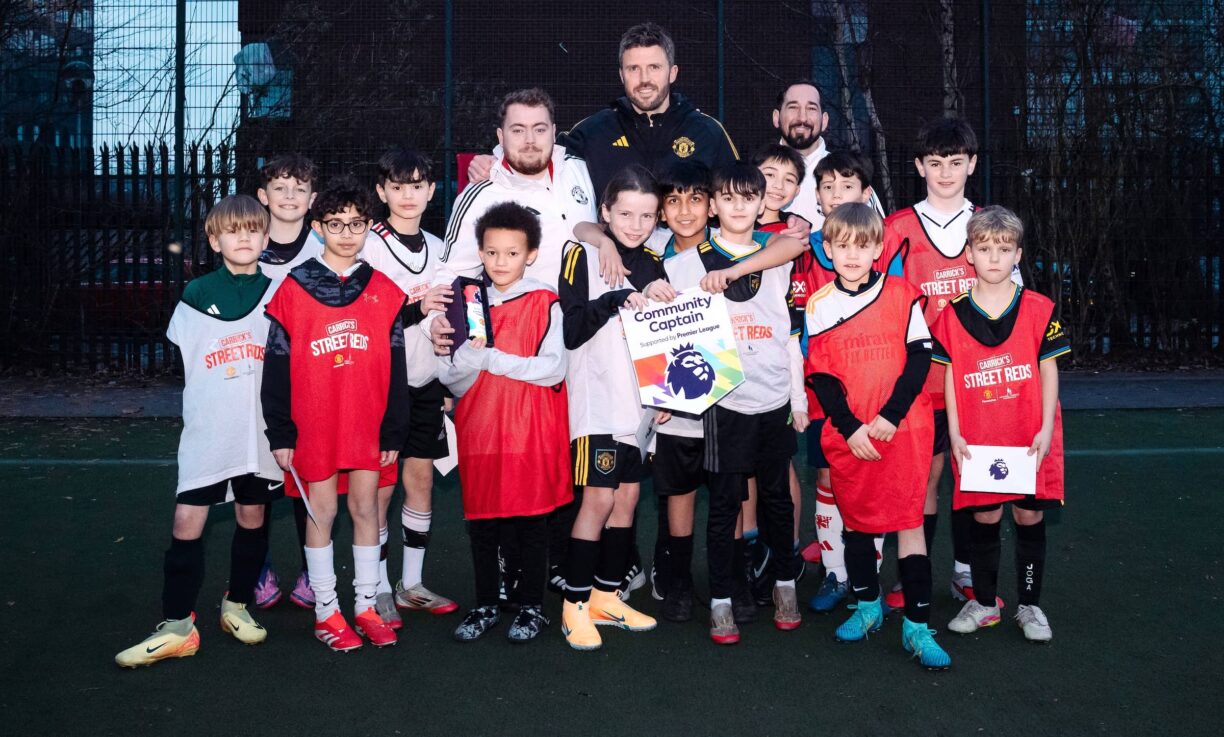
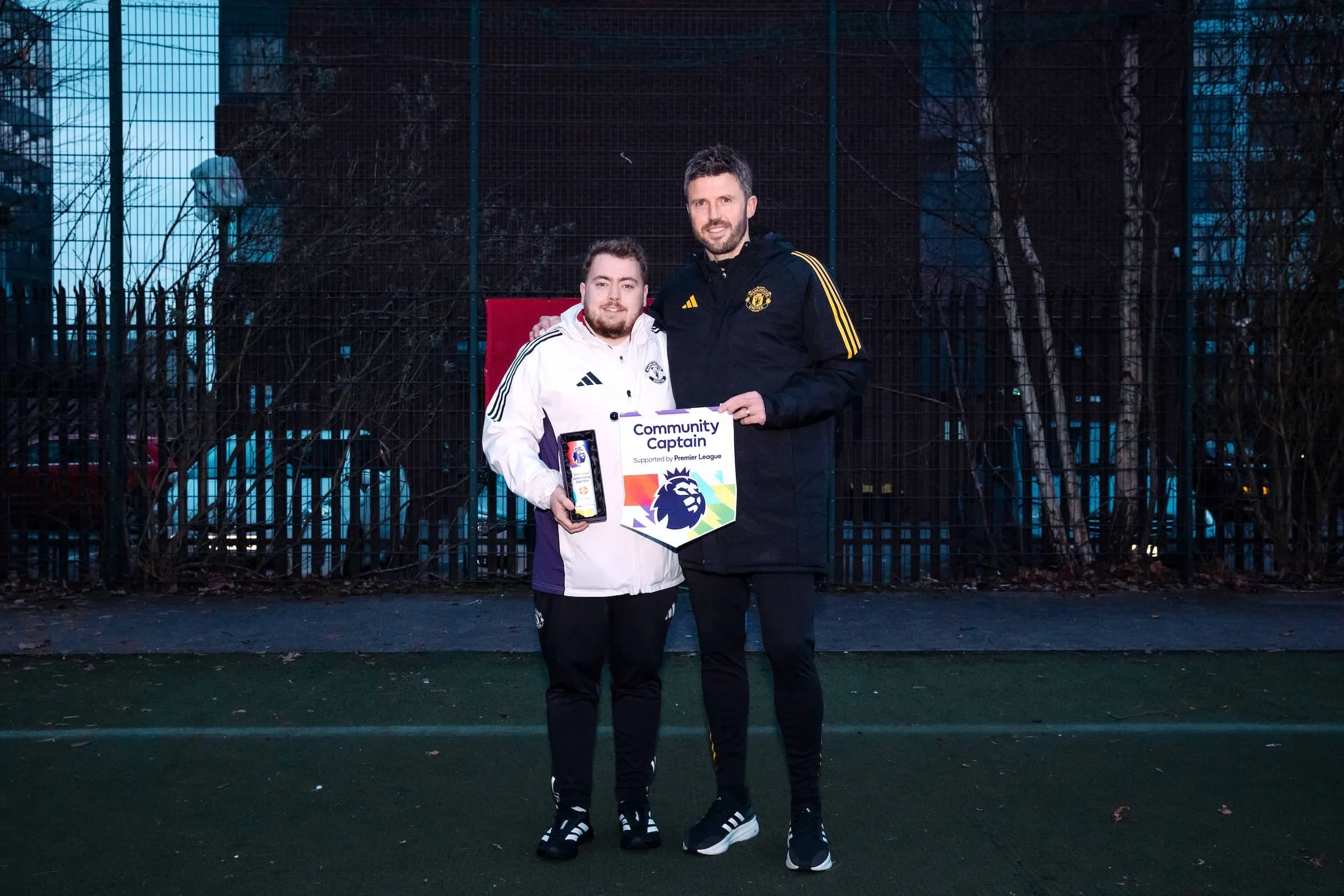
Brent received a Premier League Community Captain armband, pennant and trophy, recognition for years of volunteering, coaching and serving as a role model in the Manchester community. His journey gives the programme its credibility. He is not an ambassador dropped in for effect. He is evidence that sustained grassroots work can leave a mark far beyond the touchline.
Carrick, who has funded the session through the Michael Carrick Foundation and remains a regular visitor, understood the significance of the moment.
Michael Carrick said: “It’s brilliant for Mark. He’s been coming here for so long, so for him to get the award and for me to have the chance to present it to him, it was a really nice moment. You can tell it means a lot to him and he fully deserves it.
“We set out to give as many young people as many opportunities as we can, Mark has taken that with both hands and he’s progressed unbelievably well. He’s so dedicated and gives so much effort, you can see what it means to him to be here.”
That is the essence of good community football. Not slogans. Not token gestures. Opportunity meeting commitment and producing something solid.
A deserved honour in the Manchester community
For Brent, the award was both personal and symbolic. It recognised not only what he has done, but what the Manchester United Foundation session has enabled him to become.
Mark said: “It means the world to win the Premier League Community Captain award. Being here since I was eight and all the hard work I’ve put in, volunteering, coaching and the constant progression I’ve had, I think it shows that it is recognised.
“We all know how busy Michael is at the minute, so for him to take time out of his schedule to come down is incredible. He’s been so important for us here over the last eight years. It shows how much he values the work we’re doing and it shows how much this means to him.”
There is a straightforward honesty in that quote which tells you almost everything. Recognition matters. Being seen matters. In community sport, where the rewards are rarely financial and often quiet, that kind of acknowledgment can go a long way.
Why sessions like this matter to young people
The most telling verdict, though, came from one of the young attendees. Programmes like these are often measured in funding cycles, attendance figures and policy language. The children measure them differently. They know whether a coach is genuine. They know who helped them settle. They know who turns up.
Kai said: “Mark is an amazing coach. When I first arrived here, he’s the one who helped me settle in. He’s always nice and he just gets on with all the sessions. He’s someone you can trust to deliver and he’s a great guy.”
And there it is. Trust. For all the jargon that swirls around youth engagement and community outreach, that is the currency that matters most. A coach who is trusted can change the entire tone of a room, a session, even a teenage year.
More than a badge, more than a game
The Premier League’s ‘More Than A Game’ campaign is designed to showcase the league’s wider investment into community programmes, grassroots facilities, the non-league system, and women’s and girls’ football. Sensible enough. Necessary, too. But the real proof is not in the campaign line. It is in places like this Manchester United project, where impact can be traced in real people rather than polished copy.
For Manchester United, a club whose name carries enormous global reach, there is particular value in these local acts of continuity. Grand institutions can drift into abstraction if they are not careful. Community work keeps them tethered to the streets that first gave them meaning.
And so this was not just a nice surprise visit or a worthy award presentation. It was a reminder that Manchester United still have influence where it counts most: among young people looking for direction, in neighbourhoods where football can still open a door, and through coaches like Mark Brent who prove that when the game invests properly in people, the return is immeasurable.