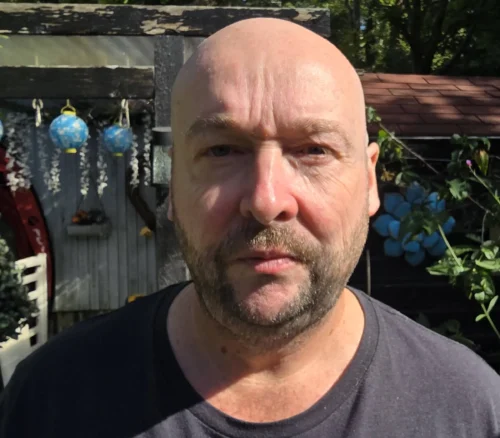
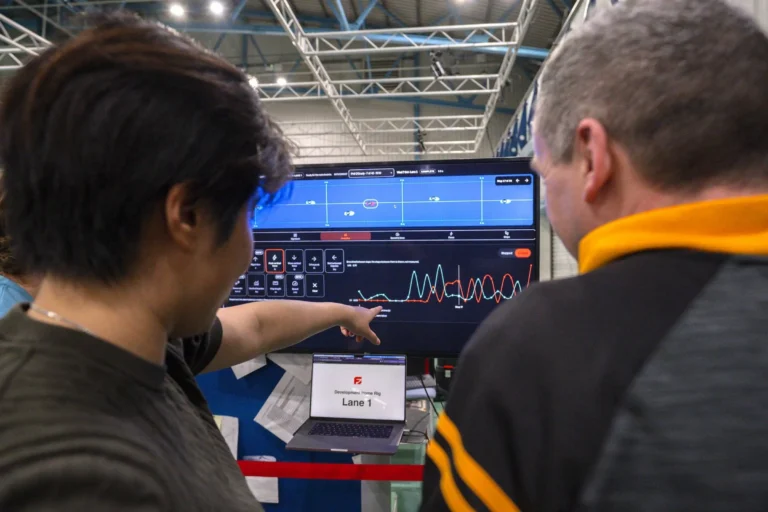
Louis Alexander trains at Body Lab for the Australian Capitals Run: eight marathons in eight days across Australia.
Inside the Body Lab in Kensington, British adventurer and two-time Guinness World Record holder Louis Alexander is plotting something that sounds half mad and half miraculous. At just 25, Louis Alexander is preparing for the Australian Capitals Run—eight marathons, in eight days, across all eight of Australia’s capital cities. It’s the sort of challenge that makes most people wince just hearing it.
Yet here he is, calm and methodical, turning the chaos of endurance sport into something closer to a science experiment.
Purpose Before Pain
Louis insists this isn’t about stunts or headlines. “What’s the hardest thing I could do that would also help the most people?” he asked himself before the idea ever took shape.
That question became the seed of the Australian Capitals Run, and it tells you everything you need to know about his motivation.
He’s running for small charities that rarely get a spotlight, for causes that scrape by in the shadows, and for young people who need someone to show them that endurance has meaning beyond medals.
Strip away the testing equipment and sponsorship logos, and you find a runner who keeps steering the conversation away from himself and back to purpose. “I’m not the hero in this story – I’m just the one doing the hard bit to get your attention,” he told me. “The heroes are the people who are choosing to stay, to fight, to speak up.” It’s a line that sticks with you.
Science Over Swagger
At the Body Lab, preparation looks more like a mission control room than a runner’s gym. Every step Louis takes on the treadmill is monitored: VO₂ max, lactate threshold, stride efficiency, heart-rate variability, sweat sodium levels. His team of specialists log the numbers, tweak his programme, and feed the data back into his training plan.
On the treadmill, he’s not showboating for the cameras. He’s efficient, almost mechanical, a technician in trainers. The Body Lab operates like a pit crew around him—adjust, test, recover, repeat. The message is clear: the chaos will come on the road and in the airports. Here, in Kensington, there must be order.
The Brutal Logistics
The challenge isn’t just the running—it’s the travel. Each marathon is followed by an airport dash, a flight, and another start line the next morning. Sydney to Melbourne. Brisbane to Hobart. Darwin to Canberra. Every transfer shaves away precious recovery time, every flight another chance for delays, lost luggage, or disrupted sleep.
He’s relying on a small, tight-knit support team: a physio, a logistics manager, a nutrition lead, and a filmmaker documenting the journey. Together, they’ll try to keep Louis in one piece as he threads marathons through the bottlenecks of Australian domestic air travel. “It’s almost military,” he admitted, describing the daily schedules: wake, run, eat, fly, recover, repeat.
Recovery as a Weapon
If the running is the visible battle, recovery is the hidden war. Cold water immersion, compression boots, magnesium supplements, blackout masks on flights, tailored meals pre-packed into vacuum-sealed bags.
Sleep will come in slivers—on planes, in vans, between physio sessions. “I need to protect my peace in the middle of chaos,” he said, explaining his almost monk-like routines.
Food isn’t an indulgence but medicine. He’ll consume over 4,000 calories a day—gels, liquid carbs, electrolyte packs. Every bite is calculated, every sip timed. In endurance sport, the margin between finishing and collapse often comes down to what you can stomach after 30 miles of dehydration and stress.
The Mental Game
Physical strain is predictable. What worries Louis more is mental fatigue: the repetition, the airports, the broken sleep. He’s preparing for that as much as the marathons themselves. His journal is filled with anchors—phrases, prayers, visualisations—to pull him back when exhaustion clouds the mind. One of them: You get to do this. Not you have to.
“Pain is temporary. Purpose lasts a lifetime,” he told me, and you believe it because he says it without theatre. He doesn’t frame suffering as an enemy to be avoided. It’s something to work with, a training partner that sharpens him.
Looking Beyond the Finish Line

Louis doesn’t see Canberra—the final marathon—as the end. It’s just the beginning of a much bigger trajectory. He’s already planning new projects: larger endurance challenges across continents, youth resilience programmes in schools, charity partnerships that live long after the headlines fade.
“If all I do is run and then vanish, I’ve failed,” he said. “This has to lead somewhere.” That “somewhere” is legacy, not limelight. He wants to give young people a blueprint for resilience, to prove that ordinary people can do extraordinary things when purpose outweighs comfort.
Honest About Failure
Unlike many young athletes, Louis isn’t afraid to talk about failure. He doesn’t romanticise invincibility. He acknowledges burnout, doubts, setbacks. “We learn more in defeat than we ever do in comfort,” he told me. There’s no shame in breaking down if it’s in service of something bigger. That honesty makes him more relatable. You don’t need to run eight marathons to understand what it means to keep going when everything in you says stop.
A Final Thought
Before I left the Body Lab, I asked him what he wanted people to take from his story. He paused, then said: “That you’re capable of more than you think. Most people never find out what they’re truly made of—I want to help change that.”
And maybe that’s the real story here. Not the eight marathons, not the airports, not the data points. But the invitation. Louis Alexander is showing us what it looks like when suffering is welded to purpose, when resilience is planned as carefully as flights on a timetable, and when a 25-year-old decides that endurance should mean more than just distance.
As I stepped back out into Kensington, Louis was already back on the treadmill, legs ticking over like a metronome, numbers flashing on the screen. He’s got thousands of miles ahead of him, but right now it’s just one step, then another. And that, perhaps, is how the extraordinary becomes possible.
Follow Louis Alexander Tiktok | Instagram | Website | Facebook