Liverpool Football Club and LFC Foundation win Women’s Football Awards recognition for gender inclusion, community work and safer stadium culture.
Liverpool Football Club and LFC Foundation have been recognised at the 2026 Women’s Football Awards, collecting the Equality, Diversity and Inclusion Award for their continued work in making football more welcoming, safer and more equitable for women and girls.
It is not silverware of the usual Anfield variety. There was no Kop-end thunderbolt, no late winner bouncing in off someone’s shin, no dramatic VAR pause to make everybody age six months. But this was still a meaningful result for Liverpool FC — one built not on goals, but on groundwork.
The award celebrates individuals and organisations making a significant impact across the women’s game, and Liverpool’s recognition points to a wider shift inside the club: inclusion is not being treated as a tidy paragraph in a corporate document. It is being pushed through stadium operations, community programmes, digital platforms and staff development.
A Red Way Of Doing Things
Gender inclusion sits at the heart of Liverpool Football Club’s sustainability strategy, The Red Way, the club’s long-term commitment to building a better future for its people, planet and communities.
That sounds like the sort of thing which can easily disappear into a boardroom binder. In this case, however, the work has had visible legs.
In partnership with Her Game Too, Liverpool FC launched a first-of-its-kind campaign designed to tackle sexism and misogyny in football. Ahead of the club’s fixture against West Ham at Anfield, more than 100 staff members completed specialist training to improve the reporting and response to incidents.
The point was simple enough: women should not need the constitution of a nightclub bouncer just to attend a football match. They should feel safe, supported and welcome.
That is the bare minimum, of course. But football, for all its brilliance, has sometimes been slow to grasp the obvious until it is wearing a lanyard and being presented on a PowerPoint slide. Liverpool’s work here feels like an attempt to move the conversation from intention to infrastructure.
Anfield, Accountability And The Matchday Experience
The significance of the Her Game Too campaign lies in its practicality. This was not just a slogan pinned to a perimeter board and left to flap in the Merseyside wind.
Training staff to recognise, report and respond to sexism and misogyny matters because matchday culture is shaped as much by small interventions as grand gestures. A stadium can have history, noise and atmosphere by the bucketload, but if sections of the crowd feel unwelcome, the game has already conceded an own goal.
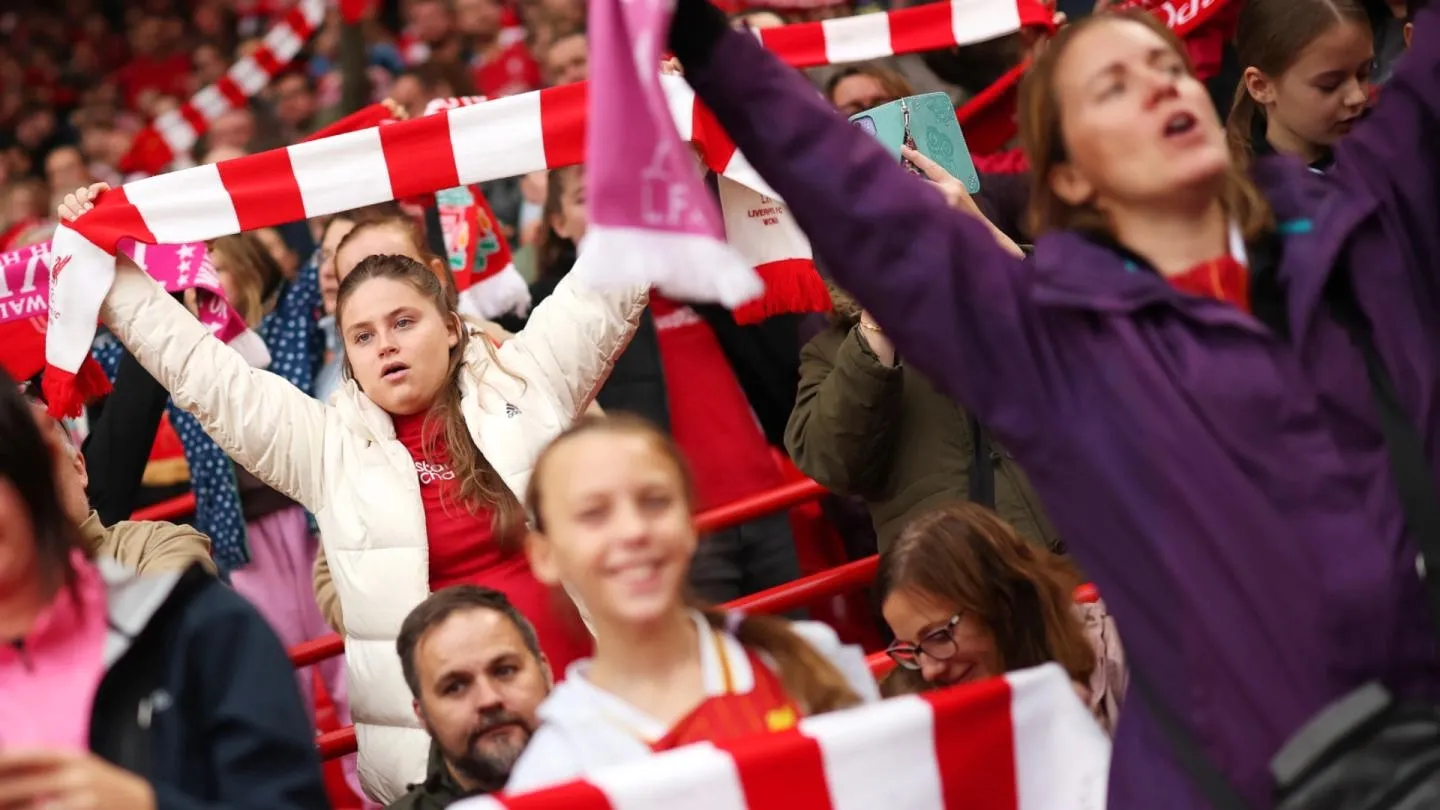
Anfield is one of football’s great theatres. Making sure it is a place where women and girls can enjoy the game without abuse, intimidation or casual discrimination is not a side project. It is part of modern football’s basic operating standard.
Digital Reach With A Purpose
Liverpool FC’s global social media platforms have also been used to elevate female voices in football, with collaborations across 2025 and 2026 involving Google Pixel, Wasabi and AXA generating a combined reach of 14 million.
Those campaigns also produced more than 14,000 hours of watch time, which is no small matter in an age where attention spans often have the staying power of a three-foot putt on glass.
The numbers matter because visibility matters. Women’s football does not grow by accident. It grows when clubs with global reach give it space, consistency and credibility.
For Liverpool Football Club, that means using its digital platforms not merely to broadcast, but to broaden the conversation around who belongs in football — on the pitch, in the stands, in media, in leadership and behind the scenes.
Building Pathways For Women Inside The Club
Internally, Liverpool FC has also been working to create more opportunities for girls and women to participate, progress and lead within football.
Since joining the Women in Football membership programme in November 2025, the club has supported its female workforce through workshops, mentoring and leadership opportunities.
That sort of development can sound quiet compared with a trophy parade, but it is often where lasting change begins. Better pathways produce better leaders. Better leaders produce better environments. Better environments make it harder for outdated attitudes to survive without being called out.
Rishi Jain, Director of Impact at Liverpool FC, said: “This recognition reflects the ongoing work across the club and LFC Foundation to drive meaningful progress on gender inclusion. At Liverpool FC, we believe football should be a game where women and girls feel safe, valued and able to thrive.
While we are delighted with the progress being made, we know there is still more to do. We remain committed to using the club’s platform to challenge discrimination, break down barriers and create opportunities for women and girls locally and beyond.”
LFC Foundation’s Community Work Carries Real Weight
The LFC Foundation’s role in this recognition should not be treated as a footnote. Its community programmes are helping create accessible pathways for women and girls across Liverpool and beyond, with a focus on confidence, participation and personal development.
The We Empower initiative, designed to tackle gender stereotyping and discrimination, supported 928 young people last season. Crucially, 86% reported increased confidence in challenging stereotypes.
That is the sort of statistic that deserves more than a polite nod. Confidence is not a soft outcome. For young people, it can be the difference between staying quiet and speaking up, between walking away and getting involved, between seeing football as someone else’s world and claiming a place in it.
The Foundation’s Premier League Kicks programme also continues to use football as a tool for engagement and development, with 271 girls taking part last season.
There is something powerful in that. Football becomes more than a game. It becomes a doorway — to skills, friendships, resilience and self-belief.
Remembering Matt Beard’s Contribution
The Women’s Football Awards also paid tribute to Matt Beard, with Niamh Fahey, technical co-ordinator at LFC Women and former club captain, receiving a posthumous award on his behalf.
The award recognised Matt’s lasting contribution to the women’s game through his commitment to player development, building competitive teams and helping raise the profile of women’s football in the UK.
It was a poignant moment, and rightly so. Progress in women’s football is often discussed in campaigns, funding, broadcast deals and participation numbers. But it is also built by people who spend years pushing the game forward before the wider world decides to look properly.
A Recognition That Comes With Responsibility
Awards are pleasant things. They sparkle, they photograph well, and they look excellent in a cabinet. But the best ones also carry a quiet demand: keep going.
For Liverpool Football Club and LFC Foundation, this Women’s Football Awards honour is a marker of progress, not a final whistle.
The work around equality, diversity and inclusion in football remains messy, necessary and ongoing. There will be more conversations to have, more barriers to dismantle and more uncomfortable moments to confront.
But Liverpool FC has shown that a club’s influence can reach far beyond the touchline. It can shape matchday culture, amplify women’s voices, support young people and create better routes into the game.
That may not make the same noise as a last-minute winner at the Kop end. But in the long run, it might matter just as much.