Laureus Awards in Madrid crowned Alcaraz, Sabalenka, Rory McIlroy and PSG on a glittering night for world sport.
The Laureus World Sports Awards turned Madrid into the drawing room of global sport, where greatness arrived in black tie and left with fresh silverware. On a night when the red carpet glowed, the camera flashes popped like starter’s pistols and the guest list looked as if it had been assembled by a child with access to the entire sporting universe, the Spanish capital staged a celebration that felt both glamorous and oddly intimate. This was not just another awards show with polished shoes and rehearsed applause. It was sport looking itself in the mirror and, for once, rather liking what it saw.
Madrid had already spent the day behaving like the centre of the athletic world, with the Madrid Open getting under way and the city preparing to welcome Formula One back later this year. By nightfall, though, the focus narrowed to one room, one stage and one unmistakable truth: the Laureus Awards remain the closest thing sport has to the Oscars, only with sturdier calves and fewer acceptance speeches written by agents.
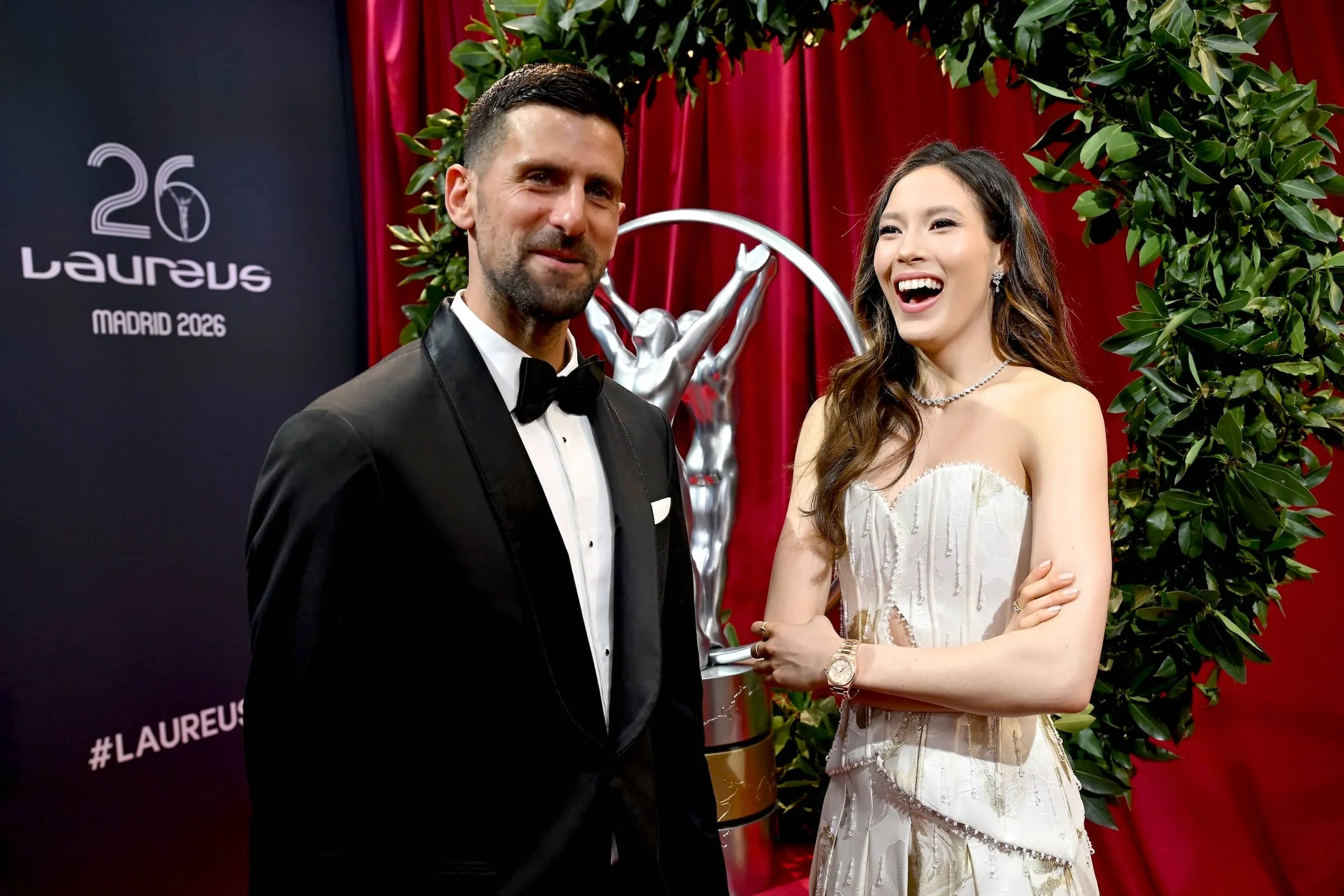
For the first time in Laureus history, the evening was hosted by two former winners, Novak Djokovic and Eileen Gu, which gave proceedings a nice touch of insider gravitas. They know the pressure, the sacrifice, the absurd routines, the early flights, the late pain and the expectation that elite athletes somehow remain both machine-like and charming. That helped. So did the parade of nominees, Academy members and legends, each one lending the room a little extra electricity.
Carlos Alcaraz gives Madrid its golden moment
It was fitting that the biggest roar of the night belonged to a Spaniard. Carlos Alcaraz, still only 22 and already playing tennis as though he has been conjured from a laboratory built by poets and sadists, was named Laureus World Sportsman of the Year after a season that restored him to World No.1 and added Grand Slam silver in Paris and New York.
His Roland Garros final against Jannik Sinner was invoked as one of those matches that enters sporting folklore and refuses to leave. That is often the difference at the Laureus Awards. Plenty of athletes win. Fewer create moments that linger in the bloodstream.
Alcaraz now joins Roger Federer, Rafael Nadal and Novak Djokovic as a winner of this award, which is rather like being invited to sit at a table where the cutlery alone could intimidate you. He had won Laureus World Breakthrough of the Year in 2023. This felt like the next chapter, only written in thicker ink.
Laureus World Sportsman of the Year Carlos Alcaraz said: “What an incredible honour it is to win the Laureus World Sportsman of the Year Award. As a tennis player, I compete for titles on the court, but this Laureus Statuette means something more as it’s a recognition among the greatest athletes in the world, across all sport.
“Three years ago, I received the Laureus Breakthrough Award in Paris and met one of my heroes, Leo Messi, who won the Laureus Sportsman Award. At the time, I dreamt that maybe one day I would join the great Leo Messi on the Sportsman list, and today, I have. Messi, Federer, Djokovic, Usain Bolt, and of course the great Rafa Nadal. I am following in the footsteps of giants. That makes this moment so special.
“I truly understand why these Awards mean so much to the best athletes in the world. That includes all my fellow Laureus Nominees – the greatest sportsmen in the world – but I especially would like to thank Jannik Sinner. If we hadn’t been across the net from each other, pushing the other one so hard, I don’t think either of us would have found the levels we did.
“I have always felt a strong connection with Laureus, and the famous words of Laureus’ Patron Nelson Mandela, because it is about much more than celebrating wins and records. I too believe that sport can change the world. Long after the Awards night, Laureus shows how powerful sport can be in giving opportunities to young people all over the world. To know that my story can inspire the next generation makes me proud, as does holding this Laureus Statuette.”
Aryna Sabalenka earns the prize that relentless excellence demands
If Alcaraz brought the home-city romance, Aryna Sabalenka arrived with the kind of authority that comes from owning the calendar. She was Laureus World Sportswoman of the Year after holding the top ranking from the first day of the year to the last, defending her US Open title and reaching major finals with the sort of consistency that can look routine from a distance and utterly exhausting up close.
That is the trap with sustained excellence. It rarely arrives with fireworks every week. It arrives with repetition, nerve and the willingness to keep doing difficult things while everyone else starts looking for excuses. Sabalenka did that and then some, adding WTA 1000 titles in Miami and Madrid and reminding everyone that dominance in modern tennis is less a sprint than a long, bruising negotiation.
Laureus World Sportswoman of the Year, Aryna Sabalenka, said: “Winning the Laureus World Sportswoman of the Year Award is really special for me. Honestly, it’s a bit crazy to hear my name next to so many legends. To be recognised by the Laureus Academy means a lot, because they truly understand what it takes to get here.
“For me, it’s not just about the wins – it’s about everything behind it. The hard moments, the pressure, the team, the work every single day. That’s why this award feels different. When I look at the list of past winners like Serena Williams, Lindsey Vonn, Simone Biles, it’s really inspiring. Some of them I watched growing up, some I’ve competed against, and all of them pushed the sport forward in their own way. If I can inspire even a few people the same way, that would mean everything to me. This award is a reminder to keep going, keep improving, and stay true to myself.”
There was something fitting about Sabalenka receiving that honour in Madrid, a city that understands sporting theatre but also appreciates staying power. You do not keep the top spot all year by accident. You do it by turning excellence into a habit.
PSG and Lando Norris confirm that brilliance now travels fast
Paris Saint-Germain were named Laureus World Team of the Year after collecting six titles in 2025, their first Champions League crown serving as the showpiece triumph. Their 5-0 destruction of Internazionale in Munich was the sort of statement that does not merely win a trophy; it colonises memory.
Football teams can rack up medals and still vanish into the fog of history. The memorable ones have a flavour all their own. This PSG side, with silverware spilling out of every cupboard, have that flavour. They were not merely successful. They were unmistakable.
Lando Norris, meanwhile, took Laureus World Breakthrough of the Year after becoming Formula One world champion for the first time. Seven wins, including Silverstone, Monaco and Australia, told one story.
Holding off Oscar Piastri and Max Verstappen when the pressure began to gnaw told the more important one. Anyone can look quick in clear air. Champions remain tidy when the walls start closing in.
Norris now follows Lewis Hamilton and Jenson Button as a British driver to win the award, which is decent company if you enjoy things like speed, scrutiny and impossible expectation.
Rory McIlroy gets the ovation that took a decade to arrive
If the room had an emotional centre of gravity, it was probably Rory McIlroy. The Laureus World Comeback of the Year Award can sometimes feel like a polite pat on the shoulder. This was not that. This was recognition of one of sport’s longest and most public acts of unfinished business finally being settled.
Augusta National had teased, tormented and occasionally haunted McIlroy for years. Then in 2025 he completed the career Grand Slam, defeating Justin Rose in a playoff and ending one of golf’s most persistent conversations in the only way possible: by making it obsolete. The 2026 Masters defence only added polish to the thing.
Golf is cruel in a particularly refined way. It lets you imagine redemption before asking for another small piece of your soul. That is why McIlroy’s moment mattered beyond scoreboards and green jackets. People had watched the near misses pile up. They had seen the shoulders tighten, the expectations grow and the years slip by. When the breakthrough came, it landed with the force of relief as much as glory.
Laureus World Comeback of the Year Award winner Rory McIlroy said: “Winning my second Laureus Award is a huge honour, both personally and for golf. To have the sport recognised on a global stage like this, alongside so many great athletes, means a lot. There are certain moments in your career that stay with you, and winning The Masters is one I’ll carry with me forever. To then have a year like that recognised by Laureus is very special.
“Completing the career Grand Slam was incredibly emotional. It’s something I’ve been chasing for a long time, and it probably means more because of everything that came before it — the near misses, the setbacks, and the questions along the way. That’s a big part of the journey, and I’m grateful that this award recognises that. I also want to congratulate all of the nominees, especially those in my category. There are some amazing stories there, and I’ve taken a lot of inspiration from them.
“I know the Laureus Awards were founded by Johann Rupert, who I’m fortunate to know, so that makes this even more meaningful. I also believe strongly in what Laureus stands for and the idea, as Nelson Mandela said, that sport has the power to change the world.”
For golf, it was an important moment too. McIlroy has spent years carrying the sport’s modern burdens with unusual candour, and seeing him honoured on a stage like this felt appropriate. Not sentimental. Appropriate.
Young stars, enduring legends and the wider meaning of the Laureus Awards
The Laureus Awards have always understood that sport is a conversation between the newly arrived and the already immortal. This year’s honours made that point rather beautifully.
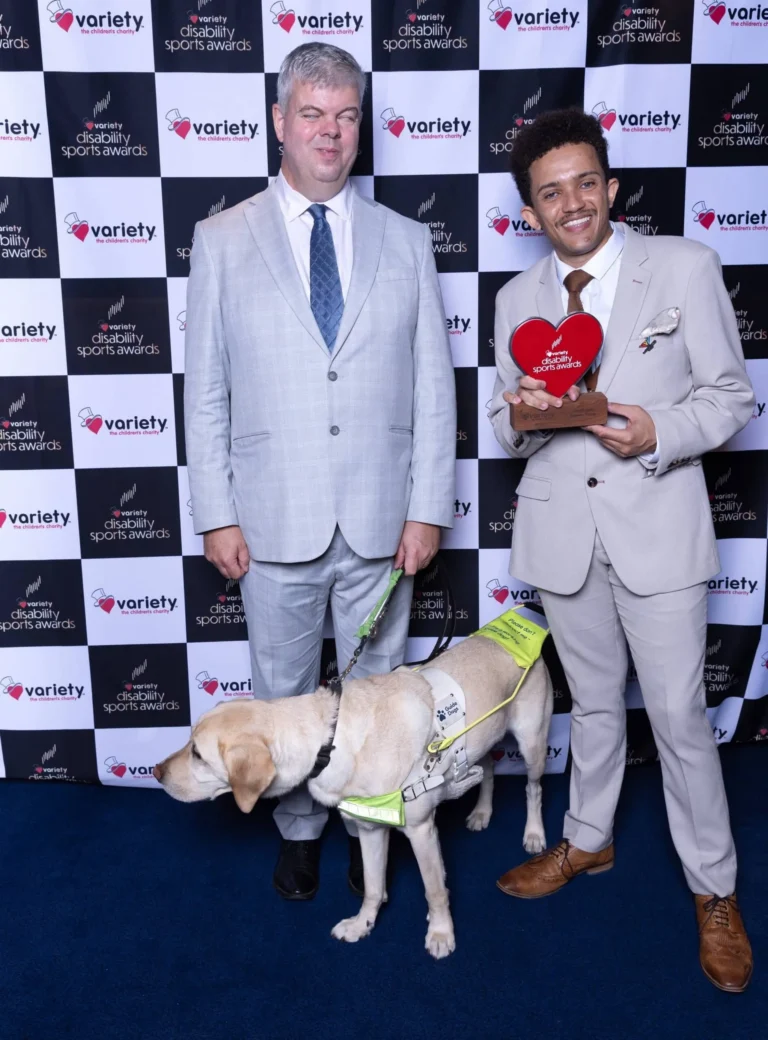
Lamine Yamal became the inaugural Laureus World Young Sportsperson of the Year, a neat acknowledgement that football’s prodigious teenager is not merely promising but already shaping matches and expectations at the highest level. Chloe Kim collected her third Laureus World Action Sportsperson of the Year Award after another season that confirmed she remains the defining snowboarder of her era. Gabriel Araújo, after a haul of gold medals at the World Para Swimming Championships, was recognised as Laureus World Sportsperson of the Year with a Disability.
Then there were the discretionary honours, where history walks into the room without needing introduction. Toni Kroos received the Laureus Sporting Inspiration Award after a career that turned control of midfield into an art form so smooth it often looked suspiciously easy. It was not easy, of course. It only looked that way because he was brilliant.
And then Nadia Comăneci received the Laureus Lifetime Achievement Award, 50 years after the Perfect 10 that altered Olympic gymnastics forever. Some sporting achievements age. Hers seems to have grown sharper with time. She has also helped shape the Laureus movement itself, which made the honour feel complete rather than ceremonial.
Sport for good remains the heartbeat beneath the glamour
It is easy to get distracted by the tuxedos, the statues and the parade of world champions. The Laureus Awards encourage that, to be fair. Yet the deeper point of the evening remains the same one Nelson Mandela gave the movement all those years ago: sport can change the world.
That was brought into focus again by the Laureus Sport for Good Award going to Fútbol Más, whose work supports young people across Latin America, Africa and Europe by building resilience, belonging and leadership through football. On an evening filled with household names, there was something powerful about seeing that mission share the same stage.
It stops the whole enterprise from becoming too pleased with itself. Or at least it should.
A night Madrid will remember
What made this edition of the Laureus World Sports Awards memorable was not simply the calibre of the winners, though that was absurdly high. It was the range of stories gathered under one roof. A Spanish tennis prodigy now standing among the giants.
A woman’s world No.1 being rewarded for uncompromising consistency. A Formula One champion breaking through. A football club sealing its place in history. A golfer finally winning the argument with his own past. A teenage star at the beginning. A legend being honoured half a century after perfection.
Madrid, on nights like this, can make even the improbable feel inevitable. That was the mood in the room: celebratory, generous, a little dazzled by its own company and entirely aware that sporting greatness comes in many shapes. The Laureus Awards did what they are supposed to do. They recognised excellence, yes, but they also recognised resonance.
And that is the thing people tend to remember. Not just who won, but who moved the room. On this sparkling Madrid night, plenty did.