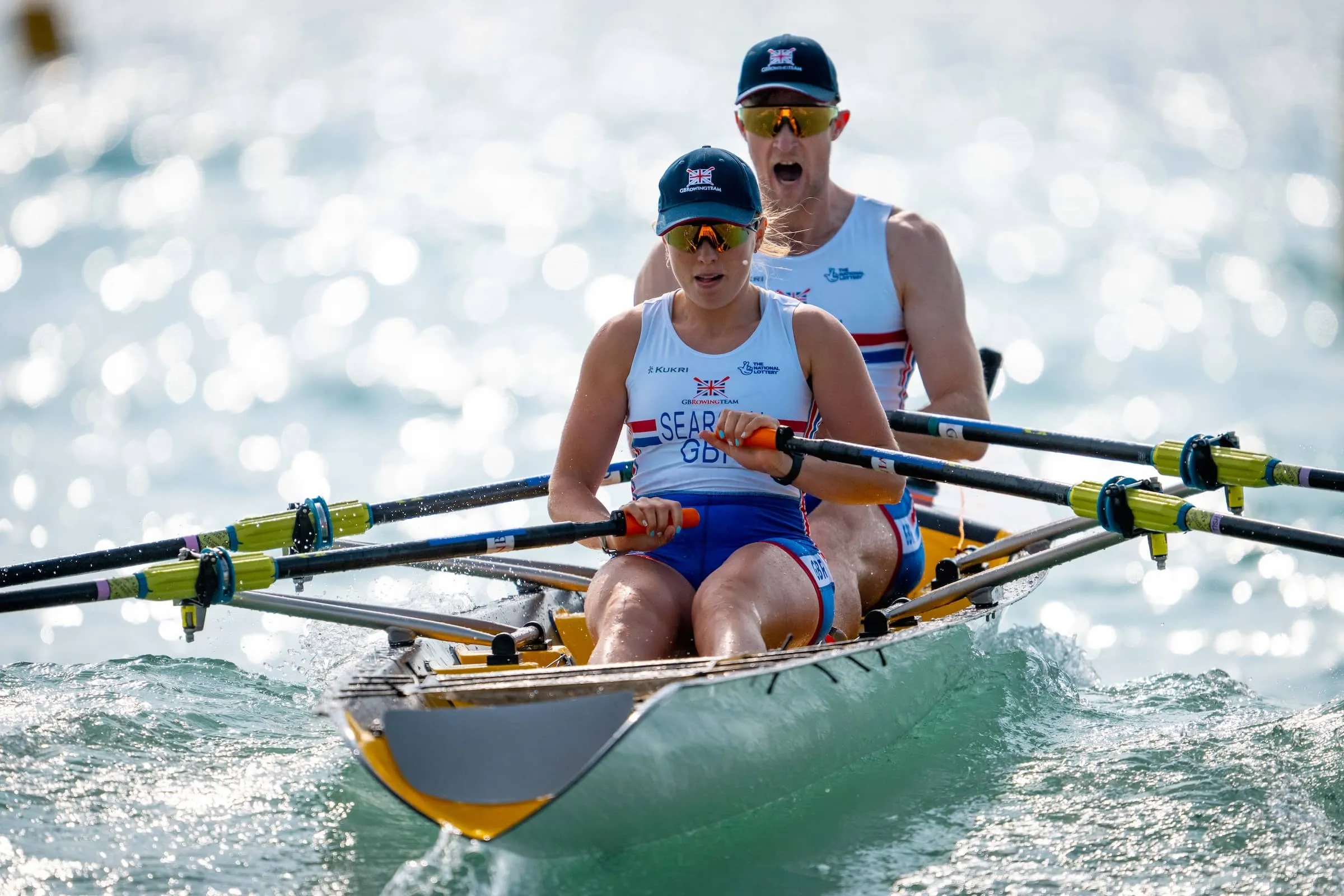
Henley Royal Regatta adds Beach Sprints for 2026 in a bold twist ahead of LA 2028.
There are traditional sporting institutions, and then there is Henley Royal Regatta, which has spent nearly two centuries polishing silver, enforcing standards and doing things in a manner so crisp you could serve it with cucumber sandwiches. So the decision to add Beach Sprints to the 2026 programme feels rather like spotting a speedboat moored outside the Bodleian: startling at first glance, but hard to ignore once the logic kicks in.
In what amounts to a genuinely bold swing ahead of the Los Angeles 2028 Olympic Games, Henley Royal Regatta and Henley Women’s Regatta have announced a brand-new event for next year: Beach Sprints. It is a format built less for still water and quiet contemplation, and more for chaos, urgency and lungs set on fire.
That makes it a curious fit for Henley. It also makes it irresistible.
A coastal sport arrives at rowing’s most polished address
Beach Sprint rowing is new to the Olympic programme for LA 2028 and comes with all the neat brutality modern sport seems to admire. Crews race over a 250-metre slalom course at sea, whip around a final buoy, row back to shore and then sprint up the beach to hit a buzzer. It is part rowing, part scramble, part organised ambush.
Unlike the long, measured cadence traditionally associated with Henley Royal Regatta, Beach Sprints are knockout racing in its rawest form. First to the buzzer wins. No committee meeting required.
For Britain, this is not some speculative flirtation with a novelty discipline. Great Britain has already tasted success in the format, collecting a gold, silver and bronze at last year’s World Rowing Beach Sprint Finals. With Olympic places and reputations beginning to take shape long before the Games themselves, the timing is no accident.
The Beach Challenge Trophy and a new road to LA
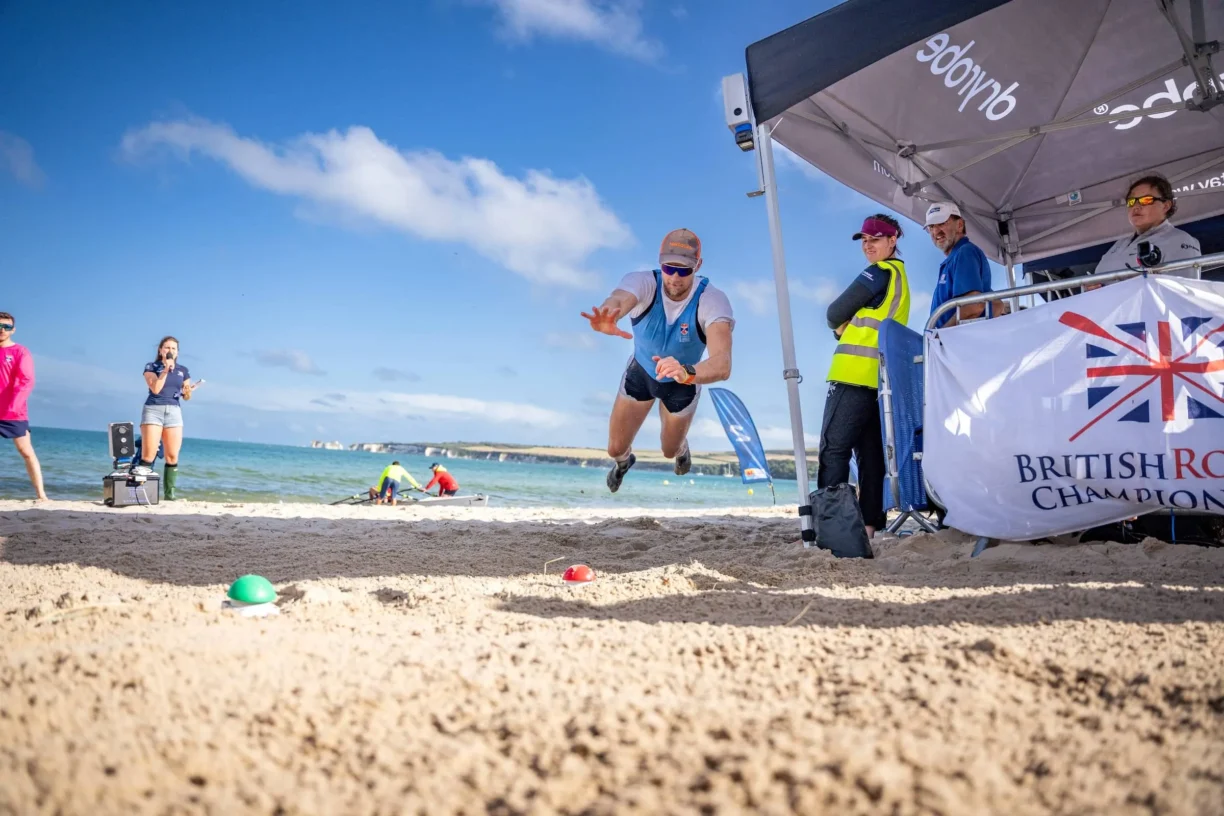
The new race will be known as The Beach Challenge Trophy at both regattas and will feature Coastal Mixed Doubles (CMix2x) in the senior category. That alone gives the event some proper competitive weight. This is not window dressing. It is a serious addition, aimed squarely at athletes with Olympic ambitions and enough nerve to thrive in conditions that change by the second.
For Henley Royal Regatta, the appeal is obvious. The regatta has always liked to think of itself as a standard-bearer, and the arrival of Beach Sprints offers a chance to stay relevant in a sport that is stretching beyond its old boundaries.
It also offers athletes a rare opportunity: the chance to race in one of the sport’s most famous settings while preparing for one of its newest Olympic tests.
The small matter of there being no beach
Of course, Beach Sprints usually require one awkward ingredient: a beach.
Henley, as generations of blazer-wearing traditionalists will confirm, is better known for its stretch of river, its wooden booms and the sort of riverside orderliness that does not naturally lend itself to sand between the toes. Yet that has not stopped organisers from pressing on with a plan to create a 50-metre beach along the course.
That sentence alone deserves a second read.
Richard Phelps, Chair of the Committee at Henley Royal Regatta, said: “We’ve worked closely with British Rowing and key stakeholders including Henley Women’s Regatta, to provide our athletes with the best possible racing conditions and to ensure Temple Island Beach meets international racing standards.”
Temple Island Beach is not a phrase many expected to hear in their lifetime, but here we are.
Sand, waves and organised ingenuity
The venture hasn’t come without challenges – the first one being the lack of beach along the Henley course. In order to sustainably gather enough sand to fill the 50m beach, Henley Royal Regatta’s team of stewards has been tasked with collecting 1 tonne of sand each month up until the event.
Waves posed another challenge to the new event, but the regattas plan on trialling alternating Beach Sprint races with flat water events that don’t benefit from a coxswain’s steering expertise. No two beach sprint race conditions are the same, and it’s thought that boats that bump into Henley’s iconic wooden booms will generate enough wave activity to recreate a competitive coastal environment.
The solution being explored is to alternate Beach Sprint races with flat-water events, using the movement of boats colliding with Henley’s famous wooden booms to generate enough wave action to simulate a coastal environment. It is wonderfully eccentric, undeniably ambitious and exactly the kind of thing that can either become an inspired innovation or a story told over regatta lunches for the next 40 years.
Why this matters for British rowing
For British Rowing, the significance is straightforward. LA 2028 may still be some distance away on the calendar, but Olympic pathways are built early, and opportunities to race matter.
Tom Solesbury, CEO of British Rowing, said: “With the LA 2028 Olympic Games just around the corner, we’re on the lookout for future Olympic Beach Sprint athletes, and for more opportunities for them to race. Being able to compete at the World’s most prestigious regattas in brand new conditions is the perfect opportunity.”
That is the real story beneath the novelty. Henley Royal Regatta is not merely dabbling in spectacle. It is helping create competitive volume in a discipline that is moving rapidly from fringe to flagship. In Olympic terms, that is smart business.
Tom Pattichis, Olympic Head Coach for Beach Sprints, kept things rather more grounded, saying: “It’s a new idea. We’ll never say no to new racing opportunities in the lead up to LA. Let’s see what happens.”
That may be the most sensible sentence in the whole enterprise.
Henley Women’s Regatta sees a pathway, not a gimmick
Henley Women’s Regatta has also leaned into the opportunity, and understandably so. For a regatta with a strong developmental role, Beach Sprints represent another route into top-level competition and another chance to expose athletes to the demands of an Olympic format before the spotlight gets hot.
Naomi Ashcroft, Chairman of Henley Women’s Regatta, said: “We are pleased to be giving HWR competitors a taste of the Olympics and Paralympics with them racing the LA28 regatta distance, so this is an exciting step on to further support our Olympic development pathway. We’re always supportive of initiatives that create new opportunities for athletes, and we’re looking forward to seeing how Beach Sprints translate to the Henley course.”
That last line is doing some heavy lifting. Because how Beach Sprints translate to the Henley course is the question everyone will be asking.
Innovation, risk and the charm of sporting absurdity
Richard Phelps framed the move in historic terms, saying: “Innovation has always played a key role in Henley Royal Regatta’s history, and while creating our very own beach is undoubtedly one of our more ambitious undertakings, we’re committed to staying at the forefront of the sport and are confident that it will add an exciting new dimension to our event.”
He is right on one front at least: it is ambitious.
And yet there is something rather fitting about Henley Royal Regatta choosing to evolve in a way no one saw coming. Sporting institutions survive because they know when to defend tradition and when to loosen the tie a fraction. Beach Sprints do not replace the soul of Henley. They test its elasticity.
If it works, the regatta will have found a way to connect its gilded history with the sport’s Olympic future. If it does not, well, it will still have created a beach in Berkshire and given rowing one of its strangest and most memorable experiments.
Either way, Henley Royal Regatta will not be accused of standing still. And in modern sport, that may be the most useful stroke of all.