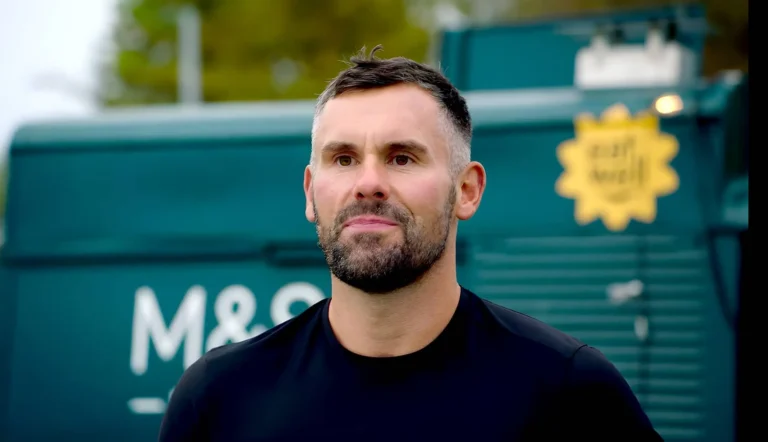
Harry Maguire invests in Feedz, an AI coaching app helping coaches turn voice notes into player feedback reports.
Harry Maguire has invested in Feedz, a new AI-powered coaching platform built to turn hurried coach voice notes into clear, structured player feedback reports — which, for anyone who has ever coached a youth team, may sound less like technology and more like mercy.
Because coaching, at any level below the rarefied oxygen of the elite game, is rarely just coaching.
It is putting cones out in sideways rain. It is remembering which child has lost a boot, which parent needs a message, which player has quietly improved but has not been told so yet. It is trying to develop athletes while being buried alive beneath admin, WhatsApp threads and the faint smell of damp bibs.
Feedz is pitching itself directly at that problem. Not by replacing the coach — no app can do the hard stare, the arm around the shoulder or the well-timed “try that again” — but by making it easier to turn observations into feedback people can actually use.
Why Harry Maguire Is Backing Feedz
The headline name is Maguire, the England and Manchester United defender, who has not simply lent a face to the platform but invested in it as co-founder.
That matters because his interest is not theoretical. Maguire has spent his career inside environments where feedback is constant, precise and expected. He also admits he has thought about coaching once his playing days are done.
Co-founder Harry Maguire, said: “I believe that better feedback builds better players. Coaches at every level should have access to tools that help them communicate clearly and consistently. Feedz is about creating environments where players, whether it’s from youth level to the top of the game, understand what they’re doing well and where they need to focus improvement on. I know how that clarity can make a real difference to a sportsperson’s development.
“Even in the time I have played the game, technology has changed the way players prepare and improve. So, Feedz is an inevitable next step. A good idea is always one you think should already exist, which is why I invested. The Feedz team were really interested in my thoughts as a professional — and I am delighted that a number of elite clubs are already using it. I have often thought about coaching after I retire, and this is exactly the sort of help that I would use. The game is evolving all the time and Feedz is helping coaches on that journey.”
Strip away the app-store polish and there is a serious sporting point here: the best players are rarely improved by vague praise and occasional shouting. They improve because someone spots the detail, explains it properly and keeps doing so consistently.
That is easy to say. It is rather harder when you have 17 players, one assistant coach, two missing water bottles and a parent asking whether training finishes early because they have parked on a double yellow.
The Unfashionable Problem Feedz Is Trying To Fix
Feedz works by letting coaches record short voice notes about an athlete’s performance. Its AI then turns those notes into structured coaching reports, ready to share via PDF, email or messaging platforms such as WhatsApp.
The process is intentionally simple: speak, generate, share.
The cleverness is not in pretending AI suddenly understands football better than a coach. That would be nonsense wearing a lanyard. The useful bit is speed, shape and consistency.
Coaches already notice things. They already talk. They already carry dozens of tiny player observations in their heads. Feedz is trying to stop those observations disappearing into the post-session fog, where good intentions go to die somewhere between the car park and the Sunday roast.
Key features include voice-to-report AI technology, sport-specific insight generation, collaborative sharing features and professional report formatting. It is also designed to support coaches with language and grammar difficulties, making the reporting process less intimidating and more accessible.
That last point should not be brushed aside. Plenty of excellent coaches are far better at teaching sport than writing formal reports. The two skills are not the same, despite what every academy spreadsheet might suggest.
From Parent Frustration To Coaching Tool
Feedz co-founder Matt White says the idea came from a problem familiar to many parents: children are attending sport regularly, but meaningful feedback can be patchy, delayed or absent altogether.
Matt White said: “Usually there are multiple kids to one or two sports coaches, during training sessions. But we knew the technology exists to solve the problem of coaches having insufficient time to provide valuable reports and parents being unaware of how their child is progressing. Feedz is an AI-enabled app which supports coaches working at all levels – from grassroots sport, schools, academies right up to professional environments. It’s a tool built to improve communication while reducing dreaded, time-draining admin workload.
“Our research told us that the value of consistent coaching feedback is that it drives intrinsic motivation in young people, and positive feedback encourages children to practice their sport or activity more. Simple feedback also helps them to clearly understand how to improve – and we believe Feedz addresses that gap which exists in sport today.”
There is the real battleground: not elite performance labs, but ordinary sport.
The place where coaches know feedback matters, parents want clarity, and young players need something more useful than “good session today” — the coaching equivalent of a limp handshake.
For a child, simple feedback can be gold dust. Not a lecture. Not a tactical dissertation. One clear point. One improvement. One reason to practise in the garden, the park, the cage, the driveway or wherever the ball, bat, racket or imagination happens to be.
Sheffield United Coaches Are Already Using It
Feedz is already in use at Sheffield United, where Matt Morley, Head of Junior Phase Coaching, has seen the platform used across academy age groups.
Matt Morley, Head of Junior Phase Coaching at Sheffield United, formerly coached Harry Maguire, and says the EFL Championship club’s academy coaches are among many who are benefitting from using this technology: “Our coaches of age groups from Under-8 to Under-18 use Feedz in our sessions. It helps us as coaches to plan better and communicate better. And players themselves want to get better, so the details we can provide through Feedz helps them to understand and develop their game.”
Academy football is a natural home for this sort of platform. Development is tracked. Details matter. Communication must be consistent across coaches, phases and players.
But the more interesting test is whether it works where sport is messier, noisier and less resourced.
That is where technology usually earns its keep — not in the boardroom demo, but on a cold training night when one coach is trying to give meaningful attention to an entire squad before the floodlights go out.
Grassroots Coaches May Be The Biggest Winners
At Dulwich Village, Under-15 coach James Venn says Feedz has changed the way he provides guidance to his players.
James Venn, Under-15 Football Coach at Dulwich Village said: “Before I started using Feedz, it was really difficult as a volunteer coach to provide structured guidance to individuals in my squad of 17 youth players. But now we’re thriving because of the speed and focus of the tool. It’s reduced hours of paperwork time, which enables me to spend more time coaching. Feedz’ structured consistent reports have helped my engagement as a coach with parents and it’s improved the development and progress of players in my squad.”
That is probably the cleanest argument for Feedz.
Not “AI is revolutionising sport”, which is the sort of phrase that makes sensible people stare into the middle distance. The better argument is this: it gives volunteer coaches time back.
And time is the scarce currency in grassroots sport. More scarce than left-footed centre-backs. More scarce than referees. More scarce than a parent who says, “No worries, coach, I completely understand.”
Even Under-7s Are Getting Clearer Pointers
The app is also being used at entry level, where the feedback has to be simple enough for young children to understand and act upon.
John Maloney is an Under-7 Football Coach at Leatherhead Youth FC and he added: “The ability for me to give the children regular pointers through Feedz helps them to self-assess while they practice further in their own time. There’s nothing better for me than having a young player tell me how they’ve been working on a piece of simple feedback and then showing me what they’ve developed. That’s what’s changed.”
That is a lovely sporting image, and it gets to the heart of player development.
A young player receives one clear pointer. They practise it. They return and show the coach. Confidence grows. Ownership grows. The child becomes more involved in their own improvement.
That is not Silicon Valley razzle-dazzle. That is coaching.
Powerleague, County FAs And Sport Beyond Football
Feedz is not limiting itself to academy and grassroots clubs.
John Gillespie, CEO of Powerleague, the world’s largest provider of commercial small-sided football, said: “Our venues host everything from competitive leagues to community games and Kids Camps, and we’re seeing how this form of AI technology is enhancing the playing experience at all levels. Feedz gives easy coaching communication to help players improve. In turn, that makes the overall experience more enjoyable and that helps us thrive with over 10,000 games and 150,000 players at Powerleague every week.”
The Suffolk Football Association has also adopted the app, while Surrey, Sussex and Kent County Cricket Clubs are among those using the technology outside football. It is also being used by college sports teams in the United States.
Table Tennis England has found a similar use case across its coaching network.
Evie Collier, Coach Learning and Development Manager, added: “We have around 700 coaches and 30,000 members and consistency of high-quality tailored feedback is a big challenge for us. Using Feedz enables players to receive clearly aligned direction and it’s so accessible for coaches to record voice notes, which provide feedback on the go.”
That cross-sport appeal is important. The language may change from football to cricket to table tennis, but the coaching problem remains much the same.
Observe. Explain. Encourage. Repeat.
If Feedz can help coaches do that faster and more consistently, then it has a reason to exist beyond the novelty of being “AI-powered”.
Why This Is A Smart Move In Sports Technology
Sport has spent years hoovering up data. GPS vests, video analysis, performance dashboards, wearable trackers, nutrition apps — the modern athlete can be measured to within an inch of their last hamstring twinge.
But feedback is where data becomes useful.
A player does not improve because a graph exists. A player improves because someone turns information into instruction, and instruction into action.
That is where Feedz is aiming its pitch. It sits in the unglamorous but essential space between coaching knowledge and player understanding.
There is also a broader cultural shift here. Parents expect more communication. Players expect clearer development pathways. Clubs need better documentation. Coaches are expected to deliver more while somehow having the same number of hours in the week as everyone else.
Feedz is arriving at a moment when the demand for feedback has outgrown the old habits of memory, notebooks and occasional end-of-season chats.
Maguire’s Coaching Hint Gives Feedz Its Human Edge
The most compelling line in Maguire’s involvement is not that he has invested. Footballers invest in all sorts of things. Some sensible, some shiny, some destined to become an awkward LinkedIn post.
The interesting part is that Harry Maguire can see himself using Feedz as a coach.
That gives the platform a more human edge. It places the app not as a gadget for gadgetry’s sake, but as something connected to the next phase of a player’s football life: passing knowledge on.
Elite players spend years absorbing feedback. The best future coaches learn how to translate it.
If Feedz helps bridge that gap from observation to communication, from “I can see the issue” to “here is how you improve it”, then it is playing in valuable territory.
And for grassroots coaches, the value may be even simpler.
Less time typing. More time coaching. Fewer vague conversations. More useful ones.
That is not the loudest revolution sport technology has ever promised. But it may be one of the more welcome — a little less clipboard chaos, a little more clarity, and perhaps one less coach sitting at home at 10pm trying to remember who finally stopped diving into tackles like a Labrador chasing a crisp packet.