Golfers face high UV exposure as specialists urge regular mole checks, better sun protection and earlier skin cancer detection.
A mole check is rarely top of the pre-round routine for golfers, sitting somewhere behind finding a glove, blaming the weather and pretending last week’s slice has mysteriously healed. But skin cancer specialists are warning that regular players could be among the highest-risk sporting groups for cumulative UV damage.
As millions of Britons return to the fairways this season, The MOLE Clinic is urging golfers to take sun exposure seriously, describing the issue as a “hidden epidemic” among those who spend long, repeated hours outdoors.
Golf may not look like a high-risk sport in the traditional sense. There are no scrums, no tackles and, unless the fourball ahead refuses to let anyone through, usually no major threat to public order. But from a skin health perspective, an 18-hole round can be a lengthy spell under peak UV.
Golf’s Long Walk Under The Sun
A standard round of golf lasts between four and six hours and is often played between 10 am and 4 pm, when ultraviolet radiation is at its strongest.
That matters because UV exposure is not just about whether someone burns on the day. It is about repeated exposure over years: the face, hands, ears and neck taking the same punishment round after round.
Research highlighted by The MOLE Clinic indicates that professional golfers may receive up to 217 times the annual UV radiation required to cause sunburn over the course of a year.
Recreational golfers are also exposed. According to the clinic, they can receive more than five times the UV exposure needed to cause sunburn in just one hour on the course.
For anyone who treats cloud cover as a free pass, there is the uncomfortable reminder that UV can still penetrate overcast skies. British weather may look gloomy, but your skin is not automatically off the hook.
The Health Risk Golfers Often Underestimate
Skin cancer is now the most common cancer in the UK, with more than 150,000 new cases diagnosed annually. Incidence rates have more than doubled since the early 1990s.
Men over 50 — a core golfing demographic — have the highest rates of melanoma incidence and mortality in the UK.
That combination makes golf a particular concern: a sport built around long outdoor exposure, often played by people who may already sit within a higher-risk age group.
“Golf is often perceived as a low-risk sport from a health perspective,” says Dr David Veitch, Medical Director at The MOLE Clinic. “But from a dermatological standpoint, it involves prolonged, repetitive UV exposure over many years. That cumulative damage significantly increases the risk of melanoma and other skin cancers.”
The Sunscreen And Grip Problem
One of the more practical issues for golfers is sunscreen itself.
Many players know they should use it, but avoid applying or reapplying it because they worry about greasy hands affecting their grip. Anyone who has ever watched a clubface open at impact like a badly timed apology will understand the concern.
The problem is that sunscreen needs to be reapplied every two hours, especially during a long round. A quick application before the first tee is unlikely to offer enough protection by the back nine.
Golf clothing can also give a false sense of security. Standard golf apparel may provide an SPF of only around 7 unless it is specifically labelled as UPF-rated.
So while a polo shirt may look smart enough for the clubhouse, it may not be doing enough to protect the skin underneath.
The Neck And Ears Are Being Forgotten
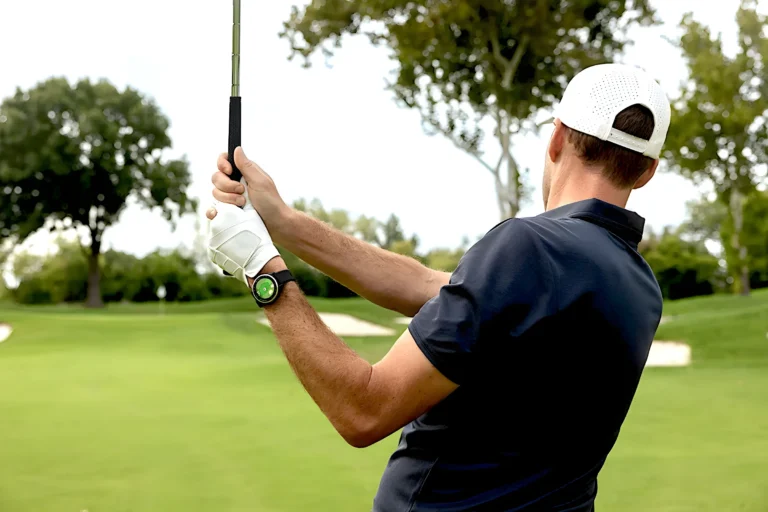
Baseball caps are another weak point. They help shade the face, but leave the ears and back of the neck exposed.
These are not minor details. They are among the areas specialists regularly see affected by sun damage, particularly in men.
“The back of the neck is one of the most commonly sun-damaged areas we see in male patients,” adds Dr Veitch. “And yet it’s frequently forgotten.”
For golfers, the solution is not complicated: broader coverage, better habits and less reliance on the standard cap-and-hope approach.
A wide-brimmed hat, UPF-rated clothing, sunglasses and sport-friendly sunscreen can all help reduce exposure without turning a round of golf into a survival expedition.
Early Detection Can Change The Outcome
When detected early, nearly 99% of skin cancers are curable. Delayed diagnosis, however, can significantly reduce survival rates.
That is where regular mole checks and professional skin assessments come in, particularly for golfers with years of outdoor exposure behind them.
The MOLE Clinic provides Full Body Skin Checks, including comprehensive head-to-toe examinations using dermoscopy.
It also offers Advanced Mole Mapping, using high-resolution digital imaging to monitor changes over time and help detect concerning changes earlier and more accurately.
“For individuals with high cumulative exposure — including regular golfers — annual skin checks are not optional; they’re essential,” says Dr Veitch.
What Golfers Should Look Out For
Golfers should pay attention to any new mole, a mole that changes in size, shape or colour, or any mark that starts itching, bleeding or refusing to heal.
Irregular borders, uneven colouring and sudden changes should never be shrugged off as “probably nothing”.
Golfers are famously good at explaining away problems. A pulled drive was the wind. A missed putt was a spike mark. A sore back was the hotel mattress. But skin changes deserve a more serious response.
A Smarter Pre-Round Routine
Good sun protection should be treated like basic golf kit.
Apply broad-spectrum sunscreen before playing. Reapply during the round. Choose a non-greasy or sport-specific formula if grip is a concern. Cover the ears and neck. Wear UPF-rated clothing where possible. Check your skin regularly.
It is not about panic. It is about prevention.
Golf already asks players to manage risk: water left, bunkers right, out of bounds lurking like a tax bill. UV exposure deserves the same level of attention.
Final Word
The fairway may feel like one of the healthiest places to spend an afternoon, and in many ways it is. Golf gets people walking, socialising and outdoors.
But long-term sun exposure is the part of the scorecard too many players forget to mark.
A mole check will not save your handicap, straighten your driver or stop your playing partner saying, “I had that line,” after every missed putt.
But it could catch something early — and that is a result worth far more than anything written on a scorecard.