
Britain’s toughest university relay returns with qualifiers, corporate teams, Japanese tradition and a 112km Thames-side test.
The FT Nikkei UK Ekiden returns on June 12 with its most competitive field so far, bringing elite university runners, corporate teams and a slice of Japanese sporting theatre to a 112km relay route between Windsor and Reading.
This is not a jog in matching T-shirts followed by a banana and a polite clap. It is a proper endurance scrap: mixed teams, ten runners, a point-to-point course, and the passing of the tasuki sash instead of a baton. One missed handover, one cooked quad, one navigational wobble by the Thames, and the whole thing can go sideways quicker than a three-footer on punched greens.
Britain’s Fast-Growing Ekiden Gets Sharper Teeth
Now in its third year, the 2026 FT Nikkei UK Ekiden has added a layer of competitive credibility that should make university athletics sit up a little straighter.
For the first time, the event is licensed by England Athletics. Also for the first time, elite university teams have had to qualify for their place. That matters. It moves the race from “interesting concept” towards genuine championship territory.
Seventeen elite university sides are set to be involved, including sixteen British university teams and Japan’s Ritsumeikan University, alongside 18 corporate and community teams. In total, 35 mixed teams of male and female runners will take on the 112km course.
The race starts at 8am at Brocas Field in Windsor, before sending teams along the Thames path, through footpath gates, fields, bridges, towns and road crossings, finishing at King’s Meadow in Reading.
In short: charming on a postcard, brutal in racing flats.
The Tasuki: More Than A Sash
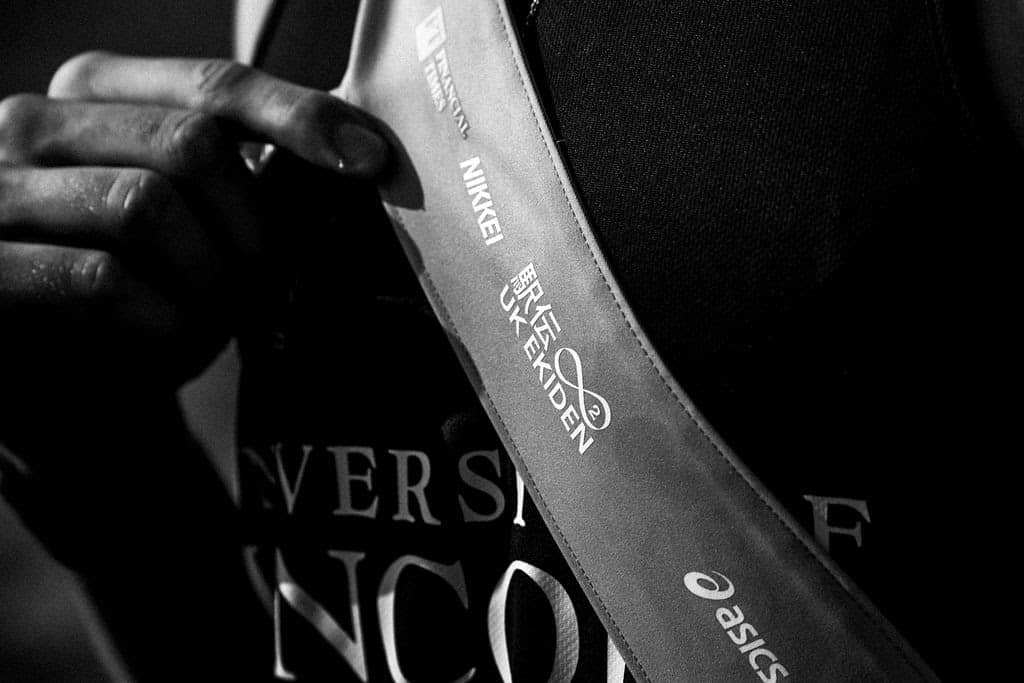
The Ekiden format is one of Japan’s great sporting traditions. Rather than passing a baton, each team carries a tasuki sash, representing the collective effort, identity and hopes of the group.
The day before the race, teams will receive their sashes in a dedicated tasuki ceremony, echoing the customs of Japanese Ekiden racing.
The word “Ekiden” was added to the Oxford English Dictionary in December 2025, which tells you something about its growing cultural footprint in Britain. It also proves that endurance runners, despite their fondness for pain and split times, occasionally do make it into polite society.
“The UK Ekiden is a truly special race, and it is a team race, which people can aspire to be part of. University teams must qualify, while corporate teams support the event and compete alongside them. With costs covered for universities and mixed teams representing their institutions, it creates a high-performance, inclusive environment.
Introducing qualification has elevated the competition even further. We already have a waiting list, and it’s fast becoming a standout fixture in the student sporting calendar. Being awarded an England Athletics licence this year is a significant milestone for the UK Ekiden. It adds an extra layer of credibility to the event and reinforces our position as a recognised and professionally delivered championship.
Inspired by the 100th Hakone Ekiden university running relay race, I’ve seen how it brings the whole country together to cheer on the next generation. Ekiden culture and teamwork are extremely important in Japan; it’s all about hearts and minds. Our plan is also for the UK Ekiden to continue for 100 years.” Anna Dingley, Founder and CEO of FT Nikkei UK Ekiden
A Race With No Passenger Seats
The 2026 field has plenty to live up to. Last year, Ritsumeikan University claimed victory after the University of Oxford was disqualified for failing to make the tasuki handover within the designated area. Loughborough University and St Mary’s finished second and third after a tense race in 29-degree heat.
That is the sort of detail that gives this event its edge. The FT Nikkei UK Ekiden is not merely about having one star runner who can drag everyone else along like luggage at Heathrow. The format asks a more uncomfortable question: how deep is your team?
“The UK Ekiden tests which institution is truly the best in endurance running. Success depends on the strength of the team, not the individual—there’s nowhere to hide. It showcases distance running in its purest form: a point-to-point relay. Behind every Olympic star is a journey. The Ekiden aims to play a key role in developing the next generation, offering a platform for emerging talent to shine. Keep an eye on these athletes ahead of 2028 and beyond—several have already represented Great Britain.
This is a true championship—no team reaches the start line without earning it. Every place is hard-won, secured either through automatic qualification from the 2025 edition or by meeting strict time standards. What sets the UK Ekiden apart is its mixed-team format, with men and women competing together towards a shared goal—something rarely seen in sport. It’s a progressive model that reflects the future of competition, bringing teams closer and strengthening collective performance.” Matt Seddon, Athletics Director for the FT Nikkei UK Ekiden
Corporate Trophy Adds A New Race Within The Race
Another first for 2026 is the introduction of the Corporate Trophy, with sponsors and leading companies entering teams alongside the university runners.
That gives the day a broader purpose than medals and mileage. The event is aiming to build connections between student athletes and corporate partners at a time when graduates are facing a rather unforgiving jobs market.
“It’s a notoriously challenging time for graduates entering the job market, and the headlines can be pretty discouraging. “At the UK Ekiden, we’re proud that our corporate partners don’t just fund the event and student participation they also engage directly with students. This year, we’re introducing informal talks in the race village where sponsors share their career journeys and offer practical advice, helping students better understand the opportunities ahead of them.” – Anna Dingley
Supported by the Financial Times and Nikkei, the race also serves as a cultural bridge between the United Kingdom and Japan, using sport as the shared language.
Headline sponsors Nikkei and the Financial Times are joined by official partner ASICS and official sponsors ABeam Consulting, Arcus Investment, Daiwa Capital Markets Europe, Japan Airlines, Kikkoman, Marsh, Science in Sport, Sports Ground, Suntory Global Spirits, Ueshima Coffee.
Supporters include the UK Embassy, Japanese Embassy, MUSUBI, Japan National Tourism Organization, Ishikawa Prefecture, Royal Air Force, The Tokyo Club, Momiji, Blick Rothernberg, Fujifilm, Linley, Sapporo.
Prize Money, Primary Schools And A Long Game
The FT Nikkei UK Ekiden is also putting money back into university running, with prize money of £3,000, £2,000 and £1,000 for the top three teams.
For 2026, the organisers are widening the net further with the launch of a “Mini Ekiden” for up to 50 primary schools across the UK. Schools in England, Scotland, Ireland and Wales will receive boxes containing tasuki sashes from Japan and an information booklet explaining how to hold an Ekiden on school sports days.
It is a neat idea. Give children the sash before they know enough to fear the lactic acid. A few years from now, some of them may be wearing university colours in the main race.
Ishikawa Prefecture Takes The Spotlight
Each year, the event highlights a Japanese prefecture to introduce UK audiences to different regions of Japan.
In 2026, the focus is Ishikawa Prefecture, located on the Sea of Japan. The region was affected by a devastating earthquake in 2024, and this year’s race will reflect that connection through runners from Ishikawa, prizes sourced from the region, and a specially commissioned poem created by a local community on the reverse of the medals.
“The FT Nikkei UK Ekiden stands as a powerful symbol of unity, reflecting the close partnership between Nikkei and the Financial Times and the enduring ties between Japan and the United Kingdom. Through the universal language of sport it connects people and fosters enduring bonds through the relay sash (Tasuki). We are deeply honoured to take part in this historic initiative.” Nobuhisa Iida, President and CEO of Nikkei Inc
“What I love about the UK Ekiden is how it brings together the best of Japanese and British traditions – athletic, cultural and academic. It’s a race built on team work and for us that means it’s a really impactful event for our people, our brand and our global outlook.”
Jon Slade, CEO of the Financial Times
Why The FT Nikkei UK Ekiden Matters
At its best, the FT Nikkei UK Ekiden feels like sport stripped back to something honest. No vanity laps. No lone hero narrative. No hiding behind one superstar with an engine the size of a ferry.
It is team running with consequence: each leg carrying the weight of the last, each handover carrying the pressure of the next. The course may run along the Thames, but the spirit belongs unmistakably to Japan.
And if the organisers get their wish, this third edition will not simply be another race on the British endurance calendar. It may be the moment the UK Ekiden becomes a fixture with roots, teeth and a very long shadow.