Flow State Fit Club opens in Clapham with boxing, strength, Pilates and yoga in one coaching-led training space.
There is a new name stepping into London’s crowded fitness ring, and Flow State Fit Club is not arriving with smoke machines, motivational slogans or the usual boutique gym razzmatazz. Set to open on Clapham Common in March 2026, the new SW4 concept is pitching itself as something rather more useful: a coaching-led training club built on structure, progression and the faintly radical idea that members deserve to know what on earth they are doing.
In a capital awash with high-sensory workouts and classes that can feel like nightclub punishment with a waiting list, Flow State Fit Club is trying a different route. Less frenzy, more framework. Less guesswork, more game plan.
Co-founded by performance coach and professional heavyweight boxer Darren Sealy and commercial finance specialist Sujit Pancratius, the club sits at the junction where athletic method meets business discipline. That may not sound terribly sexy in marketing terms, but then neither does mobility work until your hips begin moving like a rusty garden gate.
A Clapham launch built on coaching, not chaos
The central idea behind Flow State Fit Club is simple enough: training should not feel random. It should build somewhere. It should make sense. And, crucially, it should leave people better than it found them.
“We don’t believe in random workouts or formulaic, follow-along classes,” says Sealy. “Elite sport isn’t chaotic — it’s structured. That same principle applies to the general population. If members understand what they’re doing and why they’re doing it, they’ll stay.”
That is the beating heart of the concept. This is not a place selling exhaustion as entertainment. It is selling progression as value.
Sealy brings more than 16 years of experience across commercial gyms, coach education and professional boxing. He has trained and sparred alongside Anthony Joshua and Oleksandr Usyk, and that high-performance background has clearly shaped the club’s approach. The programming is designed less like a one-off sweat festival and more like a system: repeatable, measurable and sustainable.
What Flow State Fit Club will offer
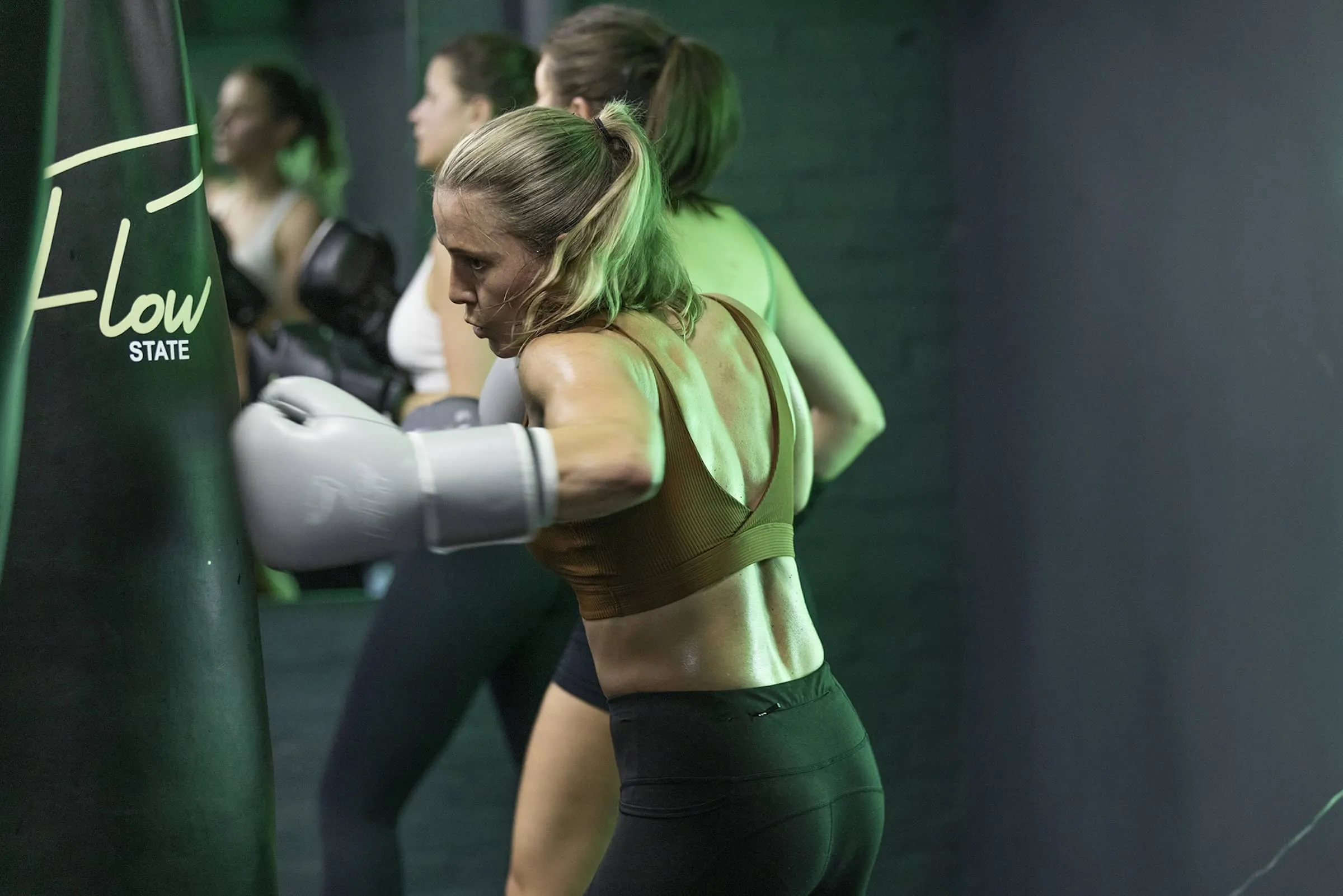
The timetable will run across two studio spaces and the offering is broad without becoming confusing. Members will be able to dip into non-contact boxing, including foundational and general-level sessions, female-only boxing, upper and lower-body strength training, athletic performance circuits, mat Pilates, yin yoga and mobility work.
That spread matters.
Too many clubs still treat performance and recovery as if they belong in separate postcodes. Here, the model intentionally puts them together. Strength development lives alongside mobility. Boxing sits beside Pilates. Nervous system regulation and recovery are not framed as soft extras for a rainy Tuesday, but as part of the same training conversation.
It is a more grown-up reading of fitness, one that recognises people do not simply need to be worked hard. They need to be coached well, kept healthy and given enough variety to improve without being chewed up by the process.
Why this boutique fitness model may have legs
London’s boutique fitness market is not exactly short on ambition. What it often lacks is patience. Launches come dressed for the ball, only to discover later that retention is harder than filling an opening week timetable with discounted classes and attractive lighting.
Flow State Fit Club appears to understand that.
Rather than chasing rapid rollout, the founders say class volume and coaching capacity will scale with demand. In plain English, they are not planning to grow faster than the experience can support. That may sound obvious, but in boutique fitness it is surprisingly rare.
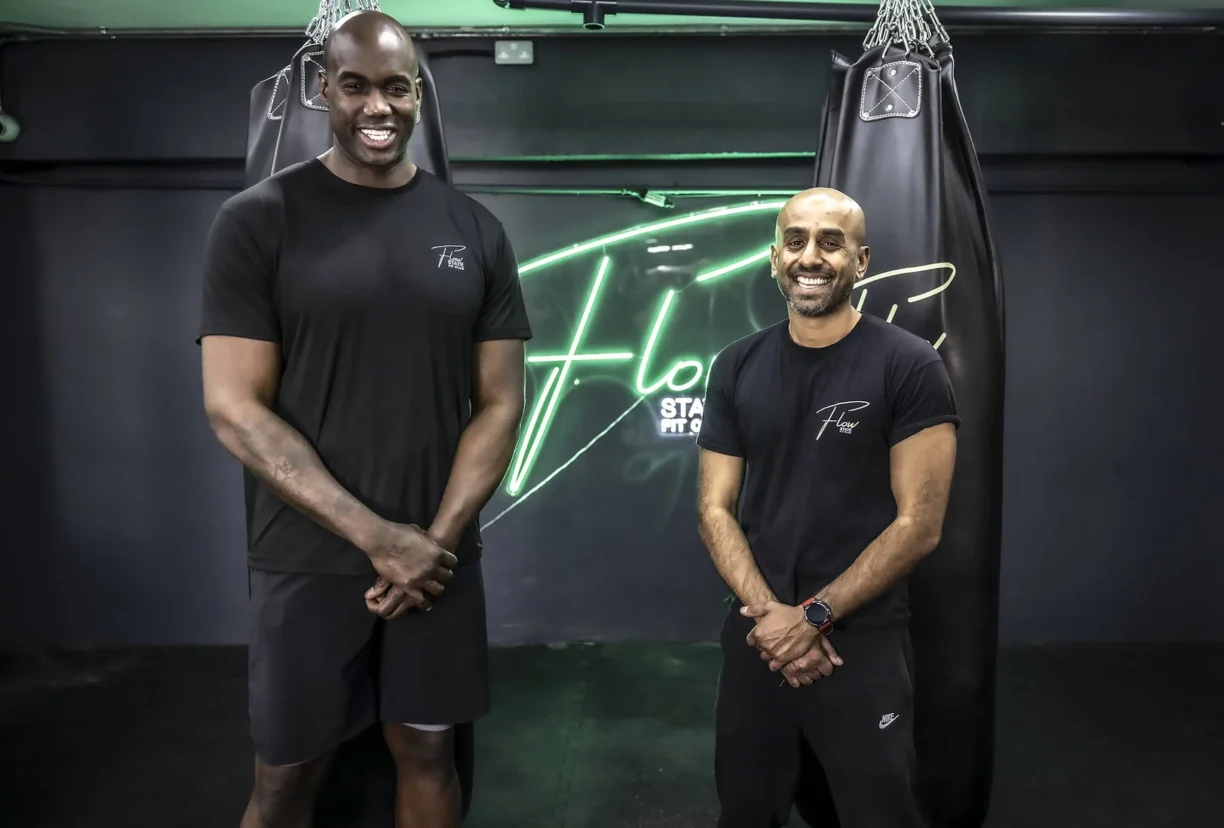
Pancratius, who brings more than 20 years of commercial finance experience as well as a long-running personal commitment to boxing and strength training, has approached the venture with the sort of commercial caution that tends to be unfashionable right up until it proves sensible.
“We’ve approached Flow State as a long-term business, not a short-term trend,” he says. “The boutique sector is crowded, but there is room for concepts that prioritise coaching standards, member experience and sustainable unit economics. Our focus is retention, value and disciplined growth.”
There is no confetti cannon in that quote, and that is probably the point. It speaks to a club more interested in building a loyal membership base than winning a brief argument on Instagram.
Boxing roots, but a broader training philosophy
It would be easy to frame this purely as a boxing-led concept with a few wellness trims around the edges. That would miss the point.
Yes, Sealy’s background gives the club credibility in skill-based training, and yes, boxing will be one of its standout disciplines. But Flow State Fit Club is aiming at a wider audience than those who fancy shadowboxing their way through Tuesday evening. Its proposition is broader: a place where ordinary members can train with a degree of intention usually reserved for athletes.
That matters in a market where many consumers are getting smarter. People increasingly want more than sweat and noise. They want context, progression and some sense that they are not simply renting fatigue by the hour.
“There’s a difference between being a trainer and being a coach,” adds Sealy. “Coaching feeds knowledge. Knowledge builds confidence. Confidence keeps people coming back.”
That is a sharp line, and a revealing one. The club is clearly betting that education and confidence are better long-term retention tools than intimidation or novelty.
Membership pricing and where it sits in the Clapham market
Pricing has also been pitched with care. Membership options include a 10-day unlimited trial at £49, monthly unlimited at £149 and a Founders Membership at £134.
For Clapham, that places Flow State Fit Club in competitive territory rather than bargain-basement mode. It is premium enough to reflect the coaching proposition, but not so inflated that it feels detached from the local boutique market. In other words, the founders appear to know exactly where they are opening and who they want through the door.
A fitness club designed for longevity
There is an interesting idea running beneath the launch of Flow State Fit Club, and it goes beyond class schedules and price points. The founders believe the next phase of boutique fitness will favour skill-based, community-driven training environments over anonymous, sensory overload formats, particularly as AI continues to reshape how people consume information, coaching and content.
That feels plausible.
The clubs likely to endure will not just be those with good branding and louder speakers. They will be the ones that create trust, competence and belonging. They will make members feel seen, not processed. They will offer progression, not just perspiration.
Flow State Fit Club is still new, of course, and every launch looks handsome before the first hard winter. But on paper, this one appears to understand both halves of the modern fitness equation: people want performance, and they want sustainability. They want challenge, but not chaos.
That is a sensible place to start.
And in a city where boutique fitness can sometimes feel like being shouted at by a scented candle, sensible may yet prove to be a very smart business model indeed.
Flow State Fit Club opened in March 2026 at 9 Clapham Park Rd, London, SW4 7ST. For further information visit flowstatefitclub.com and Instagram: @flowstate.fitclub.