FedFitness BT4 Trampoline review: stable bounce, fast assembly, joint-friendly design, and standout value for home fitness users.
The FedFitness BT4 Trampoline is built for people who want the benefits of rebounding without the usual nonsense: fiddly setup, shaky frames and a bounce that feels like it was designed by a prankster. It is a home fitness product with a clear brief — make low-impact cardio easier, safer and more accessible — and, on paper at least, it gets a lot right.
This is not a flashy bit of kit trying to blind you with jargon and neon trim. The BT4 goes after the practical stuff: a mostly pre-assembled one-piece frame, bungee-based rebound system, adjustable handlebar and a much higher weight capacity than some of its better-known rivals. In other words, it is trying to be useful rather than glamorous, which is usually a good sign.
FedFitness BT4 Trampoline review: quick verdict
The FedFitness BT4 Trampoline looks like a smart buy for anyone after a compact rebounder that prioritises stability, joint comfort and ease of setup. The generous weight capacity, included handlebar and competitive price make it especially appealing for beginners, heavier users and anyone who wants safer, lower-impact cardio at home.
It may not carry the prestige of some premium rivals, but it makes a strong value case.
Pros
- Very quick setup thanks to the 90% pre-assembled design
- One-piece frame should feel sturdier than foldable alternatives
- Bungee system promises quieter, softer, joint-friendlier rebound
- High dynamic and static weight capacity
- Adjustable five-level handlebar included
- Larger jumping area than some competitors
- Good value against premium-brand rivals
Cons
- Less portable than foldable rebounders
- More functional than stylish in its overall design
What is the FedFitness BT4 Trampoline?
The FedFitness BT4 Trampoline is a bungee rebounder designed for home cardio, balance work and lower-impact fitness sessions. It uses a one-piece frame with pre-installed bungees to reduce setup time and eliminate the weak spots often found in foldable designs.
The big pitch here is convenience mixed with confidence. You attach the legs and handlebar, then get moving. No manual threading of cords, no extended wrestling match with assembly instructions, no immediate regret.
That matters more than it sounds. Plenty of home fitness gear loses half the battle before first use because it is a pain to set up. BT4 seems determined not to make that mistake.
Design and build: practical beats pretty
If first impressions matter, the BT4’s strongest one is that it appears to have been built by people who understand what home users actually hate.
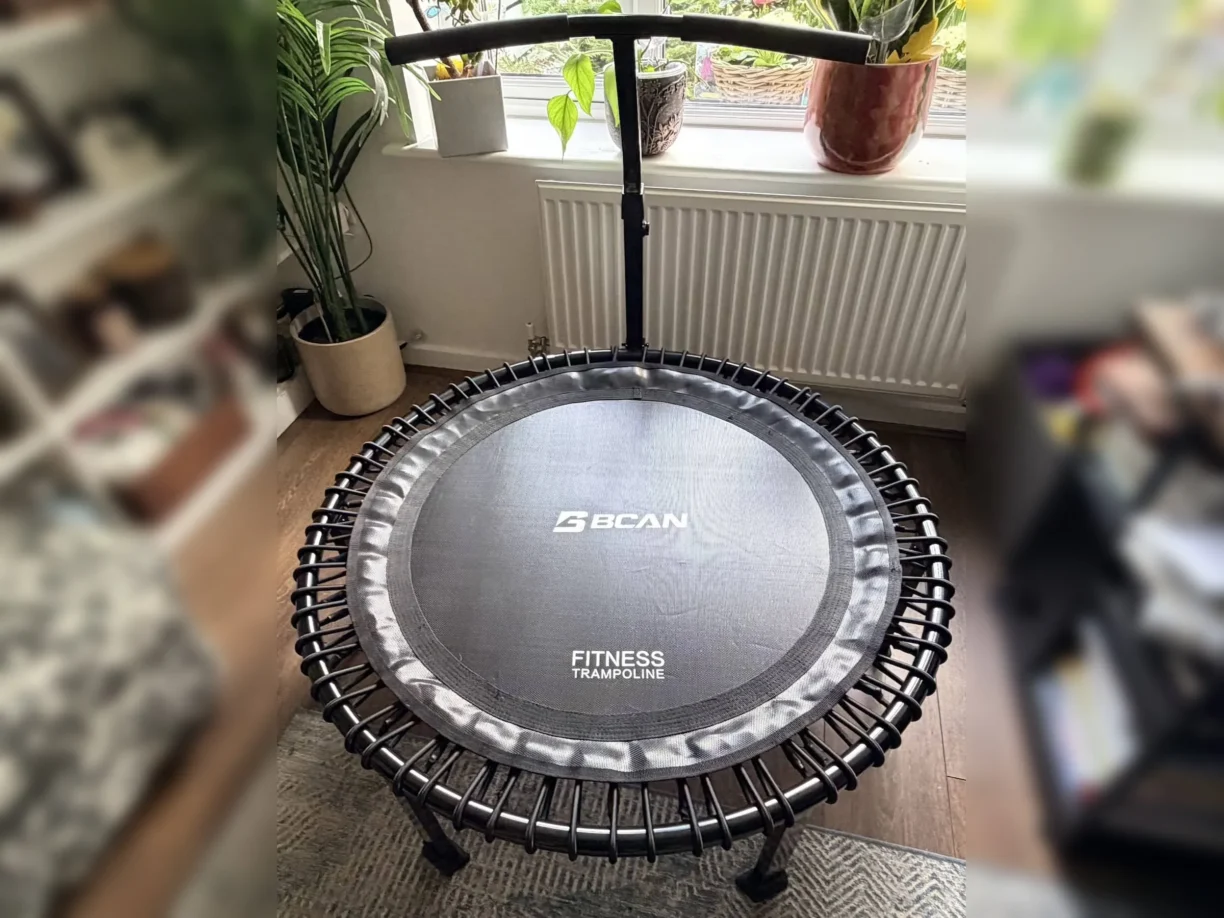
The one-piece frame is the standout feature. Instead of relying on seams, hinges or fold points that can introduce movement over time, it uses a more rigid design intended to improve stability and durability. That should translate into a firmer, more grounded feel underfoot.
There is also a dual-layer washer system designed to absorb vibrations and prevent loosening, along with rectangular rubber feet that widen the base and improve grip on the floor. None of this is especially sexy, but then neither is a trampoline that starts shuffling across the room mid-session.
Performance: softer bounce, steadier feel
The FedFitness BT4 Trampoline uses a high-density jump mat paired with latex bungee cords to spread force more evenly and create a softer landing. In real-world terms, that should mean less harshness through the joints and a more controlled rebound than traditional spring systems.
That is where the product becomes more interesting.
Rebounding only works if users feel secure enough to relax into the motion. If the bounce feels too abrupt, too noisy or too unstable, people tend to tense up, shorten their movements and lose confidence. The BT4’s soft-land setup is clearly aimed at avoiding that.
The result should suit low-impact cardio, recovery sessions, light conditioning work and beginner-friendly home exercise. It is not really about aggressive athletic explosiveness. It is about consistency, comfort and the kind of exercise people will actually keep doing.
Weight capacity and accessibility
One of the strongest parts of the BT4 spec sheet is its weight capacity.
The 40-inch model supports a 400 lb dynamic capacity and 500 lb static capacity, while the 48-inch version goes even higher at 450 lb dynamic. That is a serious figure for a compact rebounder and one that immediately broadens its potential audience.
This is where many home fitness products quietly exclude people. The BT4, by contrast, looks far more inclusive. Heavier users, beginners, older adults or anyone rebuilding confidence after time away from exercise should find that reassuring.
The included five-level adjustable T-handlebar helps as well. Beginners can use it for stability, while more confident users can remove or adjust it depending on training style. It is a practical feature, not a gimmick.
Setup and accessories
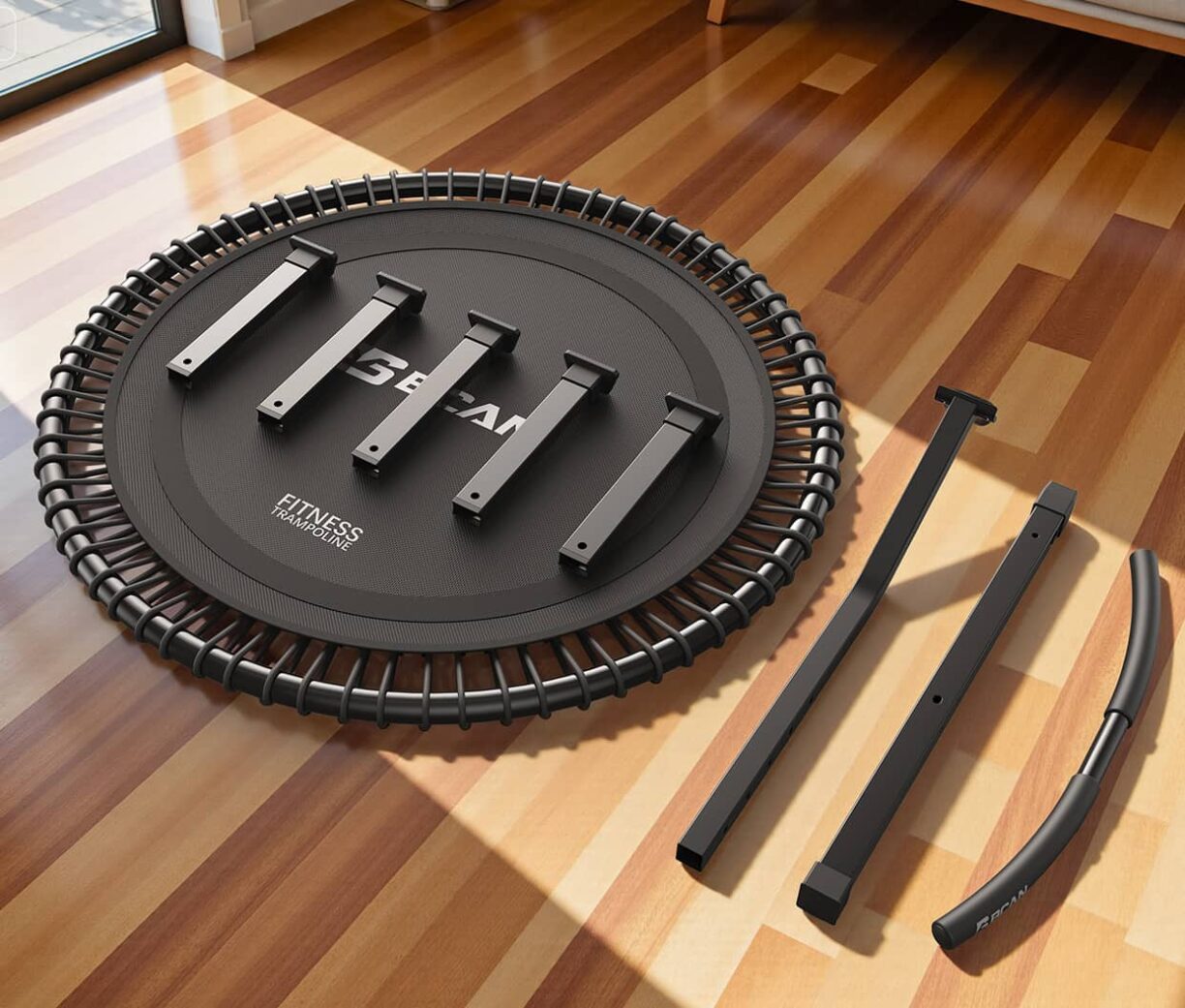
The BT4’s 90% pre-assembled design is a major selling point.
Frame and bungee cords come pre-installed, which means users only need to attach the legs and handlebar. According to the supplied product information, that cuts setup time by around 60% compared to the previous-generation model.
That is a meaningful upgrade. Anything that reduces friction between delivery and first workout is a win.
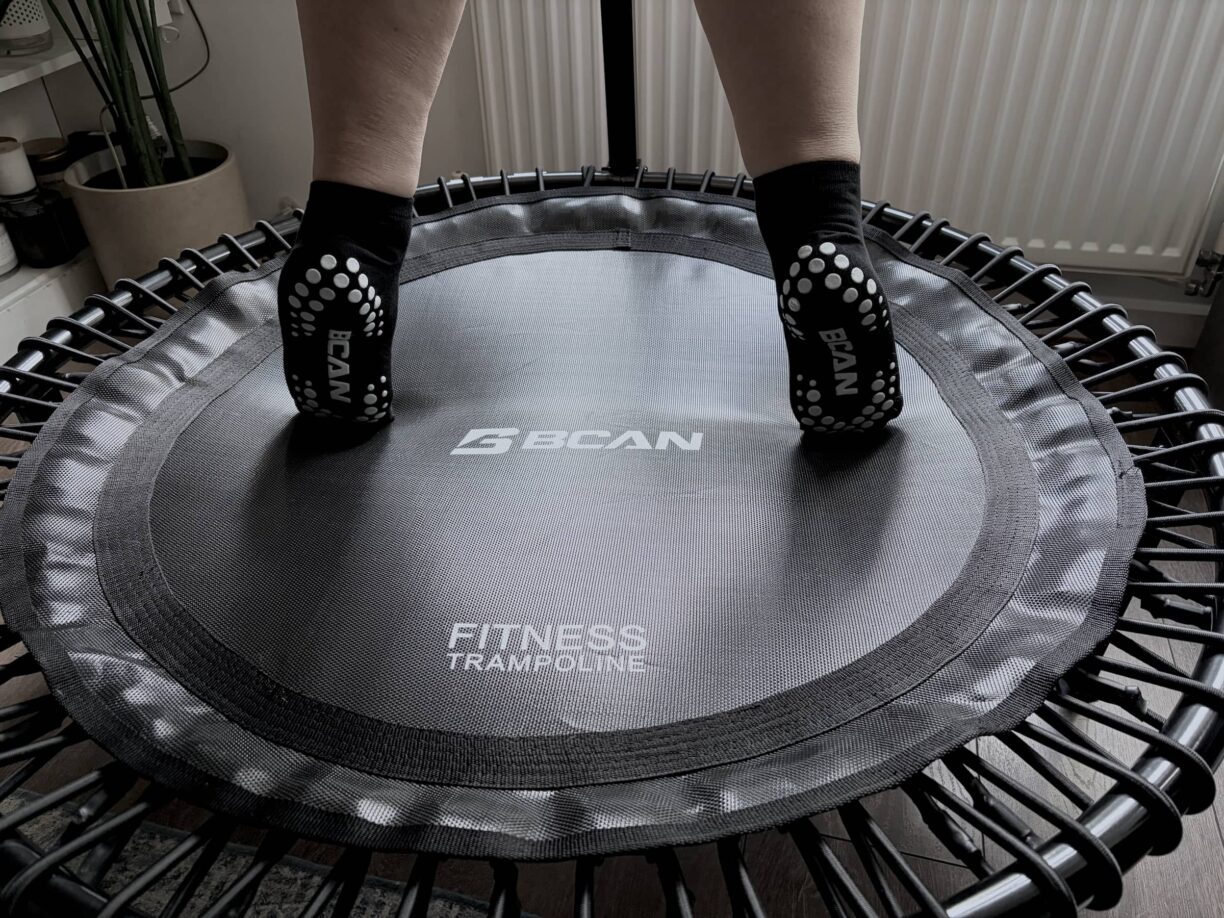
Extras include two pairs of non-slip grip socks and a 360-degree phone holder. The socks make sense. The phone holder feels slightly more lifestyle-driven, but it is easy to see the appeal for people following classes, timers or simply distracting themselves through cardio.
FedFitness BT4 Trampoline vs JumpSport 39″ Pro
This is where the value argument becomes hard to ignore.
Based on the provided comparison, the BT4 40-inch model outguns the JumpSport 39″ Pro in several areas:
- Higher weight capacity
- Larger usable jumping area
- More included cords
- Free five-level adjustable handlebar
- Extra accessories in the box
- Much lower total price
The numbers are particularly striking. The BT4 is listed at £299, while the JumpSport 39″ Pro rises to £548 when the handlebar is added.
That is not a minor difference. That is the sort of gap that forces a buyer to ask whether brand name alone is doing a lot of expensive lifting.
Of course, premium rivals may still win on long-term reputation, refinement or finish. But purely on provided spec and value, the FedFitness BT4 Trampoline appears to land a few clean shots.
Who is it for?
The FedFitness BT4 Trampoline makes the most sense for:
- Beginners starting home cardio
- Users who want lower-impact exercise
- Heavier users needing higher weight support
- Older adults wanting extra stability
- Anyone put off by complex assembly
- Home exercisers looking for value over prestige
This feels much less like a niche performance tool and much more like a sensible all-rounder. It is designed to be approachable, forgiving and sturdy enough to inspire trust.
Is the FedFitness BT4 Trampoline worth it?
Yes, on the evidence provided, the FedFitness BT4 Trampoline looks worth serious consideration.
Its appeal is not built around hype. It is built around removing common frustrations. Easier setup, a steadier frame, softer bounce, better support and stronger value. Those are not glamorous claims, but they are the ones that matter after the first week, when the novelty has gone and the routine either survives or collapses.
If you want an ultra-premium badge product, there are pricier options. If you want a practical rebounder that seems to cover the fundamentals very well without charging like a luxury purchase, BT4 looks like the smarter play.
Final verdict
The FedFitness BT4 Trampoline appears to understand the modern home fitness brief better than most. It is accessible, sturdy, thoughtfully specified and priced aggressively enough to make established rivals feel slightly overdressed.
Its greatest strength is not one headline feature but the overall package. The easy assembly matters. The high weight capacity matters. The softer, more joint-friendly bounce matters. And the included handlebar makes the whole thing more welcoming for the users most likely to need that reassurance.
No, it is not trying to reinvent fitness. It is simply trying to make rebounding less awkward, less intimidating and more usable for more people. That may not sound revolutionary, but it is often exactly what makes a product worth buying.