A ‘healthy’ fear of death is normal – but what happens when it tips into full-blown anxiety? Here's 7 ways to manage death anxiety
The fear of dying is one of those thoughts most people would rather leave in the locked cupboard at the back of the mind, somewhere between tax returns and old running shoes. But every so often, it rattles the handle.
For some, it becomes more than an occasional shiver. It becomes death anxiety — also known as thanatophobia — and it can start dictating the way a person lives.
Winston Churchill once said: “Any man who says he is not afraid of death is a liar.”
Blunt, yes. But also rather comforting in its own bulldog way. The fear itself is not the enemy. The problem begins when it starts making decisions.
Clinical psychologist Dr Anna Janssen, who specialises in the care of people with cancer and terminal illness, explains: “Most people will experience death anxiety at some time in their lives.”
“Some have a way of dealing with it which causes them less anxiety, perhaps through their culture or religion or their own ideas about death.
“There’s nothing unusual about being apprehensive about death, and worrying about it a bit, but those worries become more clinically concerning if the anxiety starts to have an impact on day-to-day functioning.
When it starts to dictate much of how you live, and is to the detriment of other meaningful things or your wellbeing, it’s more concerning.”
Why Death Anxiety Can Feel So Overwhelming
Death anxiety is not always about death itself. Sometimes it is about uncertainty, loss of control, unfinished business, separation from loved ones, illness, ageing, or the nagging sense that life is moving quicker than expected.
It can show up as intrusive thoughts, panic, sleep problems, body-checking, avoidance, compulsive reassurance-seeking, or a grim habit of mentally rehearsing worst-case scenarios as if the brain has taken a job as a disaster forecaster.
Grief counsellor and funeral director Lianna Champ, author of How To Grieve Like A Champ, has seen how public events and heavy news cycles can pull these worries to the surface. Reflecting on a period when death dominated daily headlines, she says: “The current pandemic has made us think of death – having deaths reported daily in the news can make our anxiety external, giving us a sense of panic.
“Having a fear of death is quite normal and stems from our natural instinct for survival. But what happens when an irrational fear of death begins to seep into our thoughts and takes over our rational thinking?
Death anxiety is a very real concern for some, affecting their day-to-day functioning, and while we can’t change what is, we can change how we feel about it.”
That last line is the hinge. We cannot negotiate immortality. We can, however, change the relationship we have with the thought of death.
1. Acknowledge The Fear Instead Of Wrestling It
Trying not to think about death is a bit like trying not to think about a bunker shot over water. Suddenly, it is all you can see.
Janssen suggests making room for the feelings rather than trying to bolt the door against them.
“You can look at what your thoughts and feelings really are and get some coherence, so you feel less overwhelmed by how you feel,” she says. “Understanding what you’re thinking and feeling is sometimes a direct route to coping.”
That might mean talking to someone trusted, journaling, sitting with the feeling for a few minutes rather than fleeing it, or working with a therapist if the thoughts feel too heavy to unpack alone.
Champ says: “Acknowledge the effect the anxiety has on your life physically and emotionally. Once we acknowledge that we may be engaging in habits or thoughts that aren’t good for us, we can begin to take steps to change them.”
Writing things down can help. Not polished prose. Not a bestselling memoir. Just honest, untidy notes about what the fear is saying and where it might have come from.
2. Work Out What Is Actually Triggering It
The phrase “fear of dying” sounds simple, but underneath it can be a whole committee meeting of worries.
Are you afraid of pain? Of leaving loved ones? Of nothingness? Of what happens next? Of dying before you have properly lived? Of illness? Of losing control?
Champ suggests asking yourself about all the things that make you anxious about death. Is it missing out on being with your loved ones – even though they’ll eventually all die too?
Being in a black nothingness (which you probably won’t be aware of)? Or just the not knowing what happens? “If we understand why we’re feeling the way we do, we can take back control,” she says.
This matters because a vague fear is slippery. A named fear is something you can begin to work with.
3. Stop Feeding The Anxiety Machine
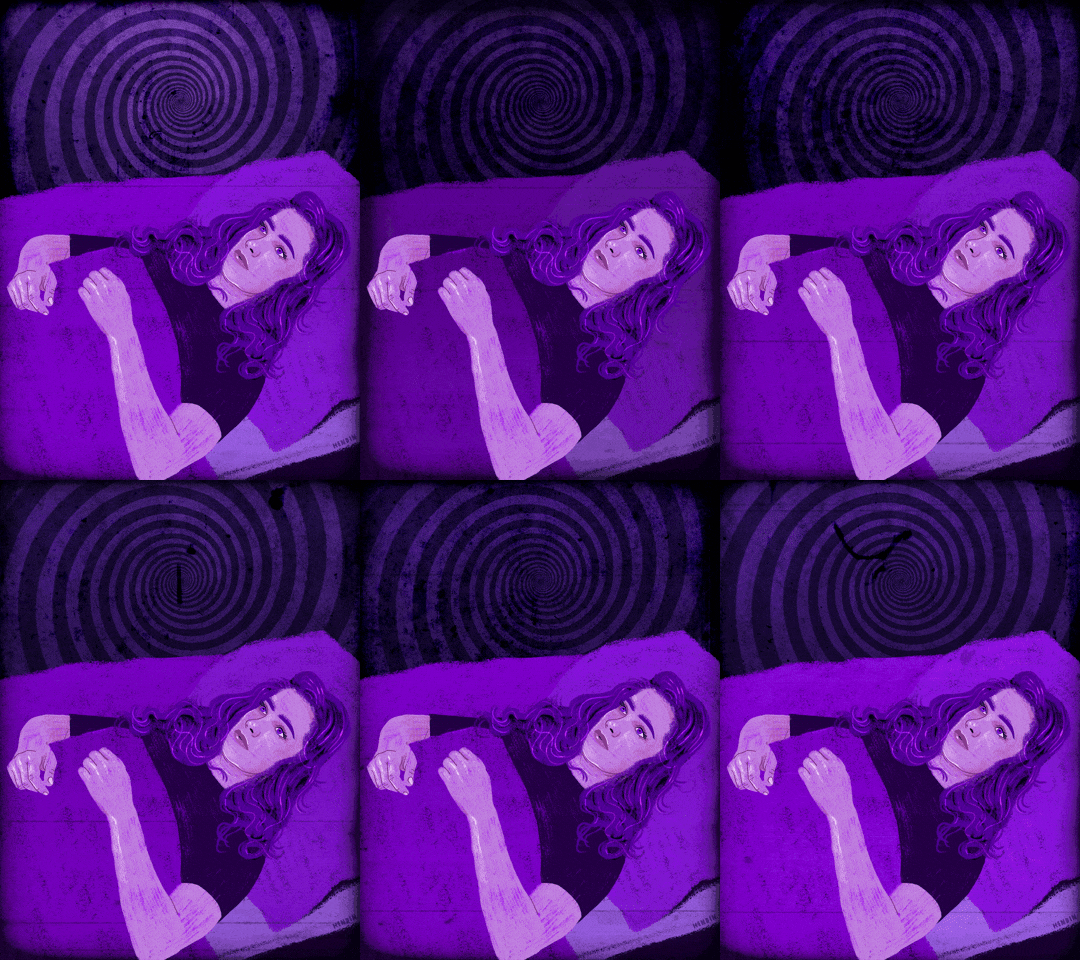
News, social media, true crime, illness forums and late-night doom-scrolling can become petrol on the bonfire.
That does not mean pretending the world is made of scented candles and puppies. It means understanding that the nervous system has a limit, and it is not improved by consuming tragedy on a loop.
Champ advises people who have death anxiety not to read or listen to the news too much. “Keep in mind that the media can hold a tragic event in the news for ages,” she says. “Yes, we see disasters, but we can also see many good and great things happening. Everything needs balance.”
Janssen adds: “The fear of death fluctuates in different people’s lives and may be triggered by an experience of a difficult death, or things people may see or hear about death that add uncertainty, or make the potential of death less deniable.
So set boundaries. Choose a time to check headlines. Avoid scrolling before bed. Mute accounts that spike anxiety. The aim is not ignorance. It is mental hygiene.
4. Say It Out Loud To Someone Who Can Hold It
Death is the one subject everyone has a stake in, yet many people speak about it as if saying the word might summon a thunderclap.
That silence can make death anxiety feel shameful, when in reality it is deeply human.
Giving a voice to your feelings can help put worries into perspective, says Champ, who suggests: “Find someone who won’t try to ‘fix’ you or change how you feel, but can give you the tools to work it out yourself. If you can’t think of someone you can trust, reach out to a professional.”
Janssen adds: “It can just be about being heard and feeling less stigmatised. Very often, we don’t talk about death or how worried we are about it, so sometimes just having a relationship where someone can bear witness to your feelings about death can be enough. Sometimes knowing you’re not the only one who feels like this can be helpful.”
That is often where the pressure drops. Not because the issue vanishes, but because you are no longer carrying it around like contraband.
5. Remember That Some Fear Is Useful
A total absence of fear might sound liberating, but it would also make us spectacularly poor decision-makers. Fear stops us from walking into traffic, ignoring chest pain, or attempting DIY electrical work after two glasses of red.
“Our survival instinct is driven by the fear of what might end our lives, so we’ll all have an undercurrent of fear of death, and that’s no bad thing because it’s how we survive,” Janssen stresses.
Champ adds: “A ‘healthy’ fear of death can make us change our beliefs and behaviours for the better. An awareness that we aren’t immortal can make us better people too, as it can make us think about how we’d like to be remembered.”
That is the useful version of the fear of dying. It reminds us to phone the person, book the check-up, take the walk, apologise properly, and stop spending our best energy on nonsense.
6. Build Acceptance, Not Denial
Acceptance is not surrender. It is not shrugging at life. It is the slow, steady business of facing reality without letting it flatten you.
Through her work, Janssen says she sees people facing death, or who’ve lost someone to illness, and they readily talk about it. “I also see people who speak about their acceptance of death,” she says.
“Some people are very much able to accept their life is ending and they feel ready for that ending, and that’s often linked to what they think death is and what they think will happen next.
“Some are very clear this is not the end of everything, so the meaning attached to death isn’t one of threat. They’re comfortable with it, and think they’re going to a safe place and to meet people that have already passed away. It’s really about the meaning we attach to death.”
That meaning may come from faith, philosophy, family, nature, creativity, service, or simply the knowledge that life has been lived with some degree of honesty.
Champ adds: “By really grasping that dying is an inescapable truth, we can live a better life. We really can live each day as if it’s our last.”
7. Know When To Get Professional Help
There is a difference between occasionally thinking about mortality and being ambushed by it every day.
If the fear of dying is affecting sleep, work, relationships, appetite, concentration, decision-making, or your ability to enjoy life, it is time to speak to a professional. A GP, counsellor, clinical psychologist or therapist can help identify whether the issue is linked to anxiety, trauma, grief, obsessive thoughts, health anxiety or depression.
If, after trying to tackle your anxiety, you’re still feeling overwhelmed and thinking excessively about death, seek professional help, advises Champ.
Janssen suggests: “If you have trauma that reminds you of how unsafe we are in this world, you can come through it with specialist therapy.”
And if thoughts of death shift into thoughts of harming yourself, treat that as urgent. Contact emergency services, a crisis line, or someone you trust straight away. That is not a weakness. That is the survival instinct doing exactly what it was built to do.
The Real Aim Is To Live More Freely
The goal is not to become fearless. Fearless people are either saints, liars, or about to make a very poor decision with a ladder.
The healthier aim is to stop death anxiety from becoming the caddie that chooses every club in the bag.
A little awareness of mortality can sharpen life beautifully. Too much can make the world feel smaller, darker and harder to move through. Somewhere in the middle is the workable place: honest enough to know life is finite, brave enough to keep living it properly.