Ethnosports 2027 launches a global cycle for traditional sports, cultural heritage and international cooperation.
Ethnosports has spent years living in the margins of world sport, admired by those who know it, overlooked by those who run the big shop. That may now be changing. At the 8th Ethnosport Forum in Antalya, held from 3–5 April 2026, Ethnosports 2027 was unveiled as an ambitious international multi-sport organisation designed to bring traditional sports onto a proper global stage.
This was not a vague nod to heritage or a polite round of speeches dressed up as progress. It was presented as a serious framework with serious intent: a long-term structure built to gather athletes from different countries, encourage competition, deepen cultural exchange and give traditional disciplines the kind of international platform they have long been denied.
There is something refreshingly clear-eyed about that. For too long, heritage sports have been treated like treasured antiques kept behind glass rather than living, breathing expressions of identity. Ethnosports 2027 wants to fling open the cabinet and let them run.
A four-year cycle with global ambition
The centrepiece of the plan is a four-year cycle, with a different host country taking the reins each time. That matters.
A rotating host model does more than spread the workload. It bakes diversity into the architecture of the project. Different nations, different traditions, different cultural rhythms. The point is not to flatten these sports into one uniform international product, but to give them a recurring stage where their differences become the attraction rather than the obstacle.
In practical terms, that also creates the beginnings of a sustainable international calendar dedicated exclusively to traditional sports. That is no small thing. Global sport, like most crowded cities, tends to reward those already shouting the loudest. Ethnosports 2027 is an attempt to hand the microphone to disciplines that have carried history on their backs without much help from modern sporting structures.
More than competition, less than nostalgia
What gives the initiative its weight is that it is not simply being sold as an event. It is being positioned as a movement.
The broader aim is to lift traditional sports beyond local and regional boundaries and establish them as a globally recognised field built on shared standards, cooperation and visibility. That is where the rhetoric starts to matter, because the language coming out of Antalya was not sentimental. It was strategic.
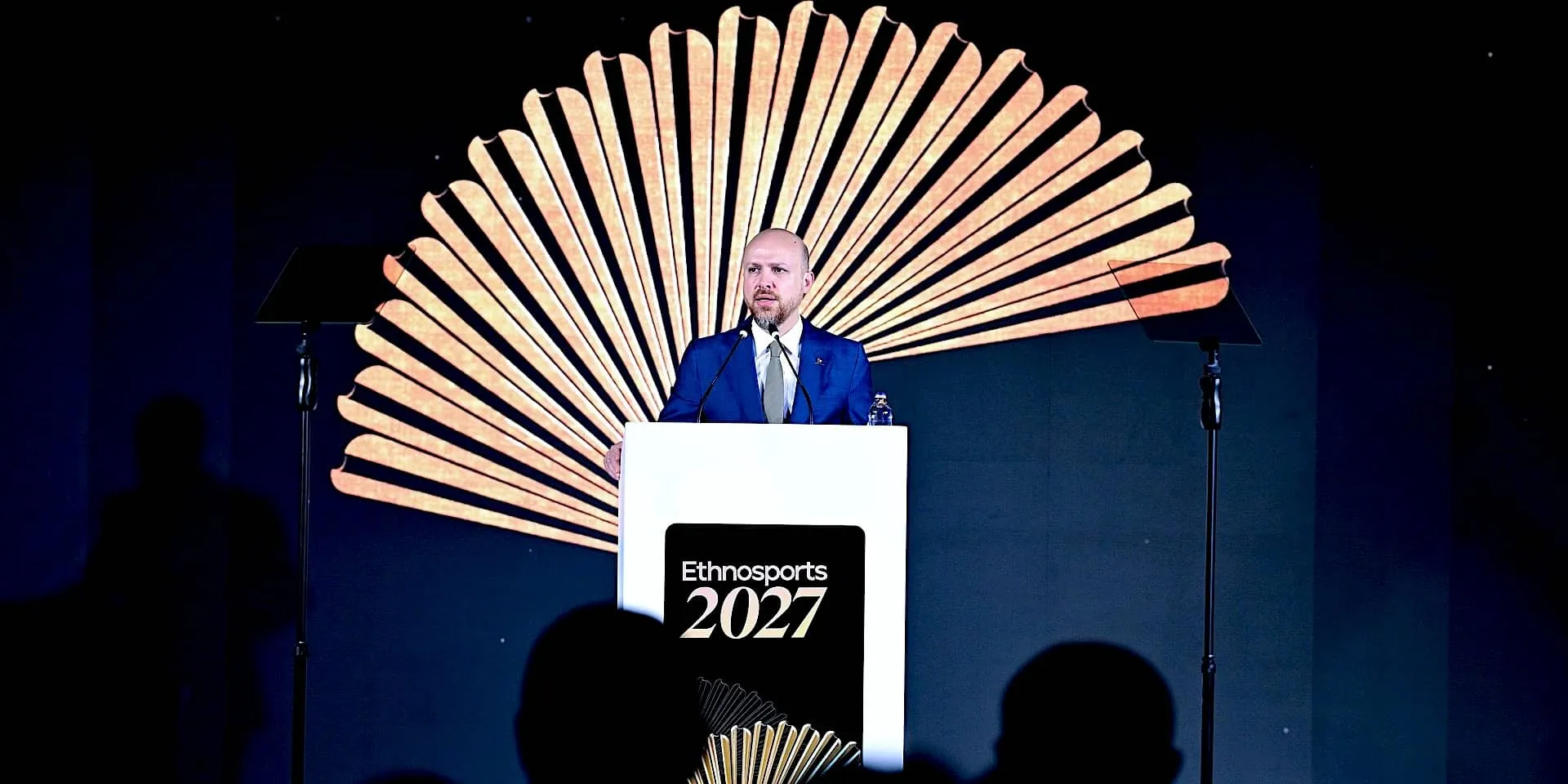
“Ethnosports 2027 represents a historic turning point. It will carry traditional sports beyond their local contexts and establish them as a respected global movement with shared values and standards,” said Necmeddin Bilal Erdoğan, President for World Ethnosport Confederation. “This initiative marks the beginning of a concrete and coordinated international effort. We must urgently move from dialogue to action.”
That last line is the important one. Plenty of forums talk. Fewer build. Fewer still endure. Ethnosports 2027 is clearly trying to move from applause to architecture.
Antalya gathering shows real momentum
If the launch needed evidence of appetite, Antalya provided it. The 8th Ethnosport Forum drew participants from 60 countries, including 14 sports ministers, along with international sports leaders, government representatives and cultural heritage ambassadors.
That scale of attendance says something useful. It suggests traditional sports are no longer being viewed merely as local curiosities or ceremonial leftovers. They are increasingly being recognised as tools of cultural preservation, diplomatic connection and international cooperation.
And in a sporting landscape that often prides itself on global reach while looking and sounding suspiciously similar from one event to the next, that is a compelling proposition. A platform rooted in identity, history and regional distinction may prove more relevant than many polished but interchangeable sporting products already on the market.
Erdoğan made that argument directly: “Traditional sports are not only physical activities. They are living expressions of identity, history and shared human values. Through Ethnosports 2027, we are creating a space where these values can thrive together on a global level. It will soon become a global brand in traditional sports.”
There is boldness in that claim, but not madness. A brand only becomes global if it stands for something people can recognise instantly. In this case, the appeal is obvious: tradition with structure, heritage with ambition, culture with competition.
A shared story, not a closed club
One of the smarter aspects of Ethnosports 2027 is that it has been framed as an open invitation rather than a private circle. The project is being pitched as a collaborative international journey, one intended to bring together countries, institutions and communities around a shared purpose.
That matters because cultural heritage, when handled badly, can become inward-looking. Here, the tone is the opposite. The emphasis is on dialogue, mutual understanding and long-term partnership across regions. In other words, tradition is not being treated as a fence. It is being used as a bridge.
As preparations begin for the first edition, the real challenge will be execution. Vision is the easy suit to wear. Delivery is the one that pinches. Host selection, sporting format, international standards and sustained buy-in will all determine whether Ethnosports 2027 becomes a landmark in global sport or merely another handsome speech with a logo.
Still, the intent could hardly be clearer.
“This is not a vision for one nation, but for all. Ethnosports 2027 is an open invitation to the world. It is a global call to tradition. Let’s come together and write this global story, united by our traditions and inspired by our shared future.”
Why Ethnosports 2027 matters now
The timing feels right. Across the world, there is a growing appetite for authenticity, local identity and cultural meaning in everything from food to travel to sport. Traditional sports sit squarely in that lane. They carry the muscle memory of nations. They tell stories that scoreboards alone cannot.
Ethnosports 2027, if it is built properly, could give those stories a durable international home.
And that may be its greatest strength. Not that it promises bigger stadiums or louder branding, but that it offers something world sport is often short on: roots. Proper ones. The kind that run deep, hold firm and still leave room for new growth.