Dušan Vlahović fronts Reebok’s football return as the brand plots a bold comeback with new boots and fresh ambition.
Dušan Vlahović has been handed a role that goes beyond modelling boots and smiling for campaign shots. Reebok’s long-term deal with the Serbian striker is being pitched as something larger: a statement of intent, a flag planted in the turf, and a rather unsubtle reminder that the brand wants its football relevance back.
That, in truth, is the story here. This is not simply another athlete endorsement in an already crowded sportswear marketplace. It is Reebok attempting to re-enter global football with a player whose game is built on force, timing and menace, which is not a bad way to relaunch anything.
Why Dušan Vlahović matters to Reebok
Vlahović is not a player who drifts politely through matches. He imposes himself. He is physical without looking agricultural, technical without fussing over it, and he plays with the sort of conviction defenders tend to dislike at close quarters. For a brand trying to recover authority in team sport, that profile makes sense.
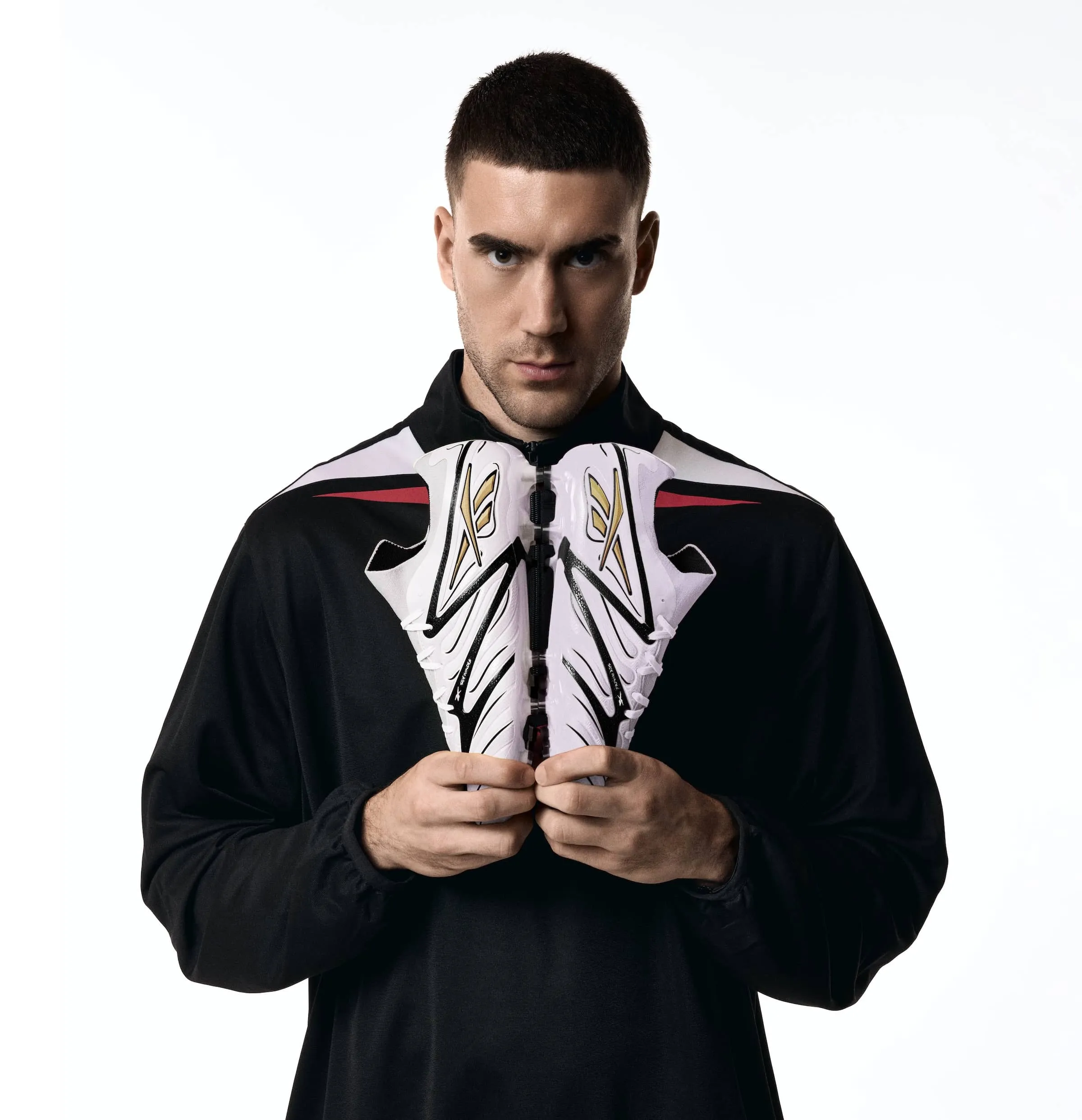
Reebok describes the partnership as part of its long-term strategy to reclaim its position in the category, and Vlahović is being installed as the central figure in that push. From summer 2026, he will become the official face of Reebok Football apparel and footwear, including the launch of the Sidewinder, the company’s new on-field performance football boot.
There is strategy in that timing. Football does not offer much patience to brands that arrive late, vaguely, or with an identity crisis. Reebok appears keen to avoid all three.
Reebok’s football return is about heritage and modern relevance
Football is littered with nostalgia traps. Brands love speaking about heritage because it is cheaper than building momentum in the present. Reebok, to its credit, is at least trying to connect the old bones of its sporting identity with something current, visible and ambitious.
“I’m proud to join Reebok as it returns to the pitch and reclaims its position in football,” said Dušan Vlahović. “Reebok has an incredible heritage in sports and I’m excited to see what we can do together to elevate Reebok Football for a new generation of athletes.”
That quote does a fair amount of heavy lifting because it frames the partnership as collaborative rather than cosmetic. The language is about building, not merely endorsing. In brand terms, that matters.
Vlahović arrives with credentials sturdy enough to make the message credible. Among his recent honours are Serie A Best Striker (2023-24), Serie A Team of the Year (2023-24), and Serbian Footballer of the Year (2024). Those are not decorative labels. They position him as one of Europe’s most recognisable attacking players and give Reebok a genuine performance asset at a time when authenticity is usually the first thing sacrificed in marketing.
The Sidewinder boot and the wider Reebok Football strategy
The most commercially significant part of this announcement may yet prove to be the Sidewinder. Reebok is not just attaching itself to a star; it is tying that star to a product launch. That is where brand vision either turns into market traction or vanishes into the long grass.
There are no technical specifications yet attached to the new football boot, so any detailed product assessment would be guesswork dressed as journalism. What can be said is that tying the Sidewinder to Dušan Vlahović gives Reebok a launch platform built around aggression, power and elite-level credibility. In football marketing, boots need a personality before they need a tagline. Vlahović supplies one.
The broader performance story matters too. As part of the deal, Vlahović will also be seen training in Reebok’s Nano X5 Edge Training Shoes and FloatZig 2 Running Shoes, extending the partnership beyond matchday aesthetics and into year-round athletic preparation. It is a smart move. Modern sportswear consumers do not separate performance, training and culture as neatly as brands once did.
What Reebok executives are really saying
The official comments from Reebok’s senior leadership are full of familiar corporate phrasing, but the underlying message is clear enough: the company believes football is too important a market to ignore, and it wants back in with intent rather than nostalgia alone.
“Football is deeply rooted in Reebok’s heritage, and it is central to our future. As we continue to rebuild our presence in team sports, partnering with an elite talent like Dušan signals our commitment to competing at the highest level. This is about honouring where we’ve been while boldly shaping where we’re going,” said Todd Krinsky, CEO of Reebok.
That is not the language of a tentative pilot project. It is the language of a brand trying to reclaim space in a category dominated by louder, richer and more entrenched competitors.
“Bringing Dušan to Reebok underscores our long-term vision for the brand. From the outset, our strategy has focused on reigniting Reebok’s authority in sport through deliberate investments in product, athletes, and global partnerships. This move reinforces our commitment to elevating Reebok back to the forefront of performance and culture,” said Steve Robaire, EVP of Reebok at Authentic Brands Group, the brand’s owner.
Again, the key phrase is not buried particularly deep: deliberate investments. That suggests Reebok sees this as one move in a sequence, not a one-off headline grab.
Why this partnership could carry real weight
Plenty of athlete-brand partnerships amount to little more than an exchange of logos and handshakes. This one has a chance to matter because the needs are mutual. Reebok needs relevance in football. Vlahović, entering what should be his prime years, gains a platform that positions him not just as a player but as a lead figure in a relaunch.
There is also a certain neatness to the fit. Reebok has always had a slightly mischievous, anti-polished edge compared with its slicker rivals. Vlahović, for all his technical polish, still plays with a bit of abrasion. He does not look airbrushed. He looks like trouble. For a football brand, that is useful.
Semantically and strategically, the partnership also broadens the conversation around Reebok football apparel, performance football boots, athlete endorsements, training footwear, and global football marketing. Those are not just industry buzzwords; they are the battlegrounds on which sportswear brands now live or die.
What happens next for Dušan Vlahović and Reebok
The immediate next step is visibility. Fans will see Vlahović attached to Reebok’s performance narrative ahead of the FW26 football launch, with his preferred training products already being pushed through Reebok’s European channels. That creates a runway rather than a hard launch, which is usually wiser.
The bigger question is whether Reebok can turn attention into legitimacy. A high-profile striker helps. A new boot helps. Heritage helps if it is not overplayed. But football is a brutally unsentimental market, and brands are judged less by what they once were than by what players choose to wear when the lights come on.
For now, though, Reebok has done something sensible. It has put a dangerous centre-forward at the front of its football return and trusted that his presence can say what marketing departments often cannot.
And in an industry fond of noise, that is at least a start with some bite.