Women’s cricket leaders unite in Nottingham to build momentum ahead of the 2026 ICC Women’s T20 World Cup.
Women’s cricket has spent long enough being discussed as a promising side project, a noble cause, or something that might really take off one day if the stars aligned and the weather held. Now, with England and Wales preparing to host the ICC Women’s T20 World Cup in 2026, the mood has changed. In Nottingham this weekend, that shift felt less like a polite intention and more like a sport clearing its throat before speaking up in a much louder voice.
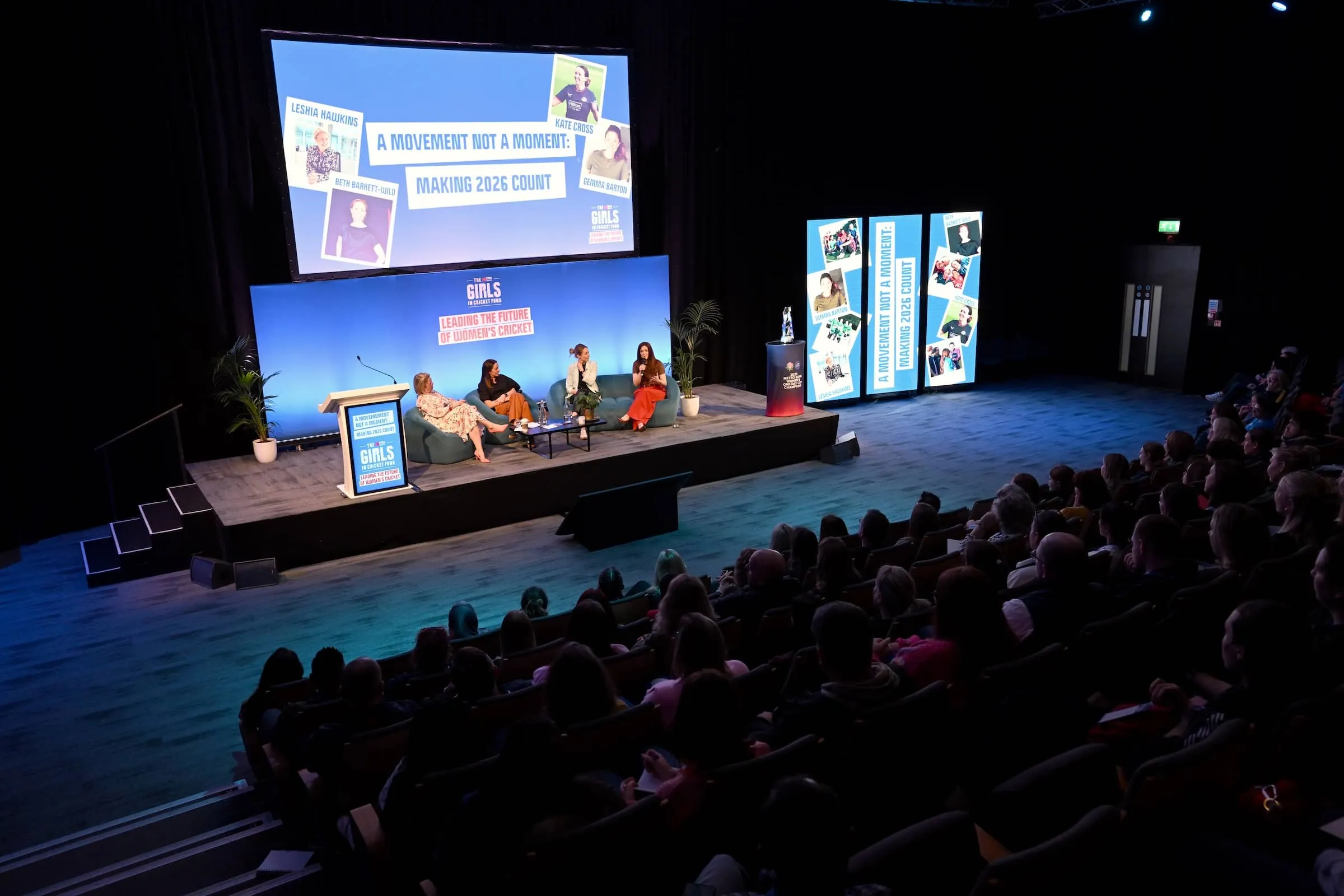
Around 250 figures from across the game gathered at the East Midlands Conference Centre at the University of Nottingham for the Metro Bank Girls in Cricket Fund Network Live 2026: Leading the Future of Women’s Cricket conference, staged by the England and Wales Cricket Board in collaboration with Metro Bank.
The purpose was not to admire the view from 30,000 feet. It was to get boots muddy at club level, to sharpen ideas, to share workable solutions and to make sure the coming World Cup does not drift by as a glittering event with too little legacy underneath it.
This was not a weekend built on slogans and lanyards alone. The emphasis was on upskilling, connecting and equipping the people who do the real work of growing the women’s and girls’ game: coaches, volunteers, officials, leaders and organisers who often operate without much fuss and even less glamour.
A conference with purpose, not polish alone
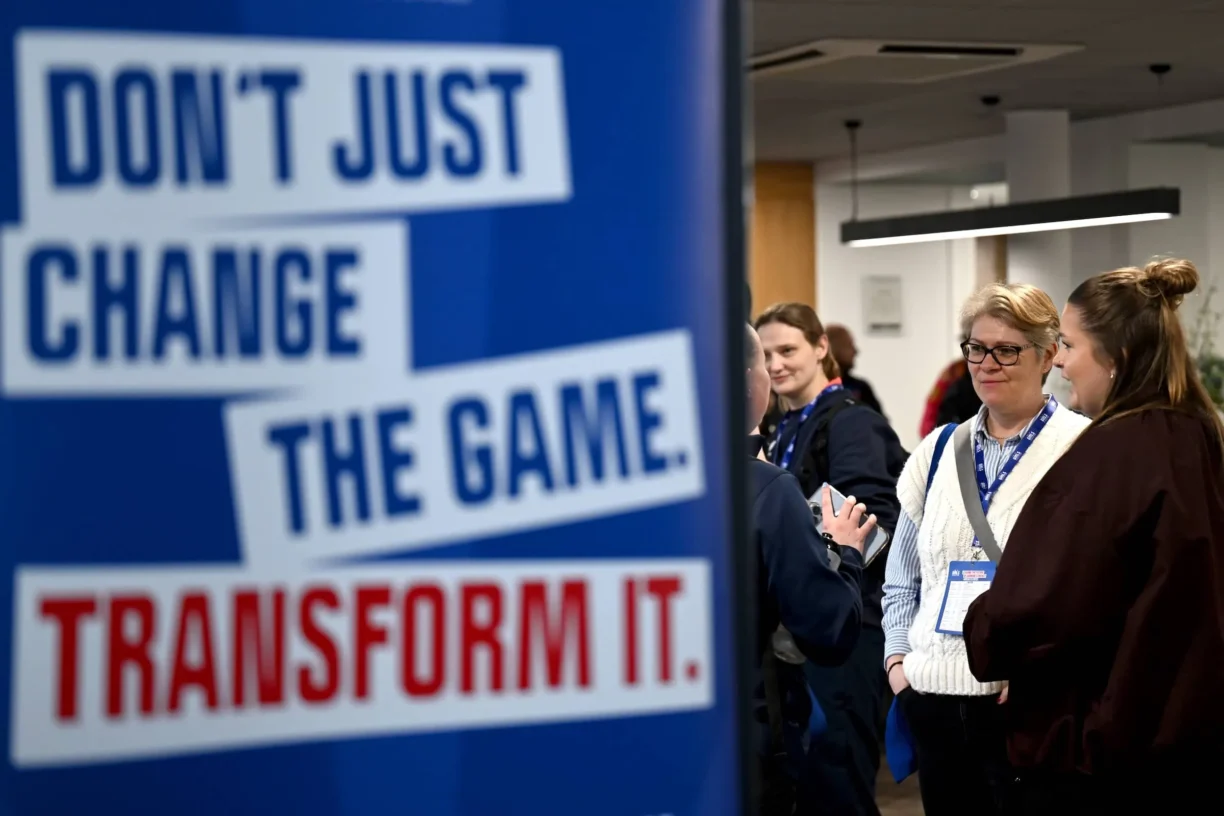
There is a particular danger with gatherings like this. They can become well-meaning echo chambers, all nodding heads and motivational wallpaper, full of applause but thin on practical use. By all accounts, this one avoided that trap.
Hosted by sports presenter Sam Hurst, the two-day event blended keynote speakers with practical workshops, panels and sessions spanning coaching, officiating, leadership and inclusion. That matters. Women’s cricket does not grow simply because the top of the pyramid shines brighter on television. It grows when clubs know how to welcome new players, when volunteers feel supported rather than depleted, and when girls entering the game can actually see a path to staying in it.
The speaker list gave the event some extra weight. Sara Davies MBE brought the entrepreneurial angle. Wing Commander Nicola Lofthouse offered the perspective of leadership under pressure. Kate Richardson-Walsh OLY OBE, a woman who knows something about building winning culture, added the authority of elite team sport. Together, they helped frame the central truth of the weekend: sport develops best when ambition is matched by structure.
Why 2026 matters far beyond one tournament
The home ICC Women’s T20 World Cup is clearly the centrepiece of the strategy, and rightly so. Major tournaments can do marvellous things for visibility. They pull a sport into living rooms, onto front pages and into casual conversation. But visibility, on its own, is like confetti in the rain. Lovely for a moment, then gone.
That is why the language around this event focused so heavily on opportunity, momentum and action. The ECB sees 2026 not merely as a showcase for elite players but as a lever to drive participation, leadership and volunteering throughout the recreational game. That is the grown-up version of growth: not just bigger crowds for a fortnight, but stronger clubs for years.
On Saturday evening, delegates looked ahead to how the World Cup could place women’s cricket at the centre of mainstream conversation. On Sunday, the tone shifted slightly with an International Women’s Day wellness programme aimed at supporting the people carrying so much of this progress on their shoulders. That, too, felt sensible. Grassroots sport does not run on applause. It runs on human beings, many of whom are forever one WhatsApp message away from burnout.
The people behind the progress
The most revealing line from the weekend may not have come from a headline speaker at all, but from the collective shape of the event itself. Women’s cricket is now being driven by a network, not a novelty. That is a significant difference.
Leshia Hawkins, ECB Managing Director, Recreational Game, said, “From start to finish it was a joyous, upbeat, positive, progressive conference.
“This year, we have the opportunity and power of a home World Cup to attract even more female players, leaders and volunteers into our sport, whilst celebrating the men and women involved in cricket who already inspire others to get involved.
“This conference has brought together the absolute best of the women’s and girls’ cricket community and put the game in an enviable position, primed and ready to seize our moment in 2026.”
That phrase, seize our moment, is doing a lot of heavy lifting, but fairly so. The women’s game has earned this window. The challenge now is to turn broad goodwill into deeper infrastructure.
Sara Davies MBE, Founder of Crafter’s Companion said, “You know the thing I love about cricket is it’s just such a community sport. It was brilliant to see such a varied lineup of speakers to really inspire people and equip them with the tools they need to go out and build success in our sport from the grassroots upwards.”
That gets to the heart of it. The women’s game may be getting bigger stages and brighter lights, but its real strength still lies in cricket’s local heartbeat: community clubs, school programmes, volunteer networks and role models who make sport feel reachable rather than remote.
Kate Richardson-Walsh added, “Women’s and girls’ sport need these networks, it needs that curiosity, it needs people who are prepared to give their time to take this forward. It’s been a really positive weekend.”
And there it is, neatly put. Networks. Curiosity. Time. Not glamorous words, perhaps, but they are the nuts and bolts of sustainable progress.
More than inspiration: the grassroots engine
For all the star names and strategic language, the real value of the event lies in what happens next in clubs, leagues and communities across England and Wales. If a coach returns with better ideas for player retention, if a volunteer feels newly energised rather than overlooked, if a young girl picks up a bat because somebody in her local club has built a more welcoming environment, then the conference will have done its job.
Danielle Lee, Director of Brand and Marketing at Metro Bank said, “What stood out wasn’t just the quality of the speakers or the practical coaching sessions, but the shared ambition in every room. The passion, commitment and sense of community was unmistakable, and at the heart of what our Metro Bank Girls in Cricket Fund is about.
By empowering coaches, volunteers and role models at club level, we’re helping create environments where girls feel encouraged, supported and inspired to pick up a bat and to stay in the game for years to come. The momentum around women’s and girls’ cricket is building and this year is set to be its biggest yet.”
That club-level focus is critical. Elite women’s sport has learned, sometimes the hard way, that progress can look impressive from a distance while remaining fragile underneath. Attendance spikes, broadcast noise and social media excitement are useful, but they are not the same as durable pathways. Women’s cricket needs both: the glamour of the global stage and the gritty dependability of local structures.
What this means for women’s cricket now
The significance of this weekend is not that it solved every challenge facing the sport. It didn’t. Participation, retention, facilities, funding, visibility and leadership pathways are all ongoing questions, and none of them disappear because a conference room is full of good intentions and clever people.
But what Nottingham showed is that women’s cricket is no longer waiting to be discovered. It is organising itself, backing its own people and preparing to make the most of a rare sporting moment when public attention, institutional support and major-event hosting all converge at once.
That matters because momentum in sport is a slippery thing. Ignore it and it vanishes. Build around it and you can change the landscape.
In 2026, the eyes of the cricketing world will turn to England and Wales for the ICC Women’s T20 World Cup. The smart play now is to make sure that when those eyes move on, the foundations underneath women’s cricket are stronger, wider and far harder to ignore. Nottingham suggested the people leading that charge understand the assignment perfectly.