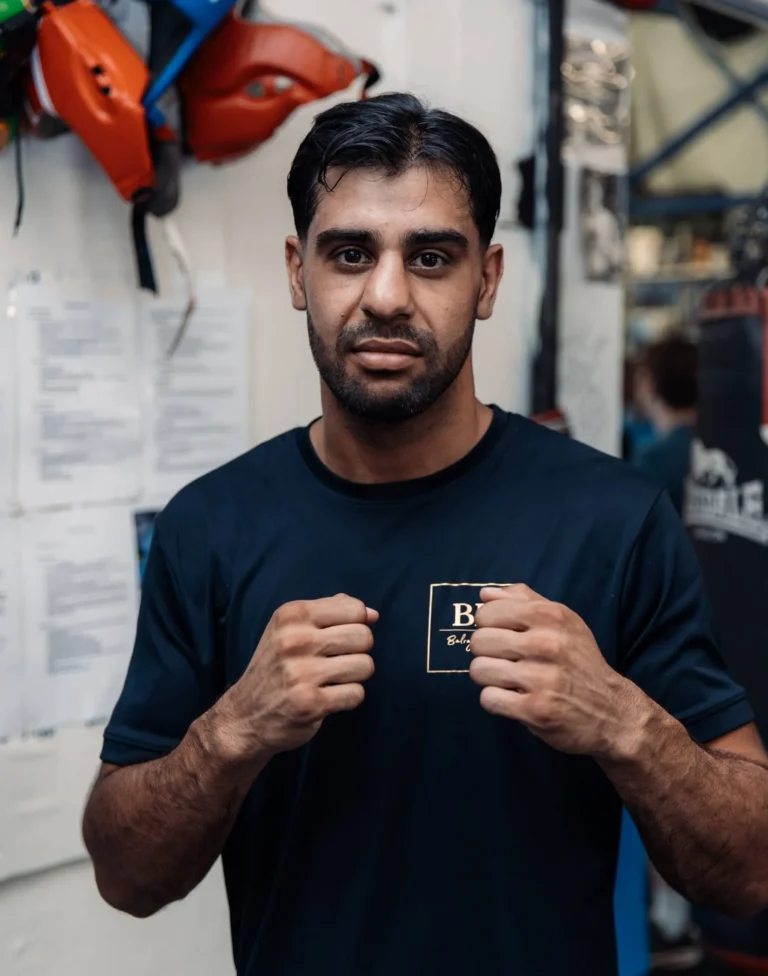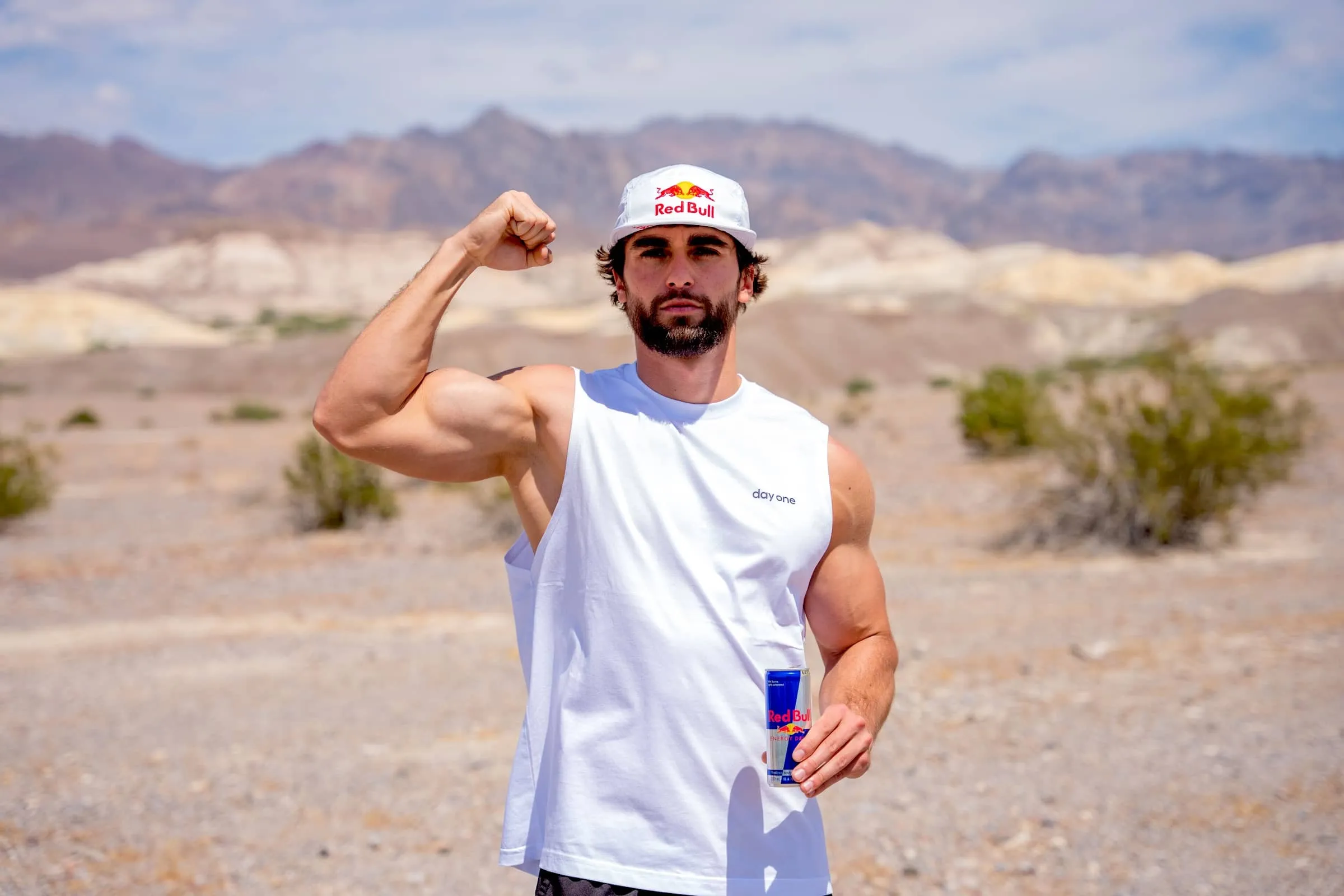
Arda Saatçi has begun a 600km ultrarun from Death Valley to Los Angeles, a Red Bull Cyborg Season challenge that sounds less like a sporting event and more like something invented by a committee of desert survivalists, sleep scientists, and people who believe comfort is a moral weakness.
The 28-year-old German Red Bull athlete started from Badwater Basin in Death Valley at 11:00 PST on 5 May, with the aim of reaching Santa Monica Pier around 11:00 PST on 9 May.
That gives him 96 hours to cover 372 miles, climb 6,000 metres, negotiate desert roads, highways, Route 66 sections and Los Angeles traffic, all while sleeping about as much as a nervous parent before school admissions day.
A 600km Run From America’s Lowest Point
The route begins at Badwater Basin, the lowest point in the United States at 85.5 metres below sea level. It is a place of salt flats, mirages, long straight roads and very little forgiveness.
From there, Arda Saatçi must push through one of the most demanding running environments on Earth before heading towards the sprawl, noise and concrete theatre of Los Angeles.
The course is expected to include air temperatures above 40°C, humidity below 10%, and road surfaces potentially reaching 80°C. That is hot enough to make the asphalt less of a road and more of a frying pan with lane markings.
At times, Saatçi may be forced onto the white-painted edge of the road, where the lighter surface absorbs less heat than the blacktop. In most races, the racing line is about speed. Here, it might be about keeping his shoes from being cooked into modern art.
Heat, Hydration And The Blow-Dryer Effect
The physical arithmetic is savage. Saatçi is attempting the equivalent of more than 14 marathons in four days, with daily energy demands around 15,000 calories and total expenditure estimated at 60,000 calories.
Fluid loss could reach up to 1.5 litres per hour. The dry desert heat creates what has been described as a “blow-dryer effect”, making dehydration harder to recognise until the body is already in trouble.
That is where this challenge becomes more than distance. It is thermoregulation, nutrition, sleep management, medical decision-making and stubbornness strapped into the same pair of running shoes.
He will be supported by a crew including medical care, a running coach and a live production team. Viewers can follow the Death Valley to Los Angeles attempt through a continuous livestream on Red Bull TV and YouTube, with tracking, vital stats, location, distance, speed and sleep data available throughout.
Sleep Deprivation Turns The Road Into An Opponent
If the heat is the visible enemy, sleep loss is the one that sneaks up wearing soft shoes.
Across nearly four days of acute sleep deprivation, Saatçi faces the risk of hallucinations, disorientation and impaired judgement. Every short nap has to be balanced against the pace required to reach Santa Monica Pier inside the 96-hour window.
This is the peculiar cruelty of ultra-endurance. Stop too long and the clock eats you alive. Keep moving too long and the mind starts adding scenery that is not on the route map.
Natural hazards add another layer. The isolated sections may bring potential encounters with rattlesnakes, scorpions, spiders and coyotes, while higher stretches move into mountain lion territory.
Route 66 Adds A Cultural Thread
The challenge also brushes against American road history, arriving during the build-up to Route 66’s 100th anniversary in 2026.
That gives the run a strange and compelling contrast. On one side, there is the romance of America’s most recognisable road network. On the other, there is a man trying to outrun heat, fatigue and dehydration across a landscape that could make a cactus ask for shade.
The route moves from exposed desert roads into highway sections and eventually the urban corridors of Los Angeles. By the final approach to Santa Monica Pier, the challenge shifts from isolation to navigation, traffic, safety and fatigue control.
Arda Saatçi’s Cyborg Season Continues
The 600km ultrarun is part of Saatçi’s ongoing Cyborg Season series, which already includes a 2025 run across Japan from north to south, covering the equivalent of 72 marathons in 43 days.
In 2024, he also ran from Berlin to New York, covering 3,000km in 74 days.
Saatçi, a hybrid athlete, entrepreneur and founder of DAY ONE® and co-founder of PERFORM ALL, has built a social following of 2.5 million people. His “You vs. You” mantra sits at the heart of his work, though this time “you” appears to include heatstroke, sleep deprivation, calories, asphalt and possibly a rattlesnake with poor manners.
Preparation Built Around Controlled Suffering
To prepare, Saatçi completed multiple long runs of 80–100km and a seven-day block covering 242km. That included a 32-hour period without sleep.
He also simulated the expected heat by running on a treadmill while wearing heat jackets, and trained at the Red Bull Athlete Performance Center before acclimatising to California.
His preparation has blended endurance work with strength training, giving him a more muscular build than the traditional long-distance silhouette. It is not the classic ultra-runner template, but then again, this is not exactly a Sunday 10K with a banana at the finish.
Saatçi: “This Is Precisely The Kind Of Challenge”
Arda Saatçi, ultramarathon runner and endurance athlete, said: “This is precisely the kind of challenge that will push me to new limits – and push me to try to break through them. The conditions are brutal, and I will try to grow beyond my limits there and master this challenge as best as I possibly can, hopefully crossing the finish line with a winner’s smile.
My goal is to become the face of sport, so that no matter where people are in the world, when they hear the word ‘sport,’ my name also comes to mind. I want to inspire as many people as possible, to be a role model, and to leave a lasting footprint.”
Coach Says The Battle Is Against Physics
Lukasz Wolejko-Wolejszo, Arda Saatçi’s running coach, said: “The Death Valley one isn’t a classic run, but a system under constant stress. Heat, sleep deprivation, and energy intake are constantly working against each other. If one factor fails, everything fails. The key is whether Arda can remain functional for 96 hours -thermally, metabolically, and mentally. We haven’t planned a perfect run; instead, we’ve worked on preventing a collapse. You don’t lose to the course; you lose to physics.
Conditions like heat exposure, limited cooling, energy intake under stress, and cumulative fatigue over several days can’t be fully simulated. You can only prepare the relevant systems and increase their stability. Therefore, you can’t recreate Death Valley, but you can learn not to fall apart in it.”
That last line is probably as tidy a summary of ultra-endurance as you will find. Nobody beats Death Valley. The best outcome is leaving with your faculties, your pulse, and preferably your shoes.
Training For Naps, Monotony And Movement
Gzim Ferizi, Arda Saatçi’s physiotherapist, said: “We integrated night runs and specifically trained phases with up to 24 hours without sleep. Typical sessions reflect exactly these demands: marathon, 30-minute nap, then straight into a half-marathon – these transitions are what matter later. The goal was to prepare the body to keep functioning steadily even under extreme fatigue.
We also deliberately prepared for the terrain: through many trail sessions, we got the body used to changing surfaces and technical sections. This is a crucial factor on this route. We also specifically combined individual stress factors. We simulated elevation gain in a controlled way on the treadmill; for example, with 8-hour walking sessions at a 5% incline. This way, we deliberately got Arda used to walking and monotony. Heat stimuli were also added: bike sessions in the sauna helped us get the body used to sustained exertion in the heat.
We specifically trained to deliver performance immediately after short naps. In the end, it’s not maximum performance that decides, but the ability to keep regenerating and moving forward.”
A Live Endurance Test For The Data Age
This is where Arda Saatçi’s Red Bull Cyborg Season run becomes more than a private act of athletic punishment.
The attempt is being broadcast as a live, data-driven endurance story, giving viewers access not only to distance and speed, but to sleep, vital signs, fatigue, hydration and the relentless toll of the route.
Traditional endurance feats often become legend after the fact. This one is being watched in real time, with the mechanics of suffering made visible.
The Road To Santa Monica
If Saatçi reaches Santa Monica Pier inside the 96-hour target, he will have completed one of the more punishing road ultraruns imaginable: 600km from Death Valley to Los Angeles, more than 14 marathons, 6,000 metres of climbing, and a four-day argument with heat, hunger, exhaustion and time.
It is sport stripped to its raw materials. One athlete, one road, one support crew, and a finish line waiting on the edge of the Pacific.
By the time Arda Saatçi reaches Santa Monica, the question will not simply be how far he has run. It will be how much of himself he has managed to carry all the way there.