Arccos Air promises sensor-free golf tracking, smarter data and less hassle. Here’s who it suits and whether it earns its price.
Golf technology has long had a slightly ridiculous streak to it, as though the average club golfer secretly dreams of becoming a data scientist in waterproof trousers. Arccos Air seems to have noticed that problem and, rather sensibly, tried to remove it. Instead of asking players to tag every club, babysit a phone and spend half the round wondering whether the system is still alive, it sits in the pocket and gets on with the job.
That is the clever part of the pitch. The more important part is what it says about where golf tech is heading. Arccos has made its name with connected performance tracking, but Arccos Air feels like an attempt to make that intelligence less obtrusive. This is AI-powered shot tracking without screw-in sensors, without constant phone dependence and, crucially, without the sort of digital housekeeping that can make a Saturday medal feel like office admin.
A golf tracker built for golfers who would rather just play

The central idea is straightforward enough: many golfers like the concept of performance data, but not the ceremony usually required to collect it. That has always been the catch. Plenty of systems promise enlightenment, then ask the golfer to behave like a junior technician.
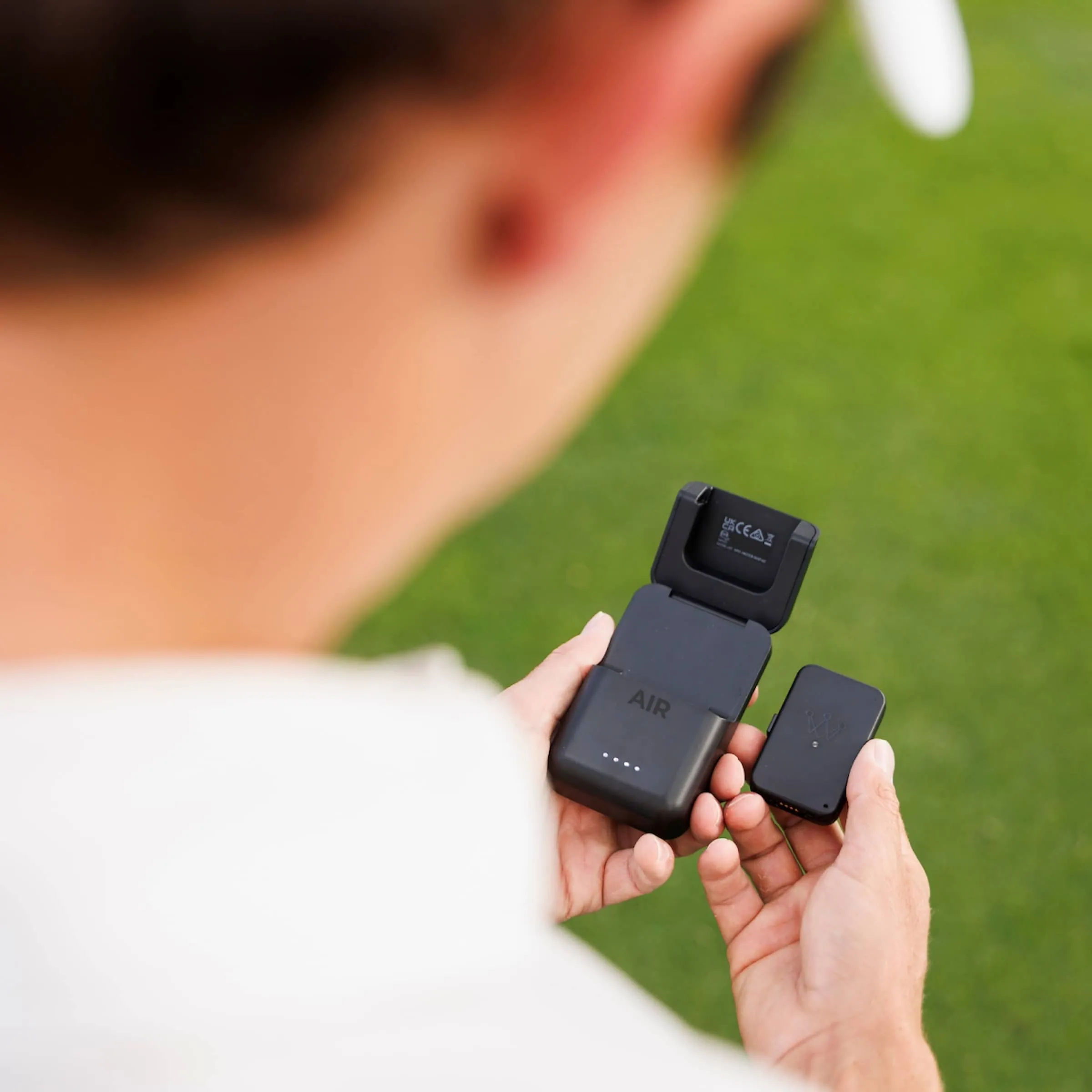
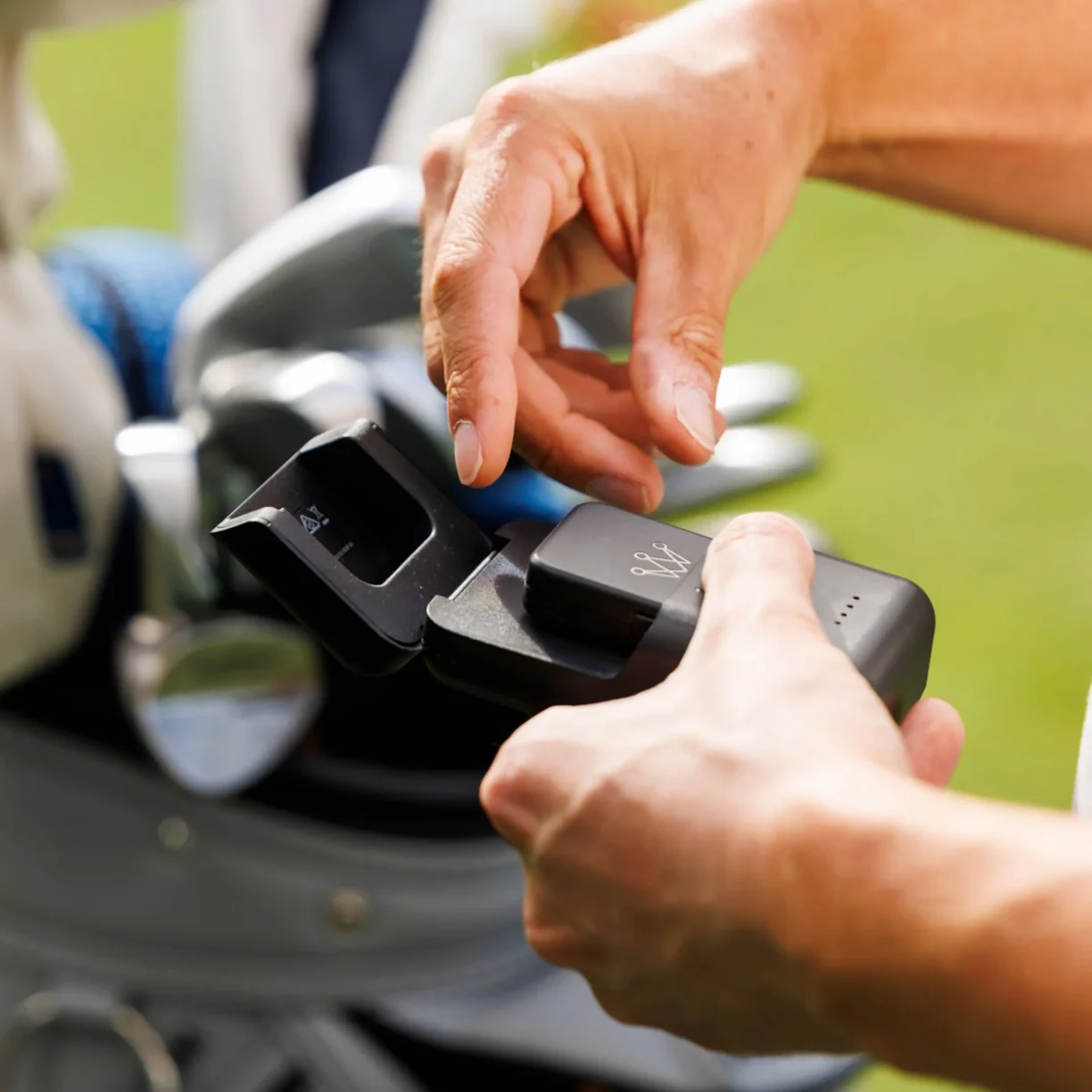
Arccos Air is a wearable device about the size of an AirPods case. It lives in the pocket, detects shots automatically and uses gyroscope, accelerometer and GPS technology to work out what happened and where. In plain English, it is trying to reduce the friction between playing golf and understanding why you played it that way.
That matters because most golfers are not crying out for more hardware in their lives. They want answers. Why did the score drift? Was it the driver, the wedges, the approach play, the putting, or the usual ugly cocktail of all four? They want the truth after the round, not a running negotiation with technology on the 7th fairway while their playing partners pretend not to notice.
What Arccos Air actually does

The technical credentials are not flimsy. Arccos says its AI models are trained on 4 trillion data points from 1.5 billion golf shots, with 25 million rounds tracked across its wider ecosystem. That is a substantial pool of golf performance data, and it gives the system at least a fighting chance of telling the difference between a real shot and a rehearsal waggle.
In practice, the test is simpler than the science. A system like this has three jobs.
- First, it has to know when you have hit a shot.
- Second, it has to know where you hit it from.
- Third, it has to turn that information into something genuinely useful.
That last point is where proper golf analytics separates itself from novelty. Through the Arccos app, golfers can review strokes gained, compare performance against benchmark players and identify which parts of the game are actually costing shots. It is less about abstract information and more about diagnostic clarity. If your approach play from 125 to 175 yards is leaking shots, Arccos Air is supposed to tell you. If your putting is quietly committing crimes against scorecards, it should expose that too.
Why that matters on the course
Golfers do not buy gyroscopes. They buy outcomes.
The first real benefit of Arccos Air is convenience. Automatic shot tracking removes much of the mental clutter that comes with manual input or phone-led systems. That matters more than the marketing language might suggest. Anything that interrupts rhythm on the course has a way of becoming irritating very quickly.
The second benefit is that strokes gained analysis remains one of the clearest ways to understand performance. Golfers are often dreadful witnesses to their own rounds. They remember the topped hybrid, the lip-out and the tee shot that nearly killed a squirrel, but they are much less reliable at spotting patterns. Arccos Air promises evidence over emotion. That alone gives it a serious edge.
The third is practice efficiency. Good data narrows the search. If the numbers show you are losing shots with short irons rather than off the tee, then a range session becomes targeted instead of ceremonial. There is a difference between practice and merely hitting balls until the light fades.
“Arccos Air removes the biggest barrier golfers have had to understanding their game,” said Sal Syed, CEO and Co-founder of Arccos Golf. “Now, you don’t have to manage sensors or think about technology. You just play. And when the round is over, you know exactly where you gained strokes, where you lost them, and what to work on next. That kind of clarity leads to smarter decisions and ultimately lower scores.”
That is a sharp summary of the appeal. Golfers are not short of numbers. They are short of low-hassle numbers that mean something.
“Arccos Air is incredibly accurate and easy to use,” said Matt Fitzpatrick, Major Champion and Arccos Tour Ambassador. “You just put it in your pocket and play, and the insights you get afterward show exactly how your game is performing. That same strategy has been transformational for me and helped me win a major.”
Tour endorsements usually arrive with the subtlety of a brass band, but this one at least aligns with the product logic. Fitzpatrick is known for detail, planning and strategic discipline. Arccos is built around exactly that kind of thinking. The device will not turn anyone into a major champion, which is just as well because golf has enough false prophets already. But better information can produce better decisions, and better decisions tend to reduce the number of avoidable messes.
The performance case: forgiveness, control and scoring insight
Arccos Air is not a club, so the language of forgiveness, spin and launch does not apply in the usual sense. But there is still a performance story here, and it is rooted in control.
Not control of the golf ball, but control of the round.
The golfer who uses Arccos Air well should gain a clearer picture of dispersion patterns off the tee, distance control into greens, short-game inefficiencies and putting losses. That is the value. It helps reveal whether your misses are random or recurring, whether your scoring is being damaged by poor course management or poor execution, and whether your practice habits are treating symptoms instead of causes.
Arccos also says its members lower their handicaps by 25 percent in their first year on average and hit approach shots 14.9 feet closer to the pin. Those are eye-catching claims, though sensible readers will note that improvement depends on frequency of play, quality of practice and whether the golfer actually acts on the information rather than merely admiring it in the app.
Who Arccos Air is best for
Arccos Air looks best suited to the committed improver: the golfer who genuinely wants to lower a handicap and is willing to use performance analytics to do it. For that player, sensor-free tracking and post-round analysis could be extremely attractive.
It should also appeal to the tech-curious golfer who likes information but hates clutter. That is probably the sweet spot. Many players enjoy the benefits of golf GPS, shot tracking and AI golf analysis right up until the moment the technology starts demanding rituals of its own. Arccos Air appears designed for exactly that audience.
There is also a natural fit for existing Arccos users who want more flexibility. Because it can work within the broader Arccos ecosystem, it offers a less cumbersome option on days when full club-sensor setup feels like overkill.
It is less compelling for the occasional golfer who plays a few times a year, shrugs at post-round analytics and is broadly content to remain a mystery to themselves. If you have no interest in why you shot 94, this may feel like applying space-age diagnostics to a perfectly ordinary sporting disappointment.
Strengths and weaknesses
The obvious strength is convenience. Sensor-free golf tracking is a meaningful advance for players who were put off by the old setup demands. There is also the maturity of the platform itself. Arccos is not wandering into this category with a nice logo and a hunch; it already has a vast dataset, a recognised strokes gained framework and a connected ecosystem that includes AI strategy tools and Green Maps across thousands of courses.
Another strength is that the product solves a real problem rather than inventing one. Arccos Air is not trying to make golfers care about technology. It is trying to make technology disappear.
The weaknesses are just as clear.
Accuracy is the big one. Pocket-based tracking sounds elegant, but serious golfers will want proof that it consistently recognises full shots, awkward recoveries, partial swings and the assorted oddities that make up a real round. That question will decide whether Arccos Air becomes a category leader or a clever concept with expensive manners.
Then there is the price. At $349.99, with a first-year Game Tracking subscription included and valued at $199.99, this is not a casual checkout add-on. Buyers will need to believe the long-term value of the golf analytics justifies both the upfront spend and the broader subscription model.
There is also the simple human objection that not every golfer wants more data. Some people want freedom from analysis, not a more elegant version of it. Arccos Air may be less intrusive than rival systems, but it is still fundamentally built for golfers who want to know more.
How it compares with rivals
This is where Arccos Air gets interesting.
Traditional Arccos Smart Sensors remain one of the strongest benchmarks for club-level shot tracking, but they require setup and physical tagging. Shot Scope has built a loyal following with GPS watches, tags and stat tracking. Garmin appeals to golfers already inside its broader wearable ecosystem. Launch monitors and laser rangefinders solve different parts of the information puzzle, while GPS devices offer convenience without necessarily delivering deep strokes gained analysis.
Arccos Air occupies a shrewd middle ground. It is not simply selling data. It is selling reduced friction. That matters because friction is often what kills adoption in golf tech. Plenty of golfers want insight; fewer want another system to maintain.
There is also strategic value in the wider Arccos universe. The Arccos Smart Laser Rangefinder, with its “Plays Like” yardages using slope and real-time weather, suggests a brand trying to connect the whole decision chain of a round: planning the shot, playing the shot and then understanding the shot afterwards. That is more coherent than a one-off gadget launch.
Verdict: is Arccos Air worth it?
For the right golfer, absolutely yes.
If you are serious about improvement, prefer evidence to guesswork and would like your golf technology to be useful without behaving like an attention-seeking toddler, Arccos Air has a strong case. It addresses a real pain point, offers meaningful post-round insight and appears to understand that convenience is not a side issue but the whole battle.
If, on the other hand, you trust instinct more than data and regard post-round analysis as reopening emotional wounds that should be allowed to heal naturally, then the value proposition is thinner.
Still, there is something refreshingly sensible about the product. Golf has no shortage of technology designed by people who seem far fonder of gadgets than golfers. Arccos Air, by contrast, appears to start from a more useful premise: let the player play, then explain what happened.
That alone makes it one of the more intriguing golf tech launches in recent memory. The promise is modern, the analytics are substantial and the sensor-free design is exactly the kind of refinement this category needed. The price is high enough that it must perform convincingly, and long-term accuracy will be the final judge.
But on early inspection, Arccos Air looks like the rare golf gadget that may improve the round without trying to become the main character in it. In a sport already overloaded with noise, that is a very smart place to begin.