Matt Hodges talks Behind Gym Doors, celebrity training, glass-spine honesty and the fitness myths worth binning.
There are fitness books that promise a better you by Tuesday, usually involving chicken, broccoli and the emotional range of a park bench. Then there is fitness trainer Matt Hodges, whose Behind Gym Doors peers into the stranger, funnier and occasionally alarming world of celebrity bodies, billionaire expectations and the sort of gym behaviour that makes a man reach for the sled pushes.
Hodges is not short of material. After 15 years as a personal trainer, he has built studios, nearly lost studios, trained high-end clients, worked around television and film circles, and now runs The MPH Method — The Whole-Body Practice — from an exclusive studio in central London.
“I’ve been a personal trainer now for 15 awesome years. It’s been a rollercoaster of ups and downs. I’ve opened numerous studios in that space of time, and I’ve also been close to going under many times.
I now own my own studio in central London that is completely exclusive and have done since the start of Covid (worst timing in the world!).
My business – The MPH Method (The Whole-Body Practice) – is a one-stop shop for everything you need from personal training to nutrition, hormone testing to metabolic testing, meal servicing and private cheffing, osteo, physio and massage.
I pitch to the higher end of the market and give the regular joe’s the same service that I do when I built my business within the tv and film circuit.”
It is a neat summary of the Hodges proposition: premium service, unvarnished language, and a healthy suspicion of fitness industry pantomime.
Behind Gym Doors And The Odd Theatre Of Elite Fitness
The fitness world loves a transformation story. Preferably one involving harsh lighting, a tragic “before” photo and a caption about discipline. Hodges, mercifully, is more interested in the bit nobody posts: the vanity, the pressure, the absurd habits, the backstage compromises and the sheer weirdness of training people whose lives are not exactly short on drama.
“For years clients and friends have been telling me I should write my experiences down with regard to training the type of clientele I have – the celebrities, the millionaires and billionaires, and the professional sportsmen and women.
I’ve been party to some incredibly interesting, eye-opening and sometimes awful situations, but I’d always palmed it off because I didn’t really think my life (or experiences) with these kinds of clients were out of the ordinary or anything special.
It turns out, since writing the book, that many seem to think I have this secret life, which always makes me laugh. I always thought of myself as a secret agent, but alas, I have to make do with clients eating their own placentas or sticking coffee enemas up their rear end.
Anyway, it wasn’t until Adam Kay’s ‘This Is Going To Hurt’ came out, that I really thought I should do something with all these stories and situations I’d been in.
I wrote a few chapters and managed to get it in front of Adam’s editor, who then referred me onto Pan McMillan who saw value in the book.
That was enough of a motivation to get it written, and then suddenly we were all plunged into 2 years of not being able to leave the house, which served as the perfect time to get my head down and write it.”
That, in one glorious swoop, is the difference between the fitness industry’s public face and its private machinery. Outside: filters, meal prep boxes, beach abs and motivational captions. Inside: chaos with a foam roller.
The Trainer With A Glass Spine And A Low Tolerance For Circus Tricks
For all the colour, Hodges is not selling the fantasy that every body can be bullied into greatness with enough deadlifts and motivational shouting. His own body has had a word with him, repeatedly.
“I’m currently very much into barbell Hack Squats or differing loads on the quads or hamstrings without loading the spine.
The reason is mainly that for the past 12 years, I’ve suffered terribly with herniated discs in my lower back and neck, so things like Romanian deadlifting or barbell squatting have always been an issue.
I’m 6 foot two and my levers would give Stretch Armstrong a run for his money so lifting has never come naturally. Now given I have a glass spine I’d say for me my least favourite exercise is probably the barbell deadlift. Ironically pre-injury it used to be my strongest lift.
In terms of god-awful exercises for clients and the average person, I’d have to say anything standing on a balance ball whilst doing some single leg bicep curl to shoulder press squat on your head ab hell crunch.
You get the idea.”
He does. So should everyone else.
The best personal trainers tend to become less impressed by novelty over time. The bad ones discover balance balls and start behaving like Cirque du Soleil has opened a branch in Clapham. Hodges’ view is refreshingly plain: training should make you stronger, healthier and more functional, not turn you into a frightened flamingo holding dumbbells.
Do Celebrities Train Differently?
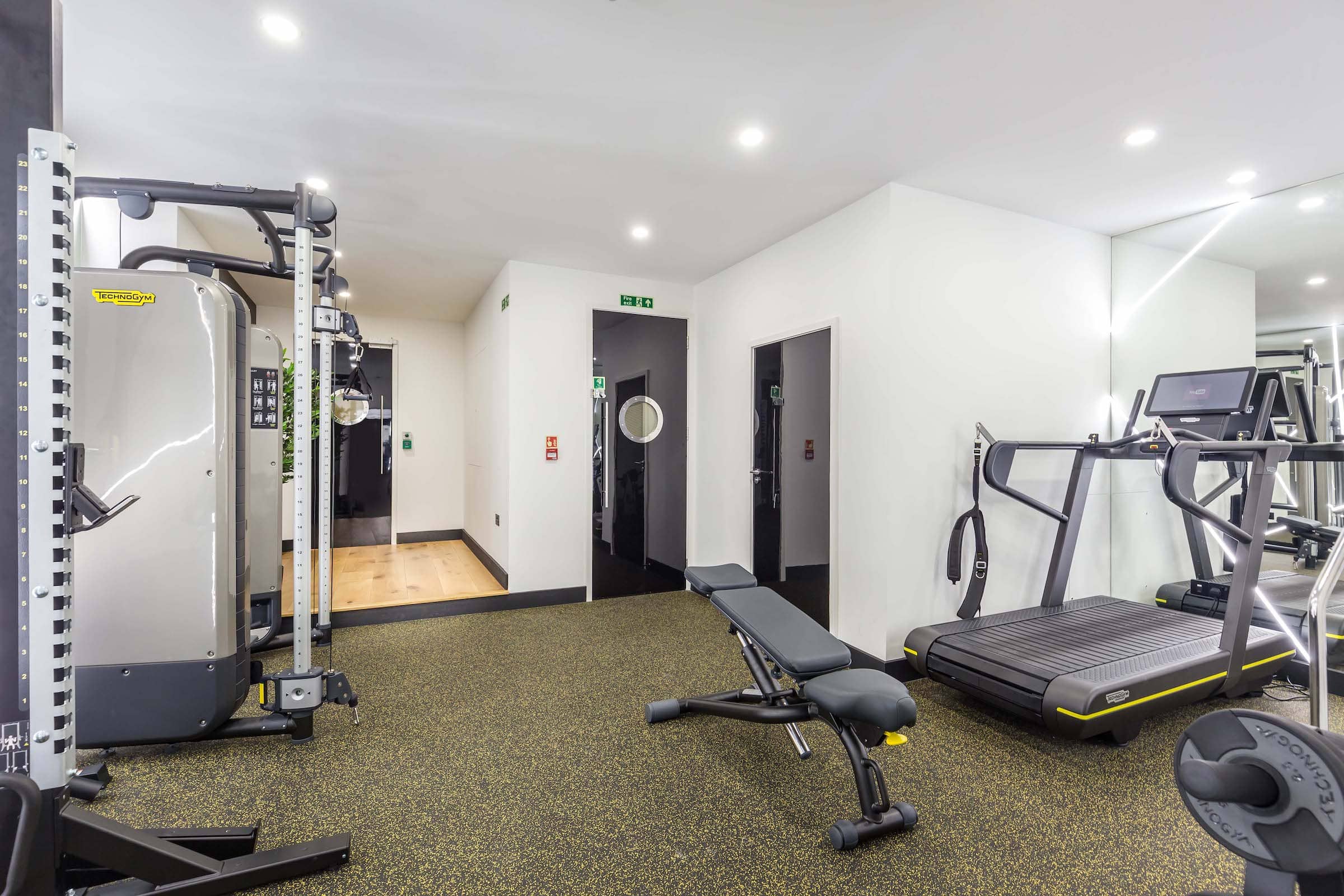
The public tends to assume celebrity training happens in a different universe, somewhere between a Marvel set and a Himalayan wellness retreat. Hodges is clear that bodies remain bodies, even when the person attached to them has a trailer.
“In terms of physicality absolutely not. In terms of their attitude – yes. Back in the day many management agents or production companies used to pay for their actors or singers to get in shape.
This meant that there was little accountability for the ‘celeb’ to turn up on time or turn up at all. It often led to a lot of missed sessions and poor results. That said, there were/are some who take it very seriously and get incredible results.
The whole thought process behind the formulation of The MPH Method was to give Joe public the same service that these high-enders get. The only difference between the two is the motivation to stick to a plan.
I recently had some of the stunt team for the new Mission Impossible film come through my gym, and they left because the production company had actually built the crew a gym on set. This is happening more than it used to.”
That is useful context for anyone seduced by the celebrity training machine. The exercises are not magic. The access, accountability and environment often are. Give an actor a deadline, a role, a production company and a gym on set, and suddenly discipline looks rather better funded.
Burpees, Bear Crawls And Dante’s Inferno
Every trainer has a punishment drawer. They may dress it up as conditioning, metabolic work or resilience. It is still a drawer, and inside it live burpees.
When asked which exercises secretly raise a smile when a difficult client appears, Hodges does not reach for euphemism.
“Hands down it’s got to be burpees, bear crawls, assault bike or sled pushes. Ones that no matter how fit you are, will always end up with the client thinking I’m Satan and wondering why they are paying me to put them through Dante’s inferno.”
There is honesty in that, and perhaps a small public service announcement. Be nice to your trainer. They know where the assault bike is kept.
From Fine Art To Fitness Modelling
Hodges’ route into fitness was not the standard laminated PT origin story. Before the gym became the office, there was art college, design and a physique that, by his own admission, was some distance from Greek statuary.
“So, originally, I studied fine art at Chelsea Art College and then went on to study Industrial Design at Loughborough University, which is famed for its engineering and, more importantly, its sport.
When I arrived at Luff, I was a 10.5 stone skinny kid who looked like ‘Where’s Wally’ against the burly rugby players and super broad-shouldered swimmers.
It didn’t take me long to pick up the workout vibe and I trained relentlessly for years. After leaving Uni I spent some time at a design consultancy and got picked up by a photographer who did a shoot that catapulted me away from design and into what they now call ‘fitness modelling’.
These were the days of the ‘attainable physique’ and not what it is now, so I did pretty well. There weren’t many of us back then and we cornered the market.
Nowadays, everyone’s a model. Mad really. Take away Instagram and boom, they’re back working a 9 to 5 at Morrisons. Jokes aside, the likes of Men’s Health tend not to have any ‘normals’ on their covers and it somewhat seems like most of the physiques now would bleed synthetic oil.”
It is a sharp little jab at modern body culture, and not an unfair one. The attainable physique has largely been replaced by the algorithmic physique: part genetics, part lighting, part pharmaceutical mystery novel.
How Matt Hodges Trains Now
For all the elite training background, Hodges’ own routine is strikingly sensible. No monkish nonsense. No pretending that every morning begins with a sunrise mobility flow and a tear of gratitude.
“I only do two resistance sessions a week now and they can be anywhere from 60 to 90 minutes. It’s mostly just to maintain what I’ve built. I’ve somewhat lost the love of traditional gym work, and it’s quite hard to motivate yourself when you work alone.
My studio is completely exclusive so I don’t have any other trainers working in there with me which can be hard for my own training AND keeping up with the latest research.
I also do two cardio sessions a week – normally HIIT for around 30 minutes. I also make sure I hit 10,000 steps a day.”
That last point matters. Not because 10,000 steps is a sacred number chiselled into a tablet by the gods of glute activation, but because consistency beats theatrical suffering. Hodges’ current routine sounds like something an adult with a job and a spine might actually follow.
The Diet Advice People Least Want To Hear

The fitness industry has long survived on making food feel more complicated than tax law. Hodges takes a more practical line. He knows his Basal Metabolic Rate, keeps an eye on macronutrients and does not appear to believe pizza is a moral failing.
“I am aware of my Basal Metabolic Rate (BMR), so I stick fairly close to it. I manage my macronutrient split of 40% protein, 30% carbs and fats.
It’s somewhat relaxed – If I want a few beers or a pizza I’ll have them. Gone are the days of boiling chicken and broccoli and worrying about what might be in a salad.”
That will be unsettling news to anyone who has built a personality around Tupperware.
Nor is he spending his evenings conducting military-grade meal preparation operations in the kitchen.
“No, I don’t do any of the above. I literally just freestyle and factor in what I need. This takes some practice, so I tend to only go to the same places to eat when I’m at work.
I literally cannot be arsed to have a ‘prep day’ or cook meals on a late evening when I get back from clients. And these are the things I try and teach people.
You don’t need to be militant with your diet to get results unless you’re preparing to get on stage or prep for a shoot. Those physiques you see gracing the pages of Muscle & Fitness or the #bigbootygains you see on Instagram are 0.1% of what people should be focusing on.”
There is the useful bit. Not glamorous, perhaps, but useful. The average person does not need a contest-prep diet. They need structure, repeatability and a way of eating that survives Wednesday.
The Questions That Make Trainers Weep Softly
Anyone who has worked in health and fitness will recognise the genre: the magic exercise, the fat-burning food, the shortcut disguised as curiosity.
“The most common questions I’m asked make me laugh and want to cry in equal measure. It’s always a variation on: ‘What one exercise can you do to lose the most fat?’, or ‘What superfood is best for your waistline?’, or ‘What top 5 tips would you give to someone who wants to lose a stone in under 60 seconds whilst being able to live a happy life?’.
It’s always the same stuff, even with clients. How can I get the best results in the quickest amount of time and with the least effort vibe. What they should be asking me for is ‘What is the best way to manage people’s calories?’, or ‘What are the best ways to combat poor posture/lower back pain?’ Etc etc”
This is where fitness trainer Matt Hodges is at his most valuable. Not in promising a secret. In refusing to invent one.
Advice For New Trainers — And New Starters
Hodges is equally blunt about the personal training profession itself. To outsiders, it can look like a life of tracksuits, flexible hours and inspirational captions. The reality is less glossy.
“If you’re someone who is looking to become a trainer, then you need to evaluate the following:
Are you becoming a trainer because you’ve had great results yourself? If so, can you give other people the same results? The majority of people who think like this fail in the first year. You are you; your results are your own, no one else is like you. People are individuals. Personal training is personal. You will find most people don’t have the same energy or motivation that you do, AND most people are suffering from some form of niggle or injury.
Are you becoming a trainer because you think it’s easy money and will give you a better life balance? The hours are unsociable and lousy. You are on other people’s time frames. You will have a lot of deadtime. It also takes years to bring in a sustainable income if you’re working for yourself. Again, most people fail in their first year when they realise the reality.
Do you genuinely like helping people? If you do, then you’re halfway to becoming a PT.
In terms of your own physical health, always, always, always go and find someone professional who can help you build a solid foundational program. I wish I did this. I probably wouldn’t be so injured today If I had. Don’t be glass spine Matt.”
“Don’t be glass spine Matt” may not yet be embroidered on gym towels, but it should be.
Music, Mood And Making People Comfortable
One of the more revealing details about Hodges is not the celebrity clientele or the book deal. It is the small act of letting clients choose the music. A good trainer knows the session is not merely physical. It is psychological, social and occasionally very loud.
“I have to say I’m a bit of a Luddite when it comes to Spotify. I pretty much just use my own music downloaded onto my phone for personal use. That said I do have Spotify in the gym, and you’ll often hear me putting on some liquid drum n bass.
I generally let all clients choose their own music which is a nice little touch that makes them feel more at ease. For example – I currently have a young lad with acute Asperger’s who only comes to life when we have the most death metal, eat your head, eardrum busting, volume to the max music on. I feel like I’ve been assaulted after those sessions!”
There speaks a man who understands service. Also tinnitus.
Why Behind Gym Doors Works As More Than A Fitness Book
The best fitness writing is rarely about fitness alone. It is about insecurity, ambition, vanity, discipline, self-delusion and the strange bargaining we do with our bodies. Behind Gym Doors appears to sit in that territory: part industry memoir, part confessional, part comedy of manners with kettlebells.
“In an ideal world, I’d like to think Behind Gym Doors will reach the dizzy heights of Fifty Shades or This Is Going To Hurt. But I think I may have to re-evaluate that expectation. I do, however, want people to read it. It’s far more than a typical fitness book.
It’s funny, it’s sad, it’s eye-opening and it will get a lot of people talking. I have been as honest as anyone can be (which is rare in the fitness industry), and I really hope that it takes off. I’ve had some incredible feedback for it already, so I only hope it carries on.
This year will be an important year, as I do intend to try and pitch the idea for TV and Film AND get the second book written! Watch this space.”
The danger with fitness is that it often takes itself terribly seriously while asking grown adults to crawl across rubber flooring like a wounded badger. Hodges seems to understand the joke without losing sight of the work.
Behind Gym Doors is currently available online at Amazon, while signed copies with a free gift are available via Matt’s author site at www.matthodgesauthor.com.
And if you take only one lesson from fitness trainer Matt Hodges, make it this: build the foundations, ignore the circus tricks, and never be rude to the man who controls the burpees.