Psychologists explain how watching tearjerker movies can have a cathartic effect when you’re feeling down.
Life isn’t exactly short on reasons to knock you sideways.
Global crises, grim headlines, money worries, family stress, social media noise – it all adds up. So if you’ve noticed you’re a bit more tearful these days, you’re not losing the plot. You’re human.
And it’s not just the big stuff. Sometimes it hits you when you’re least expecting it – one minute you’re “just watching a film”, the next you’re clutching a tissue and ugly-crying on the sofa. Maybe it’s Coco and that walk into the Land of the Dead, maybe it’s Marley & Me and that ridiculous Labrador that gets you every time, or some random series you only put on for background noise.
Whether you go looking for sad films on purpose or stumble into them by accident, there’s no getting away from it: a proper, shoulder-shaking sob can leave you feeling strangely lighter afterwards, especially when life feels heavy.
So what’s going on there – and why does watching a tearjerker feel so cathartic?
It can help validate our feelings

“It’s not uncommon for people to watch sad films when they are already upset, gloomy or experiencing hard times,” says Dr Gregory Warwick, counselling psychologist at Quest Psychology Services.
“The reason we are likely drawn to this media when we feel this way is because the film shown is in agreement with our internal state.
“Viewing the upset and the struggle validates our own internal thoughts and feelings.”
MS Mamta Saha, psychologist and creator of Affirmations for Inner Peace, says people might not even recognise what they’re feeling under the surface: “Many people don’t realise the depth of their emotion. They don’t have an outlet or they don’t feel comfortable being that vulnerable.
“Because it takes a lot of vulnerability and courage to say, ‘I’m feeling awkward or sad. I just want to cry’.” Watching a sad film can provide an outlet for those emotions.
It helps us process emotions
Warwick says there is evidence that upsetting films allow us to process our own feelings and problems.
“The work of Ahn et al (2012) shows us that the more realistic and involved we feel in the film, the more we’re able to enjoy it, process what we need to, and feel better afterwards.
“This could be particularly relevant now when we are experiencing a time of global pandemic and extremely emotive social rights campaigning.
We might feel as though we have little control over the situation, or not know how to move forward.
Which is why, right now, we may be watching tearjerkers to feel connected to the world and our emotional state.”
It can serve an evolutionary purpose
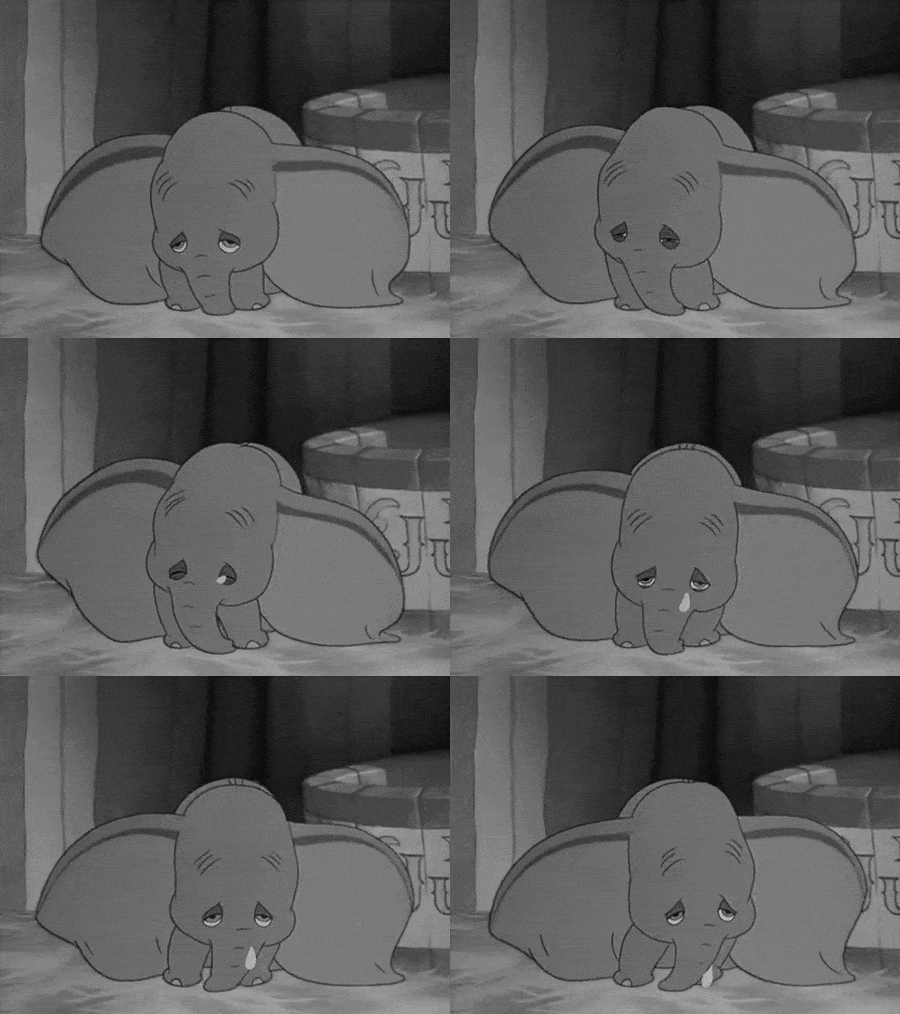
“It has been shown that crying activates our parasympathetic nervous system and as a result, soothes us through the release of oxytocin and endorphins,” says Warwick.
Also known as the ‘love hormone’, oxytocin promotes feelings of wellbeing – that’s why you can get a rush of relief when the sobbing starts.
“In addition to this, it is a way that enables us to rally those around us to provide support,” he says, which is particularly important at the moment.
“A lot of people have been dying with Covid-19, but at the same time we’re expected to get on with life and just carry on as normal,” says Saha, explaining how it’s a way of “seeking solace, by watching a tearjerking film.”
She adds: “So many of us have been conditioned to not cry, but we should never stop ourselves from crying.”
In the mood for a good blub? This eight-minute animated film should do the trick…