Everything you need to know about the therapeutic technique designed to bring your body back into alignment
Earthing is the wellness trend asking us to do something both radical and embarrassingly simple: take our shoes off and make contact with the ground. No app. No subscription. No smug little wearable buzzing on your wrist like a wasp in a blazer.
Also known as grounding, earthing is based on the idea that direct contact with the earth — grass, soil, sand or natural water — may help the body reconnect with the planet’s natural energy.
For some, that sounds wonderfully calming. For others, it sounds like something overheard in a yurt after too much herbal tea. Either way, it has tapped into something very real: the modern urge to feel less wired, less boxed-in and a little more human.
What Is Earthing?
Earthing is a wellness practice that involves deliberately making direct skin contact with the natural world.
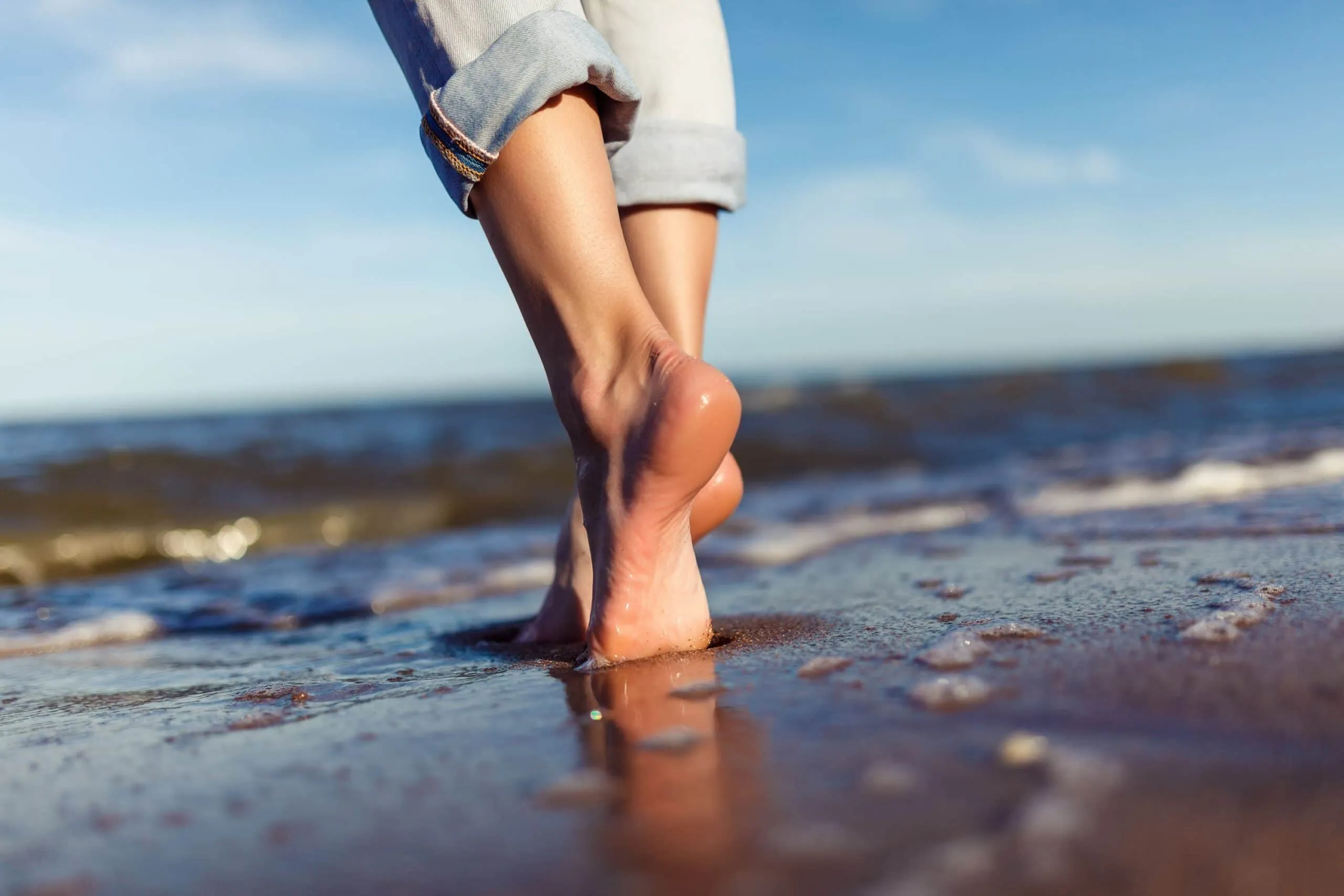
That might mean walking barefoot across a lawn, standing on wet sand, lying on the grass, paddling in the sea or swimming in open water. The principle is simple: remove the barrier between body and earth.
Supporters believe modern life can disrupt the body’s natural balance through technology, pollution, stress and indoor living. Earthing, they suggest, allows the body to reconnect with the earth’s natural electrical charge and return to a calmer, more balanced state.
It is, at the very least, a persuasive argument for stepping away from the kitchen tiles, the inbox and the doom-scroll.
Why Has Earthing Become So Popular?
Part of earthing’s appeal is that it feels like an antidote to the way many of us now live.
We spend hours under artificial light, staring at screens, sitting indoors and moving from carpet to pavement to car seat without ever touching the natural ground. We are, in effect, beautifully dressed and spiritually shrink-wrapped.
Earthing cuts through that. It asks you to go outside, slow down and pay attention to where you are.
Whether or not you buy into the full electrical theory, there is a broader truth here: nature has a steadying effect. Green space, fresh air, daylight and quiet movement can all help create a sense of calm.
Sometimes wellbeing does not need to arrive wearing a lab coat. Sometimes it arrives as wet grass between your toes.
What Are The Claimed Benefits Of Earthing?
Advocates of earthing believe it may support the body in several ways, including helping with relaxation, mood, sleep quality and inflammation.
Some small studies have explored whether grounding could influence the body’s response to chronic inflammation, while other research has looked at possible links with blood viscosity and cardiovascular health.
But this is where the brakes need to be gently applied.
The science around earthing is still limited, and many of the claims need more robust research. It should not be treated as a cure for anxiety, depression, insomnia, heart disease, osteoporosis or any long-term health condition.
The more sensible way to view earthing is as a low-risk outdoor wellbeing practice — one that may help you feel calmer, more connected and more present, but should sit alongside proper medical advice when needed.
How To Try Earthing Safely
The good news is that earthing is free, easy and does not require you to become the sort of person who says “frequency” too often at dinner parties.
You simply need safe, clean access to natural ground or water.
Walk Barefoot Outdoors
The easiest way to try earthing is to walk barefoot on grass, sand or soil.
A garden, beach or local park can all work well. Just keep your wits about you. Look out for glass, sharp stones, thorns and anything left behind by a dog with poor manners.
You could also try gentle movement outdoors, such as yoga on the grass or slow Tai Chi-style stretches, allowing your feet and hands to connect with the ground.
Lie On The Ground
Lying on grass is another simple way to practise grounding.
It increases skin-to-earth contact and, perhaps more importantly, forces you to stop charging through the day like a shopping trolley with a wonky wheel.
Choose a clean, quiet space where you feel comfortable. A few minutes may be enough to feel more settled.
In colder weather, some people turn to indoor grounding mats, although these should be seen as optional tools rather than guaranteed health solutions.
Paddle Or Swim In Natural Water
Some earthing enthusiasts believe water is a powerful conductor of the earth’s natural energy.
Paddling in the sea, standing in a lake or taking a careful wild swim may all be used as grounding practices.
Safety matters here. Cold water can be risky, especially in deep, fast-moving or isolated places. Never swim alone, know the conditions and avoid turning a wellness habit into a rescue operation.
A Calm Habit In A Noisy World
Earthing is not magic. It is not medicine. It is not a shortcut to perfect health.
But it does offer something many people are missing: contact with the natural world, a pause in the day and a reminder that the body was not built solely for chairs, screens and synthetic flooring.
At its best, earthing is less about chasing miracle benefits and more about making space for stillness.
There is something quietly powerful about standing barefoot on the grass and realising the world does not need you to answer every notification immediately.
Sometimes the most useful wellness advice is also the oldest: go outside, take your shoes off, and come back to earth.