It’s one of the most common types of cancer and on the rise in the UK, but are you as clued up as you think?
These skin cancer facts are not intended to ruin anyone’s enjoyment of a warm weekend. Sunshine is one of life’s more reliable mood-lifters, particularly in Britain, where it occasionally appears to be working on a zero-hours contract. But with UK melanoma diagnoses at record levels, protecting your skin deserves more thought than grabbing a half-empty bottle of sunscreen from the back of a bathroom cupboard.
Most of us understand the basic equation: too much ultraviolet radiation can damage the skin and increase the risk of cancer. Dig a little deeper, though, and there are several important details that remain surprisingly easy to miss.
Here are five facts worth bringing into the daylight.
1. Melanoma can develop in your eyes
Sunglasses are useful for more than preventing a day of squinting like someone examining a disputed scorecard.
Melanoma usually develops in the skin, but it can also begin in the eye. Eye melanoma most commonly affects the eyeball, although it can also occur in the conjunctiva or eyelid. Around 850 cases of eye cancer are diagnosed in the UK each year.
“Melanoma of the eye (intra-ocular melanoma) is the commonest type of eye cancer, that affects middle-aged men more than women,” says leading aesthetic and reconstructive oculoplastic surgeon Dr Sabrina Shah-Desai.
“It’s more common in fair-skinned individuals with blue or green eyes, and individuals with abnormal brown spots affecting the pigmented layer of the eye.
Many people with eye melanoma don’t have symptoms unless the cancer grows and causes blurry vision or sudden loss of vision, or the optician picks up a changing dark spot on the pigmented layer of the eyeball during a routine eye exam.
Treatment of a small growth can include radiation therapy, while a larger tumour may require surgery to remove the eye.”
Eye melanoma does not always produce obvious symptoms. Possible warning signs include blurred vision, flashes of light, an enlarging dark patch, shadows across the field of vision or partial sight loss. These symptoms can have less serious causes, but they should still be checked promptly.
The precise causes of eye melanoma are not fully understood. Fair skin, lighter eye colour, unusual moles and increasing age are among the recognised risk factors, while UV exposure may also play a role.
Regular eye examinations matter because an optician may detect a suspicious change before it begins causing noticeable trouble.
2. Childhood sunburn can affect future cancer risk
A child’s sunburn may disappear after a few uncomfortable days. The damage beneath it is rather less obliging.
UV damage accumulates over time, beginning with the first sunburn. Research has linked repeated burning and severe childhood sunburn with an increased risk of developing skin cancer later in life. Five or more sunburns can more than double the risk of melanoma.
“Suffering with one or more blistering sunburns in childhood or adolescence more than doubles a person’s chances of developing melanoma, which can potentially be fatal,” says Dr Anjali Mahto, consultant dermatologist and British Skin Foundation spokesperson. “It’s important for individuals of all ages to practice safe and healthy sun behaviours to limit the risk of skin cancer.”
Children’s skin is more sensitive than adult skin, making suitable clothing, shade and correctly applied sunscreen particularly important. The NHS recommends keeping babies and children protected from strong sunlight and using sunscreen with an SPF of at least 30 and a minimum four-star UVA rating.
Nobody needs to barricade children indoors until October. A hat, a shaded area and an adult who remembers to reapply the sunscreen will usually suffice.
3. UK melanoma cases have reached record levels
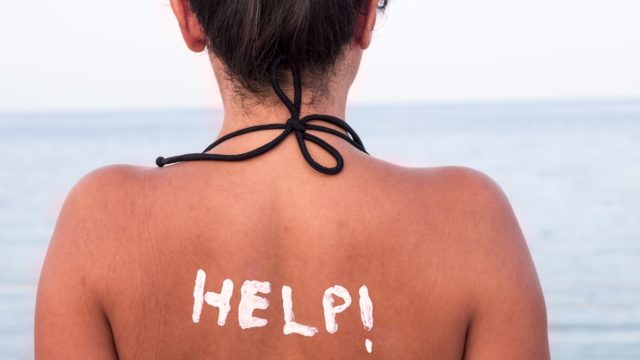
Britain may not be famous for dependable sunshine, but British skin is perfectly capable of burning through cloud, during a garden barbecue or while sitting outside a pub insisting that it “doesn’t feel that hot”.
More than 20,000 people in the UK were diagnosed with melanoma in 2022, the highest annual total recorded. Cancer Research UK projects that diagnoses could rise to approximately 26,500 a year by 2040. Nearly nine in ten UK melanoma cases are linked to excessive UV radiation from sunlight or sunbeds.
Melanoma can affect younger adults, but the risk increases with age. People with pale skin, red or blonde hair, blue or green eyes, numerous moles or a history of repeated sunburn are at greater risk. People with brown or black skin have a lower overall risk, but they can still develop the disease.
The national tendency to treat the first warm afternoon of the year as an unscheduled Mediterranean holiday probably does not help.
4. Skin cancer is not always an obvious mole
Many people associate skin cancer with a mole that changes colour or shape. That is an important warning sign, but it is not the only one.
Melanoma may appear as a new mark or as a change in an existing mole. Warning signs include uneven shape, irregular edges, several colours, increasing size, itching, bleeding, swelling or crusting. A dark area beneath a nail that has not been caused by an injury should also be examined.
Non-melanoma skin cancers, including basal cell carcinoma and squamous cell carcinoma, may look quite different. They can appear as growing lumps, rough or scaly patches, shiny areas, scabs or sores that fail to heal.
Non-melanoma skin cancer is more common and generally less serious than melanoma, although it still requires diagnosis and treatment. Melanoma can spread to other parts of the body and causes around 2,600 deaths in the UK each year.
Most unusual marks will not turn out to be cancer. Unfortunately, the bathroom mirror is not qualified to establish which ones are harmless.
A mole, lump, patch or sore that changes, bleeds, itches, crusts or refuses to disappear should be shown to a GP.
5. Darker skin is not immune to skin cancer

Fair skin that burns easily carries a higher risk of melanoma, but no skin tone provides complete immunity.
“Skin of colour is sensitive to damage caused by UV and requires protection,” Dr Mahto says.
“Those with olive or pigmented skin often think they don’t need sunscreen, and this is simply not the case. It is still possible for people of colour to get skin cancer and the same precautions should be taken as with lighter skin.”
People with brown or black skin have a lower chance of developing melanoma than those with pale skin, but cases still occur. In darker skin, melanoma is more likely to develop on the palms, soles of the feet or beneath a nail — places that are easily overlooked during a routine skin check.
Sun-protection advice should also be proportionate to individual circumstances. The British Association of Dermatologists notes that routine sun protection is rarely necessary for people with very dark skin during ordinary UK conditions.
Exceptions include people with photosensitive conditions, vitiligo, lupus, a heightened cancer risk or those taking immunosuppressive medication. Stronger climates and prolonged exposure require greater care.
Whatever your skin tone, unexplained changes should not be ignored.
How to protect your skin without avoiding summer
Sun safety need not turn a pleasant afternoon into a military operation.
The NHS recommends seeking shade during the strongest part of the day, generally between 11am and 3pm in the UK, covering exposed skin and wearing a wide-brimmed hat and UV-protective sunglasses. Sunscreen should have an SPF of at least 30 and a minimum four-star UVA rating, and it should be reapplied regularly.
Sunscreen is an additional layer of defence rather than permission to roast indefinitely.
Check your skin regularly, including less obvious areas such as the scalp, back, palms, soles and beneath the nails. See a GP if a mole changes size, shape or colour, or if a mark bleeds, itches, crusts or remains for several weeks. Finding melanoma early can make it easier to treat.
Enjoy the sunshine. Just remember that UV radiation is entirely indifferent to whether you are on a tropical beach, a golf course or a folding chair in a British back garden.