Three longstanding injuries, regular gym sessions and a determination to keep playing golf have led me to a 30-day test of DoNotAge’s NMN, Nitralis and fucoidan supplements. The research offers some intriguing possibilities, although I’m keeping my expectations firmly attached to reality.
Halfway through my 30-day experiment with three DoNotAge supplements, I have encountered something of an unexpected complication.
I think I might actually be feeling better.
My stamina seems to have improved, my general energy levels are noticeably better, and I’ve been feeling a little more switched on mentally. Nothing particularly dramatic, but enough to catch my attention.
Is that down to the supplements? A placebo effect? Or am I simply enjoying a particularly good couple of weeks?
I haven’t the faintest idea.
And that’s rather the point of this experiment.
At 50, I’m not particularly interested in turning back the clock. I would, however, quite like to stop it from running away with the remaining good bits of my body.
There is a torn rotator cuff dating back roughly six years, a torn meniscus from two years ago and an upper biceps tear about a year old. All three are being managed conservatively rather than surgically.
Despite that collection, I still train two or three times a week, mixing strength work with cardio, and generally manage golf once or twice weekly.
I have every intention of keeping that routine going for as many years as possible.
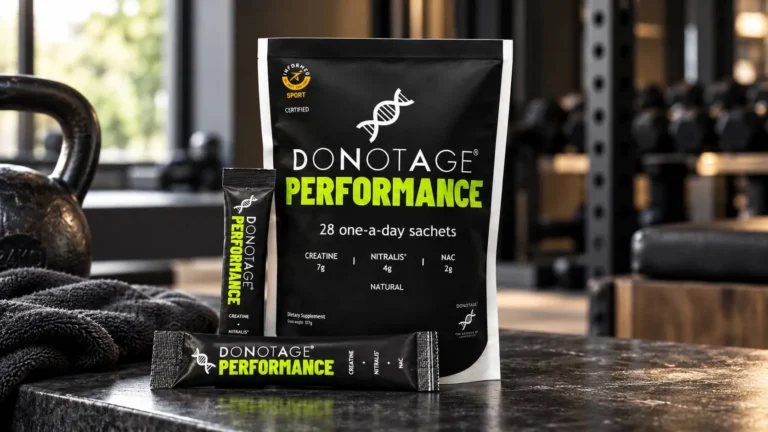
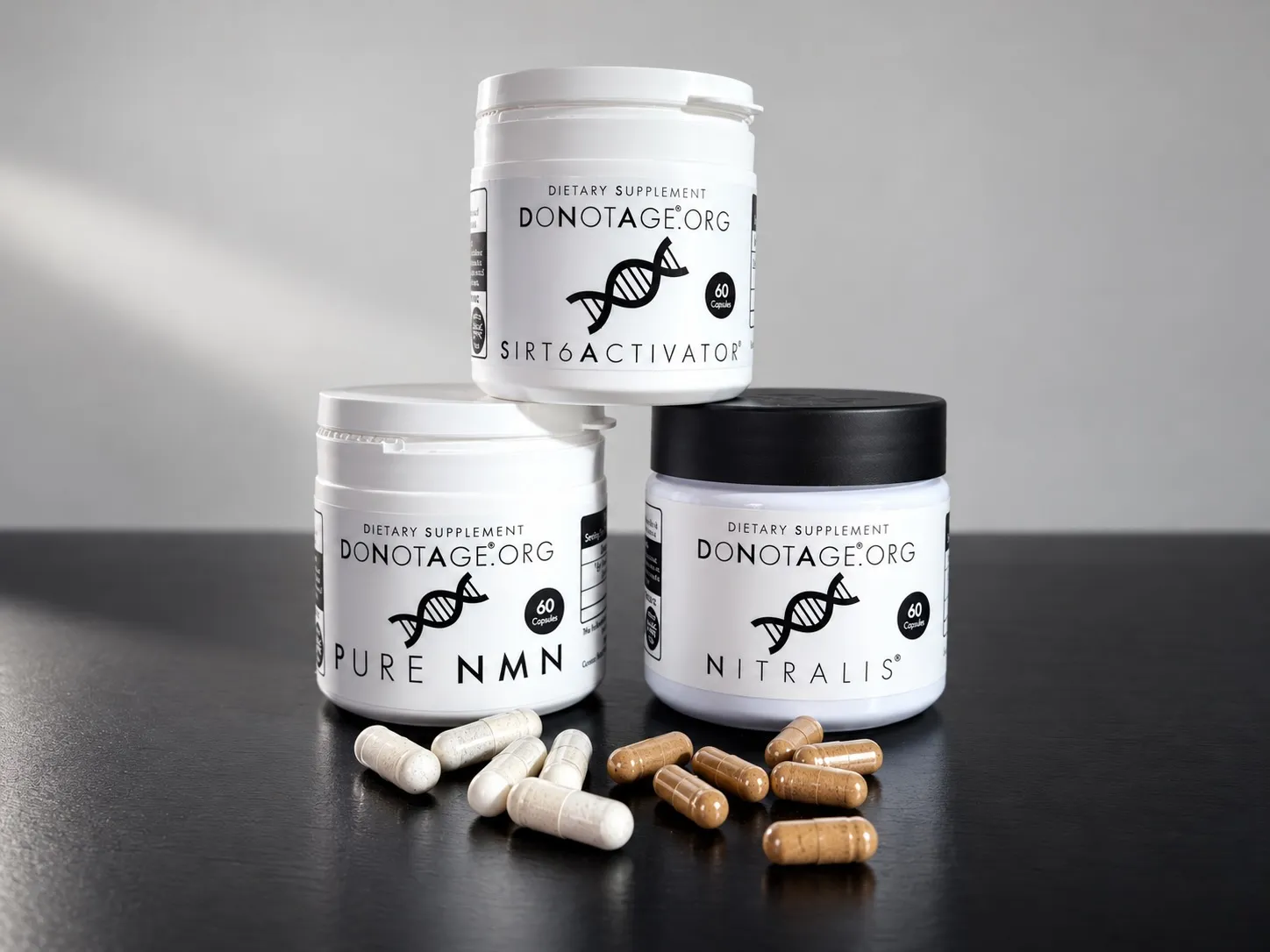
Which is how I came to be testing three DoNotAge products: 1,000 mg of NMN, Nitralis, a formulation built around fermented beet, and 400 mg of a fucoidan-based ingredient marketed in connection with SIRT6 activation.
Between them, they occupy some of the most talked-about territory in the healthy-ageing industry: cellular energy, circulation, recovery and the biological processes associated with ageing.
The science is interesting. Some of the marketing surrounding this territory is considerably more ambitious.
Before I decide whether the improvements I’m noticing deserve to be credited to anything in those bottles, it seems reasonable to examine what the research actually tells us.
Three supplements, three different approaches to ageing
One of the things that interested me about this particular DoNotAge combination is that the supplements are not simply variations of the same idea.
NMN, or nicotinamide mononucleotide, is involved in the body’s production of NAD+, a molecule essential to numerous cellular processes, including energy metabolism.
Nitralis approaches matters from a different direction. Its combination of fermented beet, magnesium ascorbate and epimedium is intended to influence nitric oxide availability, a pathway associated with blood-vessel dilation and circulation.
Fucoidan occupies a more experimental corner of longevity research, particularly when linked to SIRT6, a protein involved in processes including metabolism and DNA repair.
There are legitimate scientific reasons to investigate all three.
But a supplement influencing a biological pathway doesn’t necessarily mean it will improve the way somebody feels, trains or recovers.
That distinction matters to me.
I’m not especially interested in having wonderful cellular biomarkers if my knee still objects to the stairs and my shoulder continues to regard certain gym exercises as an unreasonable request.
What I want is reasonably straightforward: sufficient energy to train, the stamina to sustain exercise, decent recovery and the ability to keep enjoying golf.
If anything improves those things, I’m interested.
NMN: encouraging laboratory results, but what about actual performance?

Of the three supplements, NMN probably arrives with the biggest reputation.
The relationship between NMN and NAD+ has attracted considerable scientific attention, partly because NAD+ is involved in cellular energy metabolism and other processes associated with healthy ageing.
The reasoning sounds appealing enough. If levels of an important cellular molecule can be increased, perhaps some of the consequences of ageing can be influenced.
Unfortunately, human biology has a habit of being slightly less cooperative than the theory.
A 2024 systematic review covering 10 randomised controlled trials involving 437 participants examined daily NMN doses ranging from 150 mg to 1,200 mg.
The average participant was 58 years old, making the research particularly relevant to the age group I now find myself occupying.
NMN appeared generally well tolerated over the study periods, but the combined results did not demonstrate statistically convincing improvements in physical performance.
One study is especially interesting because it investigated Uthever, the branded NMN ingredient used in the product I’m taking.
In a 60-day randomised clinical trial involving 66 healthy adults aged between 40 and 65, participants received either 300 mg of NMN daily or placebo.
After 30 days, the NMN group recorded an 11.3% increase from baseline in its NAD+/NADH measurement. By day 60, that increase had reached 38%.
The placebo group showed no change after 30 days and a 14.3% increase by day 60.
Those figures are interesting, although they need to be interpreted alongside the actual performance results.
Walking endurance increased in both groups, but the difference between NMN and placebo was not statistically significant.
That is rather an important detail.
The biological measurement changed, but the study did not establish a corresponding advantage in walking endurance.
My own daily dose is 1,000 mg, considerably higher than the 300 mg used in that particular trial.
There is no reliable scientific basis for assuming that taking more automatically delivers greater benefits.
Still, given that I’m beginning to notice improved stamina and energy, NMN is naturally one of the ingredients I’m curious about.
Could it be contributing?
Possibly.
Can I demonstrate that it is?
Absolutely not.
And I rather suspect that’s a distinction worth maintaining throughout this review.
Nitralis: beetroot, nitric oxide and the possibility of better stamina
Nitralis is perhaps the supplement that most directly connects with the type of exercise I already enjoy.
Beetroot and dietary nitrate have been investigated extensively in sports nutrition because nitric oxide plays a role in blood-vessel dilation and circulation.
Unlike some of the more speculative areas of longevity research, there is a reasonable body of human exercise research to examine.
A systematic review and meta-analysis involving 123 studies and 1,705 participants found a small overall exercise-performance benefit from dietary nitrate supplementation.
Beetroot juice and nitrate-rich diets performed better in the analysis than nitrate salts.
That is encouraging, although it doesn’t automatically establish that every supplement containing beetroot will produce the same effect.
The evidence becomes less dependable when looking specifically at older adults.
A 2024 systematic review investigating dietary nitrate and skeletal-muscle function in older people concluded that there was insufficient evidence to establish reliable improvements in muscle function.
Nitralis itself has also undergone clinical investigation.
In a 30-day randomised, placebo-controlled pilot trial involving 85 adults, researchers examined a formulation containing fermented beet, magnesium ascorbate and epimedium.
They used a semi-quantitative method to measure salivary nitric oxide.
Participants taking Nitralis recorded a median increase of 90 measurement units, compared with no median change in the placebo group.
More notably, 60.5% of the Nitralis group achieved an increase of at least 70 units, compared with 11.9% of those receiving placebo.
The difference in that responder measure was statistically significant.
Interesting results, certainly.
But there are some important qualifications.
The researchers did not establish whether participants enjoyed better cardiovascular performance, improved endurance or faster recovery.
An increase in salivary nitric oxide is evidence of a change in the marker being measured. It is not, by itself, proof of better exercise performance.
There is also a commercial context worth acknowledging.
The study was funded by DoNotAge.org, and the researchers disclosed affiliations connected to the company developing the formulation.
Commercially funded research is not automatically unreliable, but independent replication would make the findings more persuasive.
As far as my personal test is concerned, Nitralis is particularly interesting because I’m already noticing an improvement in stamina.
Whether that’s connected to the product remains unknown.
But if those improvements continue throughout the second half of the experiment, I’ll certainly be paying attention.
Fucoidan: fascinating biology, considerably less certainty
The third supplement takes me into rather more experimental territory.
SIRT6 has attracted scientific attention because of its involvement in several cellular processes associated with ageing, including metabolism and DNA repair.
The possibility of influencing such pathways is naturally appealing.
But there’s a substantial distance between understanding what a protein does and demonstrating that taking a supplement will meaningfully improve human health.
Fucoidan, a compound found in certain brown seaweeds, has been investigated in human research, although the available exercise-related evidence remains preliminary.
One randomised crossover trial involving 16 participants examined what happened when people took 1,000 mg of fucoidan daily for two weeks before high-intensity exercise.
Researchers investigated inflammatory and immune responses following exercise.
Some inflammatory responses differed, but the study did not demonstrate improved exercise performance.
Sixteen participants is also a very small foundation on which to build sweeping conclusions about recovery, never mind healthy ageing.
My own DoNotAge product provides 400 mg of a fucoidan-based ingredient, rather than the 1,000 mg investigated in that trial.
Crucially, the study does not demonstrate that the supplement I’m taking activates SIRT6 in humans, repairs damaged tissue or slows biological ageing.
This is the part of my experiment where scientific curiosity probably has to do most of the heavy lifting.
I find the underlying biology genuinely interesting.
Whether it translates into anything useful for somebody like me remains a rather more difficult question.
My old injuries aren’t going to disappear because I’m taking supplements
There is one expectation I have deliberately excluded from this entire experiment.
I am not expecting any of these products to repair my existing injuries.
There is no convincing clinical evidence in the studies discussed here demonstrating that NMN, Nitralis or fucoidan can structurally heal an established torn rotator cuff, damaged meniscus or torn biceps tendon.
That is worth remembering, particularly if the improvements in stamina and energy I’m experiencing continue.
Feeling more capable of exercise doesn’t automatically mean injured tissue has become stronger.
And feeling good during a workout isn’t permission to ignore the limitations of a damaged shoulder or knee.
Training still needs to make sense.
There is also the slightly less fashionable matter of my bodyweight.
At 5ft 8in and roughly 18 stone, improving strength relative to bodyweight while preserving useful muscle is likely to be an important part of keeping my knee functioning as well as possible.
No futuristic cellular pathway can make basic mechanics disappear.
Sensible training, appropriate rehabilitation, sufficient protein, adequate nutrition, sleep and managing bodyweight all remain relevant.
They may not generate the same excitement as longevity supplements, but they are considerably more established foundations for maintaining physical capability.
I am not looking at DoNotAge’s products as replacements for any of those things.
At most, I’m interested in whether they might provide some additional benefit alongside them.
Halfway through, something does feel different
This is where the experiment has become rather more interesting than simply reading clinical studies and comparing laboratory figures.
I’m now roughly halfway through the 30 days, and I can genuinely say that I’ve noticed some positive changes.
My stamina feels better. My general energy levels seem to have improved. And I’ve been feeling a little more switched on mentally.
That last one is particularly welcome.
It’s difficult to quantify the sensation of feeling mentally sharper, but there’s a noticeable difference in how alert and engaged I feel.
None of this amounts to a miraculous transformation.
I’m not suddenly lifting enormous weights, sprinting around the golf course or waking up with the enthusiasm of a Labrador that has just discovered an unattended sandwich.
But there has been enough of a change for me to notice.
And that is encouraging.
The difficulty, of course, is working out why.
I started taking these supplements hoping they might help. That expectation alone can influence how I interpret improvements.
The placebo effect is a perfectly plausible explanation for at least some of what I’m experiencing.
So are ordinary fluctuations in sleep, mood, training intensity and general wellbeing.
There’s another complication: I’m taking three DoNotAge products together.
Even if one or more of them is contributing to the improvements, I have no reliable way of identifying which is responsible.
Nor can I establish that any effect comes from the combination.
Without a placebo comparison, blinding or a properly controlled design, this remains a personal observation rather than scientific proof.
But personal observations still have value when they’re reported for what they are.
I’m feeling better.
I just don’t know why.
What will count as success when the 30 days are up?
The temptation now would be to declare that something is working and leave it there.
That would make for a considerably more exciting headline, but not a particularly credible review.
What interests me is whether the improvements I’m noticing remain consistent throughout the second half of the experiment.
I’m paying attention to stamina during cardiovascular exercise, performance in the gym, general energy levels, mental alertness and recovery between comparable workouts.
Resting blood pressure is another potentially useful measurement to consider.
I also want to avoid mistaking one particularly good training session for evidence of a meaningful change.
After all, everybody has days when exercise feels easier and days when even putting on gym shoes seems an unnecessarily ambitious undertaking.
Thirty days is a relatively short period, particularly when some NMN studies have examined outcomes over 60 days.
Even if the improvements continue, I won’t be able to establish that the supplements caused them.
But a sustained positive experience would certainly be more interesting than a brief burst of enthusiasm during the first fortnight.
And if the improvements disappear?
Well, that would be useful to know too.
The purpose of this DoNotAge review has never been to prove that NMN, Nitralis or fucoidan works, nor to dismiss them before giving the experience a fair assessment.
I wanted to explore whether three products built around genuinely interesting areas of scientific research could make any noticeable difference to my everyday life.
At 50, that means maintaining my strength, enjoying regular cardio, playing golf and recovering well enough to do it all again.
Halfway through, I am pleased to report that my energy, stamina and mental alertness seem to be heading in the right direction.
Whether that is down to the supplements, a placebo effect or something entirely unrelated remains an open question.
I’ll complete the 30 days before deciding whether the experience makes any of these products worth continuing, and I’ll report what actually happened rather than what I hoped would happen.
For now, I’m feeling better, still training and still enjoying my golf.
Placebo or supplement? Who knows.
At this stage, I’m simply rather pleased that something seems to be going right.